
Vegetables
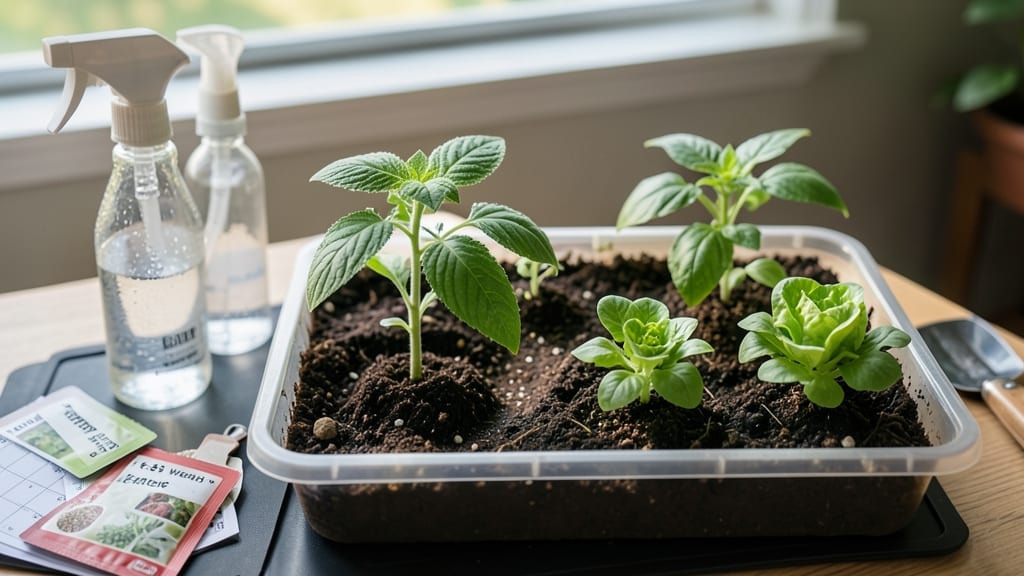
Starting vegetable seeds indoors at the right time means the difference between a bountiful harvest and a season of disappointment—get it wrong, and you’ll either have leggy seedlings or late bloomers that miss their prime.
Picture this: you’ve spent hours under grow lights, nurturing tiny sprouts, only to rush them outside too soon—April’s frost nips them back, or they bolt before you can even pick them. The key? Knowing your last frost date and counting backward from there, not guessing.
In Zone 6a, where 4-8 weeks before last frost is your sweet spot, timing varies wildly between fast-growing lettuce and slow-maturing tomatoes.
I’ll walk you through the exact weeks to start each type, how to adjust for early starts or succession planting, and the three mistakes that derail even the most careful gardeners.
By the end, you’ll have a customizable calendar tailored to your climate, plus pro tips to avoid the pitfalls that turn hopeful seedlings into sad, stunted plants. Let’s get those 🌱 off to the right start.
Climate Zone-based seed starting calendar: exact weeks to begin indoors
Getting your vegetable seeds indoors at the right time ensures strong, healthy seedlings ready for transplant when the weather warms up. Start too early, and you’ll battle leggy, weak plants. Start too late, and your garden will miss peak harvests.
Your USDA hardiness zone dictates the perfect window—each zone has unique last frost dates that determine when seedlings should hit your garden soil.
Most gardeners follow a simple rule: start seeds indoors 4-8 weeks before your last spring frost date. But this varies wildly from Zone 3’s snowy winters to Zone 10’s mild climate.
For example, in Zone 5, you might start tomatoes in early March, while in Zone 8, you could delay until late February. Below, I’ve broken down exact weeks for popular vegetables across all zones.
For tomatoes and peppers, which need a long growing season, aim for seedlings that are 6-8 weeks old at transplant. In Zone 3, this means starting them by March 15 to avoid late-season frosts.
In warmer zones like Zone 9, you can push your timeline to October 15 for fall
How to calculate your custom seed starting timeline (even without a calendar)
Figuring out when to start vegetable seeds indoors doesn’t require a fancy calendar—just a few key numbers and a little math. Start by finding your last frost date (the average date when frost no longer threatens).
This is your anchor point for transplanting seedlings outdoors. For example, if your last frost is April 15, you’ll work backward from there.
Next, check the days to maturity on your seed packet. This tells you how long the plant needs from seed to harvest. For tomatoes, which typically take 70-85 days, you’ll subtract this from your frost date.
But don’t forget to account for the 4-6 weeks seedlings need to grow strong enough for transplanting.
Your Custom Seed Starting Timeline
- 📅 Step 1: Find your last frost date (check local agricultural extensions or weather records).
- 📏 Step 2: Subtract 4-6 weeks from your frost date to determine the transplant window.
- 🌱 Step 3: Subtract the days to maturity (from seed packet) minus 4-6 weeks to find your indoor start date. Example: 85 days (tomato) - 6 weeks (transplant) = 79 days total → Start 79 - 6 = 73 days before frost.
- ⏳ Step 4: Adjust for early/late varieties. Early varieties (e.g., bush beans) can start 2-3 weeks later, while heat-lovers (e.g., peppers) need an earlier start.
- 🌿 Step 5: Plan for succession planting by staggering starts every 2-3 weeks for crops like lettuce or radishes.
- 📦 Step 6: Account for container gardening by starting 1-2 weeks earlier—small pots dry out faster and slow root growth.
For leafy greens like lettuce or spinach, which mature in 30-50 days, you can start seeds 4-6 weeks before transplanting. These fast growers are perfect for succession planting—sow new batches every 2-3 weeks to ensure a continuous harvest.
Just avoid starting them too early, or you’ll end up with bolting (premature flowering) from long daylight exposure.
If you’re growing cool-season crops like kale or broccoli, you can also start them 8-10 weeks before your last frost for an early spring harvest. These hardy plants tolerate cooler temperatures and can even handle light frosts.
For warm-season crops like peppers or eggplants, which need 80-90 days to mature, start seeds 10-12 weeks before frost—they’re sensitive to cold and need a long growing season.
Pro tip: Use a seed starting journal to track your timelines year after year. Note which varieties performed best in your climate and adjust your schedule accordingly.
Over time, you’ll fine-tune your custom seed-starting timeline to match your garden’s unique conditions—whether that’s short growing seasons, hot summers, or early frosts. 🌱
Remember, light and temperature also play a role. Seedlings need 12-16 hours of light daily (supplement with grow lights if natural light is lacking) and 65-75°F for optimal germination. Keep these factors in mind as you refine your timeline each season. ✂️