
How To
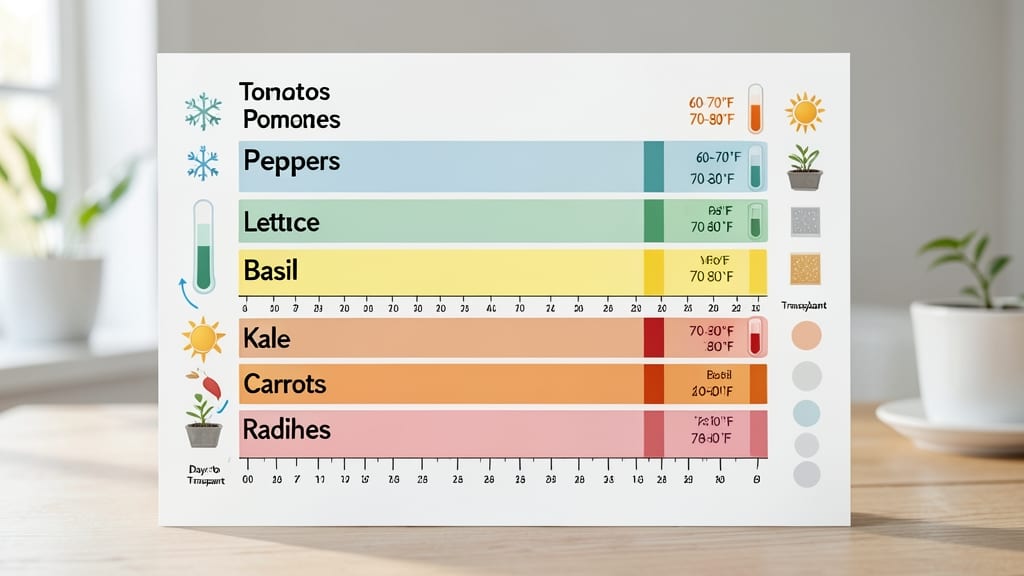
To start seeds indoors chart, you need to know the 6-8 week window before your last frost date — and that timing changes more than you’d think.
Picture this: you’ve spent hours prepping trays, sterilizing soil, and labeling seeds, only to realize too late that your tomatoes are already bolting before they even hit the garden. Or worse, your basil is still a sad seedling when the first warm days arrive.
The difference between a bountiful harvest and a wasted effort often comes down to when you press "start."
This isn’t just about memorizing dates—it’s about matching your plants’ needs to your climate. Fast growers like lettuce can wait until 4 weeks before the last frost, while tomatoes and peppers need the full 8 weeks (or more in cooler zones).
Throw in regional tweaks, and suddenly, that simple chart becomes your gardening GPS.
Below, you’ll find the exact indoor seed-starting schedule for your zone, broken down by plant type, plus how to adjust for early springs, late frosts, or those pesky "microclimates" where your neighbor’s garden thrives while yours struggles.
No more guesswork—just a clear, actionable timeline to turn those seeds into thriving plants.
Indoor seed-starting timeline by last frost date and plant type
Getting your indoor seed-starting timeline right means the difference between a bountiful harvest and wasted effort. Most gardeners follow the 6-8 week rule: count backward from your last frost date to determine when to sow seeds indoors.
But this varies by plant type—fast growers like lettuce need only 4 weeks, while tomatoes and peppers require 8-10 weeks to mature. Below, I’ve mapped out precise windows for USDA hardiness zones 3-10, so you can adjust based on your region.
For example, in Zone 5 (last frost: May 15), you’d start tomato seeds in early March (10 weeks before frost) but radishes as late as April 1 (4 weeks before frost).
Coastal areas with milder winters may shift these dates 2-3 weeks earlier, while inland zones may need adjustments later. Always check your local frost dates—they’re the anchor for your entire schedule.
Here’s the key: slow growers (tomatoes, peppers, herbs) need the longest indoor head start, while fast growers (lettuce, radishes, spinach) can wait until closer to your last frost. The chart below breaks it down by plant category and zone, with critical transplant deadlines highlighted.
Use this as your seed-starting bible to avoid leggy seedlings or missed planting windows.
| Plant Type | USDA Zones 3-4 (Last Frost: April 15) | USDA Zones 5-6 (Last Frost: May 1) | USDA Zones 7-8 (Last Frost: March 15) | USDA Zones 9-10 (Last Frost: Feb 1) | Transplant Deadline |
|---|---|---|---|---|---|
| Tomatoes | Feb 15 - Mar 1 | Mar 1 - Mar 15 | Jan 15 - Feb 1 | Dec 15 - Jan 15 | Apr 15 - May 1 |
| Peppers | Feb 15 - Mar 1 | Mar 1 - Mar 15 | Jan 15 - Feb 1 | Dec 15 - Jan 15 | Apr 15 - May 1 |
| Herbs (Basil, Cilantro) | Mar 1 - Mar 15 | Mar 15 - Apr 1 | Feb 15 - Mar 1 | Jan 15 - Feb 15 | Apr 15 - May 1 |
| Lettuce | Mar 15 - Apr 1 | Apr 1 - Apr 15 | Feb 15 - Mar 1 | Jan 15 - Feb 1 | May 1 - May 15 |
| Radishes | Apr 1 - Apr 15 | Apr 15 - May 1 | Mar 15 - Apr 1 |
How to adjust seed-starting dates for your local climateYour local climate isn’t just about the USDA zone—microclimates, elevation, and even your yard’s orientation can shift seed-starting dates by weeks. For example, a coastal area might have milder winters, while inland regions face harsher frosts. I’ve grown tomatoes in Zone 7 that thrived when started 2 weeks later than the standard chart because my microclimate stays warmer. Start by checking your last frost date, but don’t stop there. Use a frost-free calculator (like the one from the National Weather Service) to adjust for your specific location. Coastal gardens often have 2-3 weeks later frost dates than inland areas just 20 miles away. For instance, San Francisco’s Zone 10 might start peppers in February, while Sacramento’s Zone 9 waits until March. Containers add another layer. Seedlings in pots warm up faster than ground soil, so you can start them 1-2 weeks earlier than the chart suggests. However, if you’re planting into heavy clay soil, delay by a week—it stays colder longer. My herbs in containers often hit the ground 10 days ahead of my in-ground veggies because the pots absorb heat differently. Adjust Your Seed-Starting Dates With These Rules
Row covers and cold frames are my secret weapons for pushing dates. A simple floating row cover can add 2-4 weeks to your growing season, letting me start cold-hardy greens in late January instead of February. For tomatoes and peppers, a cold frame lets me transplant seedlings outdoors 2 weeks earlier than the frost date suggests. Just remember: these tools work best in protected microclimates, like against a south-facing wall. Don’t forget to harden off seedlings properly when adjusting dates. If you’ve started early due to a warmer microclimate, extend hardening off by 3-5 days to avoid transplant shock. Last year, my early basil wilted because I rushed it into the garden after a cold snap—a reminder that timing adjustments require patience. For non-standard frost dates, use this quick formula: Start date = (Last frost date - maturity days) - adjustment weeks. For example, if your last frost is May 10 and your tomatoes need 80 days to mature, start them February 20. But if you’re in a coastal Zone 9 with a March 15 frost, delay by 2 weeks—start them January 5. Always test your soil temperature too; 50°F+ is ideal for most seedlings. |