
Container Gardens
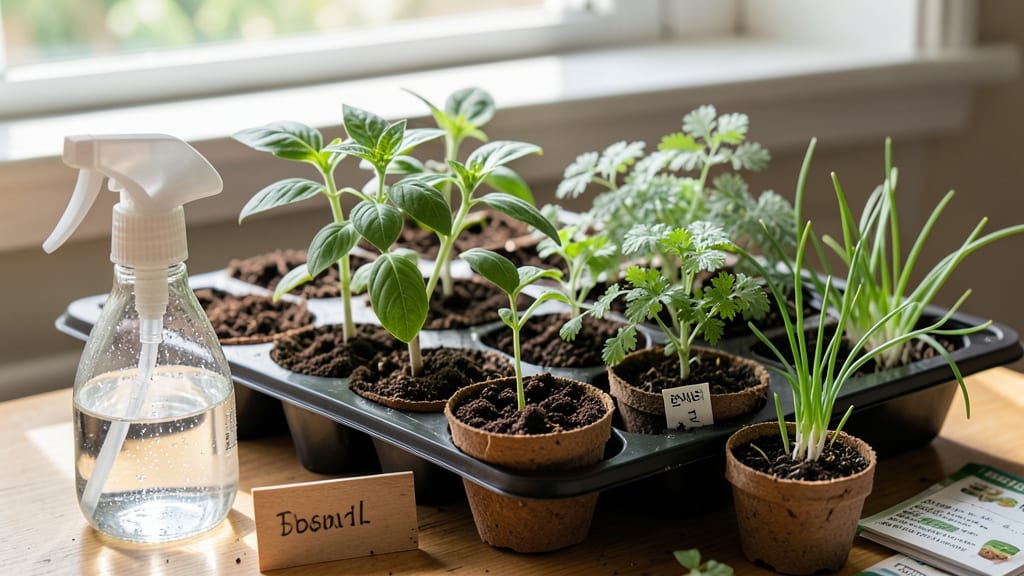
Starting herbs indoors 6-8 weeks before your last frost is the secret to a bountiful harvest—miss this window, and your delicate seedlings may not survive the transition outside.
Picture this: you’ve got a sunny windowsill, fresh seed-starting mix, and all the enthusiasm—but if you plant too early, your herbs will outgrow their containers before they’re ready for the garden. Too late, and they’ll struggle to catch up once the weather warms.
For most gardeners in USDA Zone 6a, that means kicking off your 🌿 herb seeds in late February or early March. But regional differences matter: coastal areas can start a week or two earlier, while inland zones might need to wait until March.
Below, I’ll break down the exact timing for fast growers like basil versus slow starters like parsley, plus the 10-week checklist to harden off seedlings so they thrive when moved outdoors—no more leggy, sad-looking transplants!
Optimal indoor starting times for popular herbs by climate zone
Getting your herbs off to the right start indoors means accounting for your local climate zone and last frost date. In cool climates (Zones 3-5), I begin sowing seeds as early as January to February, while warm climates (Zones 8-10) can start anytime from February to April.
The key is timing your indoor start so seedlings are ready to transplant 2-3 weeks before the last expected frost—no earlier, or they’ll outgrow their containers.
Herbs like basil and cilantro are particularly sensitive to transplant shock, so I never rush their move outdoors. For temperate zones (6-7), aim for a 6-8 week indoor window starting in late February to early March.
This gives them enough time to develop strong roots and sturdy stems before facing cooler outdoor temperatures.
Your last frost date is the anchor for all timing decisions. For example, if your last frost is April 15th, count backward 8 weeks to determine your indoor start date.
Use this zone-by-zone comparison table below to find your exact window for each herb, then adjust based on your local weather patterns.
🌱 Pro Tip: Keep a garden journal to track your local frost dates and adjust future starts. Over time, you’ll refine your timing to match your microclimate perfectly.
For cool climates (Zones 3-5), I prioritize hardy herbs like parsley and chives because they can handle cooler indoor temperatures and shorter daylight hours. These herbs also tolerate transplant shock better than delicate varieties like basil.
In my experience, parsley seedlings started in January often outperform those started later, giving me a full harvest season.
In warm climates (Zones 8-10), the focus shifts to heat-tolerant varieties and later starts. I usually begin sowing basil and cilantro in March to avoid the midday heat that can stress young seedlings.
For these zones, I also recommend using shade cloth during the hottest part of the day when hardening off seedlings.
If you live in a transitional climate (Zone 6-7), your timing becomes a balancing act. For example, I start basil in late February but move it to a protected outdoor spot as early as April 1st to extend its growing season.
This approach gives me fresh basil for 6-8 weeks longer than if I waited for the traditional last frost date.
🌿 Remember: Always check your local frost dates—they can vary by 1-2 weeks even within the same zone. Use resources like the National Weather Service or Almanac’s Frost Calculator to fine-tune your schedule.
Finally, slow-growing herbs like parsley need extra time indoors. I give them a 10-12 week head start because they take longer to mature. For faster growers like dill
10-Week growth timeline: key milestones for transplant success
Starting herbs indoors requires precision—each week brings critical milestones that determine whether your seedlings thrive or fail. I’ve mapped out this 10-week timeline to ensure your basil, parsley, and cilantro develop strong roots, sturdy stems, and vibrant leaves before their outdoor debut.
Miss a step, and you risk leggy, weak plants that struggle to adapt.
Week 1 is all about seed preparation. Soak seeds overnight (especially dill and chives) to kickstart germination. Plant them just below the soil surface—1/8 inch deep—in seed-starting mix with 50% perlite for drainage.
Keep trays in a warm spot (70°F+) and mist daily to maintain humidity. Avoid overwatering; soggy soil invites damping-off disease, a silent killer of young seedlings.
- 🌱 Week 1-2: Germination – Seeds sprout in 5-14 days. Keep soil moist but not wet; use a heat mat if germination stalls.
- 🌿 Week 3-4: True leaves emerge. Thin seedlings to 2 inches apart; transplant weak ones to spare trays.
- ☀️ Week 5-6: Introduce 12+ hours of light daily. Use grow lights if natural light is insufficient; leggy stems signal light deprivation.
- 🪴 Week 7-8: Fertilize with half-strength 5-10-5 and begin hardening-off—acclimate to outdoor temps for 2 hours/day.
- ✂️ Week 9-10: Pinch back top growth to encourage bushiness. Transplant after last frost when soil reaches 50°F+.
By Week 3, your seedlings will sprout their first true leaves (not the initial seed leaves). This is your cue to thin them—crowded seedlings compete for nutrients, leading to stunted growth.
Use small scissors to snip unwanted sprouts at soil level, leaving the healthiest 2-3 seedlings per cell. Repurpose the thinned seedlings for microgreens or share with neighbors to avoid waste.
Light becomes non-negotiable by Week 5. Herbs like basil need 12+ hours of light daily to prevent etiolation (those sad, stretched stems). If your windowsill can’t deliver, invest in a LED grow light positioned 2-3 inches above seedlings.
Rotate trays daily so plants grow straight—uneven light causes lopsided growth. A south-facing window is ideal, but east or west works too, provided you supplement with artificial light.
At Week 7, it’s time to fertilize and harden off. Use a balanced 5-10-5 fertilizer at half strength to avoid burning tender roots. For hardening-off, move seedlings outdoors for 2 hours/day, gradually increasing exposure.
Start with shade and avoid direct sun or wind, which can scorch leaves. This process teaches plants to adapt to outdoor conditions, reducing transplant shock by up to 70%.
Your final stretch—Weeks 9-10—is about preparing for transplant. Pinch back the top sets of leaves on herbs like basil to encourage bushier growth. Water deeply the day before transplanting to reduce stress.
Choose an overcast day or transplant in the early evening to minimize sun stress. Bury seedlings deeper than their original soil line to stabilize stems and promote root growth.