
Container Gardens
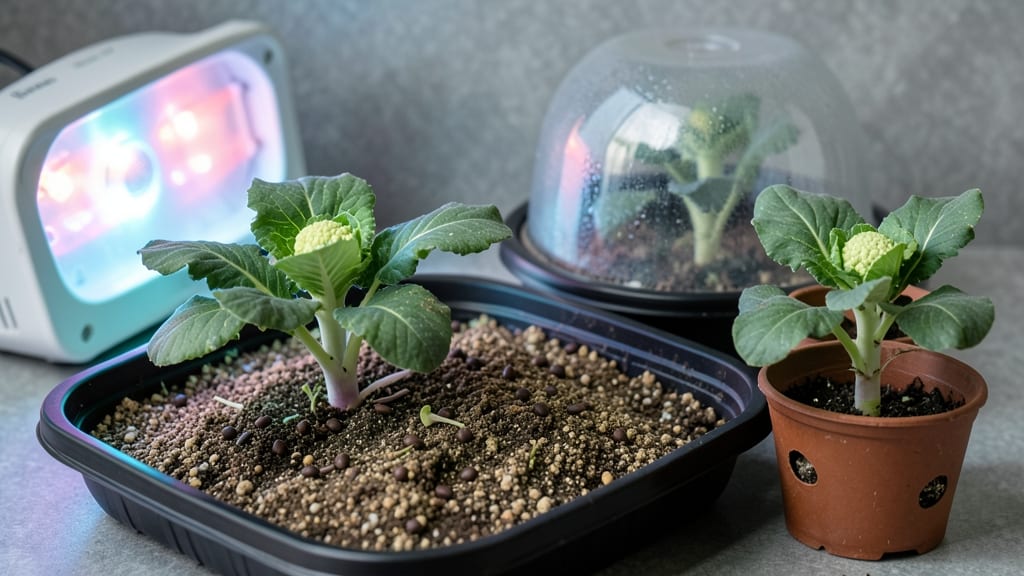
Start cauliflower seeds indoors 8 weeks before your last frost date to give them the head start they need for a fall harvest.
Timing your cauliflower seeds perfectly indoors can mean the difference between a bountiful fall harvest and wasted effort—get it wrong, and you’ll either face stunted plants or bolting before maturity.
In USDA Zone 6a, like many temperate climates, this usually means kicking off seeds in early February for a June harvest. But the exact window shifts depending on your local frost dates and whether you’re aiming for a spring or fall crop.
Below, I’ll walk you through how to calculate your ideal start date, adjust for your region, and avoid the most common mistakes that turn seedlings into disappointments.
Optimal indoor starting times for cauliflower seeds by region
Getting your cauliflower seeds started indoors at the right time ensures strong, healthy seedlings ready for transplanting when conditions are perfect. Since cauliflower thrives in cool weather and 60-90 days to maturity, your indoor starting window depends on your USDA zone and last frost date.
Northern gardeners aim for spring harvests, while southern gardeners can stretch into fall with proper timing.
For most regions, I recommend an 8-week head start indoors—this gives seedlings enough time to develop 4-6 true leaves before facing outdoor conditions. However, warm climates (Zones 8-10) can start later, while cool climates (Zones 3-6) need an earlier jumpstart.
Let’s break it down by region so you can avoid bolting or stunted growth.
| USDA Zone | Last Frost Date | Indoor Start Window | Transplant Outdoors | Harvest Window |
|---|---|---|---|---|
| Zones 3-4 (Cold Climates) | Mid-April to May 15 | February 15 - March 15 | May 1 - June 1 | July - August |
| Zones 5-6 (Temperate) | April 15 - May 1 | February 1 - March 15 | April 15 - May 15 | June - July |
| Zones 7-8 (Warm Climates) | March 15 - April 15 | January 15 - February 15 | March 1 - April 1 | May - June |
| Zones 9-10 (Hot Climates) | February 15 - March 1 | December 15 - January 15 | February 1 - March 1 | April - May |
| Fall Harvest (All Zones) | September 15 - October 15 | July 1 - August 1 | August 15 - September 15 | October - November |
Note: Adjust dates 1-2 weeks earlier for high-altitude areas or late-spring frosts.
If you’re in Zones 3-4, start your seeds by mid-February to ensure they’re ready for transplanting by early May. These northern regions have shorter growing seasons, so timing is critical to avoid early frost damage.
I’ve seen gardeners in Minnesota push their harvests by using row covers to extend the season, but seeds must still start early.
For Zones 5-6, like those in the Midwest or Northeast, aim to start seeds between February 1 and March 15. This gives you flexibility for both spring and fall harvests.
In my experience, a fall crop works well here if you start seeds in early July for a late-summer transplant. Just watch for bolting if temperatures rise too quickly.
Gardeners in Zones 7-8, such as in the Southeast or California’s coastal areas, can start seeds as early as mid-January for spring or mid-July for fall.
The key here is avoiding heat stress, which can cause seedlings to bolt prematurely. I recommend using shade cloth outdoors if transplanting during hot spells.
In Zones 9-10, where winters are mild, you can start seeds year-round, but focus on winter crops for the best results. For spring, begin in December, and for fall, start again in July-August.
I’ve grown cauliflower successfully in Southern California by planting in shaded areas during summer to prevent bolting.
Don’t forget about fall harvests—they’re a game-changer for extending your growing season! In cooler climates (Zones 3-6), start seeds in early July for a September-October harvest.
Southern gardeners (Zones 7-10) can even squeeze in a winter crop by starting seeds in August and using row covers for frost protection.
Pro tip: Use a seedling heat mat if your home stays below 65°F at night—cauliflower seeds need consistent warmth (70-75°F) to germinate properly. I’ve had the best success with a grow light on a 14-hour cycle to prevent leggy seedlings.
Keep soil moist but not soggy, and avoid overwatering, which can lead to damping off.
Finally, always check your local frost dates
How to calculate your perfect cauliflower seed starting window
Getting your cauliflower seeds started indoors at the right time ensures healthy seedlings ready for transplant when conditions are ideal. The key is balancing your last frost date with the plant's maturity timeline (typically 60-90 days to harvest).
Miss this window, and you risk bolting (premature flowering) or leggy, weak seedlings that struggle outdoors.
Start by finding your average last frost date—this is your anchor. For most U.S. regions, this falls between April and May, but check your local USDA zone for precision.
Once you have this date, work backward to determine when to plant seeds indoors, accounting for seedling growth stages and transplant timing.
- 1 Determine your last frost date: Locate this date for your region (e.g., April 15 in Zone 6a). Use resources like the Old Farmer’s Almanac or local agricultural extensions.
- 2 Count backward 6-8 weeks: Cauliflower seedlings need 6-8 weeks indoors before transplanting. For a June harvest, start seeds by April 15 (Zone 6a example).
- 3 Adjust for seedling stages: Seedlings need 4-6 weeks to reach transplant size. Add 2-3 weeks for hardening off, so start seeds 8-10 weeks before your last frost.
- 4 Verify maturity timeline: Check your cauliflower variety’s days to maturity (e.g., 60-90 days). Subtract 60 days from your target harvest date to confirm your transplant window.
- 5 Avoid common mistakes: Starting too early causes bolting (flowering before harvest), while starting too late results in small heads. Aim for robust seedlings with 4-6 true leaves before transplanting.
For example, if your last frost date is May 1 and you want a July harvest, start seeds by March 15. This gives you 8 weeks indoors, 2 weeks for hardening off, and 60 days to maturity.
Adjust for cooler climates by starting seeds 2-4 weeks earlier to compensate for slower growth.
Pro tip: Use a seedling heat mat to maintain 70-75°F soil temps for faster germination. Monitor your seedlings closely—leggy stems or yellowing leaves signal inadequate light or overcrowding. Thin seedlings to 12-18 inches apart in trays to prevent competition.
Once your seedlings are 4-6 weeks old and have 4-6 true leaves, they’re ready for hardening off. Gradually expose them to outdoor conditions over 7-10 days before transplanting. This process strengthens their root systems and stems, ensuring they thrive after moving outdoors.