
Container Gardens
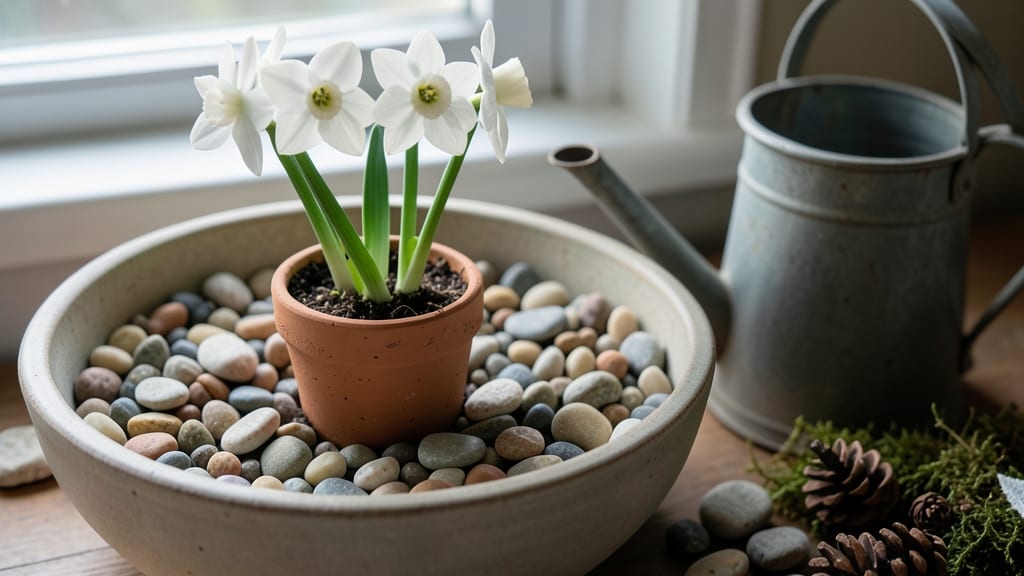
Growing paperwhite narcissus indoors means fragrant winter blooms without sunlight. 🌱 I’ve turned my dark winter kitchen into a mini greenhouse with just a few bulbs and a simple setup—no fancy equipment needed. The secret lies in the right balance of warmth, moisture, and patience.
These bulbs thrive in shallow containers, need only indirect light, and bloom in as little as 6-8 weeks. Even my black thumb can’t kill these hardy little plants. You’ll end up with clusters of delicate white flowers filling your home with a sweet, citrusy scent.
The best part? They’re done blooming by spring, leaving no mess behind. Perfect for apartments, offices, or any spot without natural light. Here’s how to get started without the guesswork!
📚 In This Guide
- What you need
- Instructions
- Tips and common mistakes
- Wrapping up and next steps
What you need
- ● Paperwhite Narcissus bulbs: 3–6 bulbs (depending on desired vase size; larger bulbs yield bigger blooms).
- ● Clear glass vase: 1 (6–8" tall, wide enough to fit bulbs snugly; no drainage holes needed).
- ● Water: Distilled or tap water (if tap, let it sit out for 24 hours to remove chlorine).
- ● Pebbles or marbles: 1 cup (to elevate bulbs and keep them submerged just enough).
- ○ Optional: Chalk or bulb food (1 packet) for extra nutrients (not required but speeds growth).
- ● Sharp knife or pruning shears: 1 (to trim bulb roots if needed).
- ● Measuring cup/spoon: 1 (for water/chalk ratios).
- ○ Decorative elements (optional): Fake greenery or floral picks for a polished look.
- ● Fairy lights or a cozy spot near a window (even without sunlight!).
Step-by-step instructions for growing paperwhite narcissus indoors
Here's how to coax those cheerful blooms indoors—no garden needed.
🪴 Step 1: Choose and Prepare Your Container
Select a shallow, wide container with drainage holes—think of a decorative bowl or ceramic tray. I like to use the 3-inch deep glass bowl from my kitchen because it catches the water beautifully while keeping roots aerated. If your container lacks drainage, place a layer of pebbles at the bottom before adding water.
Fill the container with 3-4 inches of pebbles or gravel (about 1/3 of the container's depth). This creates a reservoir for water while keeping the bulbs' bases dry. The pebbles should be clean and smooth—no sharp edges that could damage the bulbs. Place the container in a spot where you'll enjoy the blooms daily, like a kitchen counter or windowsill.
🌱 Step 2: Position the Bulbs for Optimal Growth
Arrange 4-6 paperwhite narcissus bulbs closely together in the container, leaving just enough space for their rounded sides to touch. The bulbs should sit on top of the pebbles, not buried—this prevents rot and mimics their natural habitat. I like to place them in a loose circle so the stems grow outward, creating a stunning display.
Gently press each bulb into the pebbles just enough so they don't wobble. The bulbs will naturally lean toward the light, so position them with the flat side down and the pointed end up. If you're using a glass bowl, the water will reflect light upward, encouraging even growth. Avoid overcrowding—too many bulbs compete for nutrients and produce weaker stems.
💧 Step 3: Add Water and Monitor Levels
Fill the container with room-temperature water until it reaches 1 inch below the bottom of the bulbs. Use a clear glass bowl so you can easily check the water level—it should never touch the bulbs themselves. Tap water is fine, but if your water is heavily chlorinated, let it sit out for 24 hours before using to allow chlorine to evaporate.
Place the container in a cool, bright spot (around 60-65°F), like a basement or garage, for the first 2-3 days. This helps prevent premature sprouting. After this period, move it to a warmer spot (around 65-70°F), such as a kitchen counter or sunny windowsill. You'll see green shoots emerge in about 2 weeks—that's your signal everything is working!
☀️ Step 4: Provide Light and Care for Blooming
Paperwhites thrive in bright, indirect light, but they don’t need direct sunlight. A south- or east-facing window works well, but if your home is dim, supplement with a grow light (12-14 hours daily). You'll know the light is right when the stems grow straight and sturdy—if they lean or stretch, move the container closer to the light source.
Keep the water level consistent—add water as needed to maintain 1 inch below the bulbs. Avoid letting the water evaporate completely, but don’t drown the bulbs. The roots will grow into the water, anchoring the plant and absorbing moisture. Once the first buds appear (about 4-6 weeks), you can expect fragrant blooms in another 2-3 weeks—that’s the payoff!
⏰ Step 5: Enjoy and Extend the Display
Once the flowers open, move the container to a cooler spot (around 55-60°F) to prolong their life. The blooms will last 1-2 weeks if kept out of direct heat sources like radiators. To keep the display fresh, trim any wilted stems with clean scissors, and add water as needed—just enough to keep the pebbles moist but not soggy.
After blooming, let the bulbs rest for 2-3 months in a dry, cool place. You can replant them in soil for outdoor growth next season, or simply enjoy the memory of their winter fragrance. I like to save the bulbs and replant them in my garden come spring—they often rebloom if given the right conditions!
Tips & tricks for perfect paperwhite narcissus indoors
Here's what nobody tells you about growing these cheerful blooms indoors—tricks that'll make all the difference between wimpy sprouts and show-stopping flowers.
Container Selection: Glass bowls work beautifully because they let you monitor water levels easily, but any shallow container with drainage works. If you're using a ceramic or plastic tray without holes, add a layer of pebbles at the bottom first to prevent waterlogging. I've even used decorative cake stands—just make sure the bulbs stay dry!
Bulb Placement Pro Tip: When arranging your 4-6 bulbs, place the pointed ends all facing the same direction—this creates a more uniform growth pattern. The slight gap between bulbs should be just enough to fit a finger. Too much space means weaker stems, while too little can cause competition for nutrients.
Water Chemistry Matters: The 24-hour chlorine evaporation trick is crucial if you're in an area with heavily treated water. You can also use distilled water or rainwater for even better results. Just remember to maintain that 1-inch water level below the bulbs—never let them sit in water, or they'll rot before they bloom.
Lighting Hack: If your home lacks natural light, a simple LED grow light on a timer (12-14 hours daily) works wonders. Position it about 6 inches above the container and adjust as the stems grow. I've seen dramatic improvements using a basic 10-dollar bulb from the garden center—no need for expensive setups!
Pro Tips for Paperwhite Narcissus Indoors
- Here's what nobody tells you about growing these cheerful blooms indoors—tricks that'll make all the difference betwe...
- Container Selection: Glass bowls work beautifully because they let you monitor water levels easily, but any shallow c...
- Bulb Placement Pro Tip: When arranging your 4-6 bulbs, place the pointed ends all facing the same direction—this crea...
Frequently asked questions
Got questions about growing paperwhite narcissus indoors?
You’re not alone! Here are answers to the most common concerns—from timing to troubleshooting—to help you enjoy fragrant blooms all winter long.
How cold does it need to be to force paperwhite narcissus?
Paperwhites need a cool (but not freezing) environment to trigger blooming. Aim for 45–55°F (7–13°C) for 2–3 weeks before moving them to a 65–75°F (18–24°C) spot indoors. A basement, garage, or refrigerator (without light) works perfectly for pre-chilling. Skip this step, and you might get fewer blooms!
How long does it take for paperwhite narcissus to bloom indoors?
From planting to blooming, expect 4–6 weeks in ideal conditions. The pre-chilling period (2–3 weeks) kicks off the process, followed by 2–3 weeks of growth in warmth. Patience pays off—imagine that sweet citrusy scent filling your home!
Why aren’t my paperwhite narcissus blooming?
No blooms? Check these fixes:
- Lack of pre-chilling: They need that cool phase to trigger flowers.
- Too much light: Bright indirect light is best; direct sun can scorch leaves.
- Overwatering: Let the top inch of soil dry out between waterings.
- Small bulbs: Use bulbs at least 2 inches (5 cm) wide for better blooms.
Can I grow paperwhite narcissus in water instead of soil?
Paperwhites thrive in water—just place bulbs neck-deep in a shallow container (like a vase or bowl) with pebbles for support. Change the water every 3–4 days to prevent rot. This method is low-maintenance and great for small spaces, though soil may yield slightly more blooms.
What do I do with paperwhite narcissus after they bloom?
Don’t toss them! After blooming, let the leaves yellow naturally (this feeds the bulb for next year). Then:
- Move the pot to a bright, sunny window for 6–8 weeks.
- Water sparingly until leaves die back.
- Store bulbs in a cool, dry place (like a mesh bag in the fridge) until fall.
- Replant outdoors in fall (if in a mild climate) or repeat the forcing process next winter.
Wrapping up and next steps
Growing paperwhite narcissus indoors is a rewarding way to bring fragrant beauty into your home—even without a sunny windowsill! 🌱 With the right bulb selection, well-draining soil, and a bit of patience, you’ll enjoy stunning blooms that brighten up winter.
Whether you’re a seasoned gardener or a beginner, these cheerful flowers prove that indoor gardening can be simple and stunning.
Ready to dive in? Start by gathering your supplies and follow the steps above—your first batch of paperwhite narcissus could be blooming in just a few weeks! 🌸