
Container Gardens
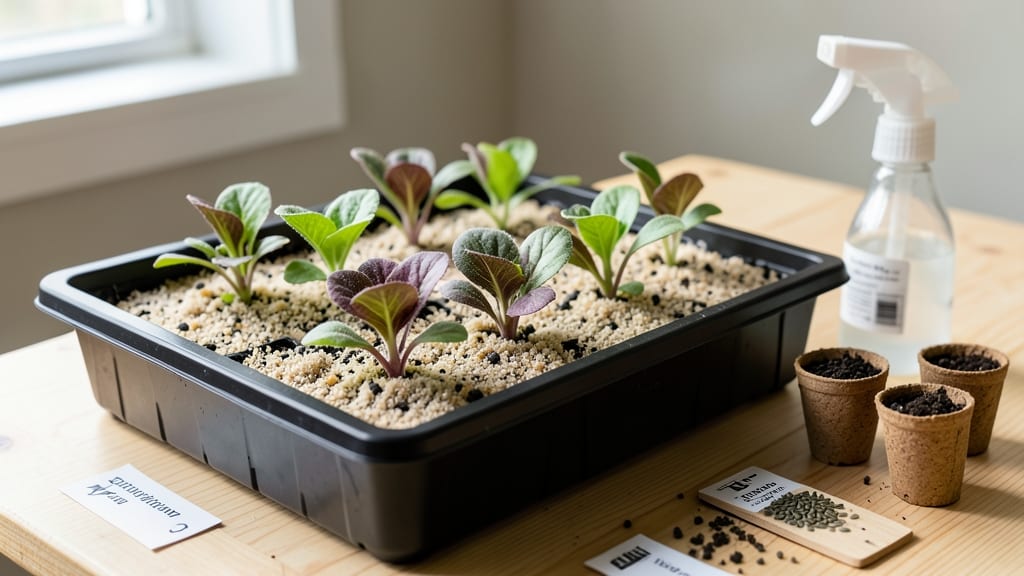
Starting lettuce indoors is the fastest way to get crisp, ready-to-harvest leaves by spring. 🌱 I’ve learned that patience pays off—lettuce seeds germinate in just 3-5 days when you nail the right soil, warmth, and moisture.
The secret isn’t fancy equipment but knowing exactly how deep to plant and when to move those seedlings into light. You’ll need shallow containers (even recycled egg cartons work), a lightweight potting mix (no garden soil), and a way to keep temps around 65-75°F.
The trick to fast germination? Keep the soil damp but not soggy—lettuce hates wet feet. Once sprouts appear, move them under grow lights or a sunny windowsill (south-facing is best) to prevent leggy, weak seedlings.
By the time you transplant outdoors, your lettuce will be 2-3 inches tall and ready to outpace store-bought starts. No more bolting before harvest, no more slugs munching your rows—just crisp, homegrown greens that taste better than anything from the grocery store.
Here’s how to do it right the first time.
Most beginners overwater or overcrowd their seedlings, which leads to mold and stunted growth. Lettuce seeds should be planted ¼ inch deep, just enough to cover them lightly, and spaced ½ inch apart in rows.
Thin to 2 inches between plants once they sprout—this gives roots room to grow and prevents competition. If your seedlings stretch toward the light (a sign of etiolation), it’s time to add a grow light or rotate containers daily for even exposure.
Transplanting is where many gardeners trip up, but lettuce handles it better than most. Harden off seedlings by moving them outside for 1-2 hours daily over 5-7 days, then plant in the garden when night temps stay above 50°F. The key?
Keep the soil moist and protect young plants from pests like slugs with row covers or beer traps. With this method, you’ll harvest baby leaves in 3 weeks and full heads in 6-8 weeks—beating the heat and pests that plague outdoor plantings.
This method works for butterhead, romaine, and leaf lettuce alike, and you can repeat it every 2 weeks for a continuous harvest. The best part? You’ll save money, avoid store-bought chemicals, and enjoy lettuce that’s sweeter, fresher, and way more satisfying than anything you’ve grown before. Ready to get started?
📚 In This Guide
- What you need
- Instructions
- Tips and common mistakes
- Wrapping up and next steps
What you need
- ● Seeds: Lettuce seeds (choose varieties like Buttercrunch, Romaine, or Leaf Lettuce—fast-growing types are ideal! Aim for 1–2 packets (50–100 seeds).
- ● Containers: Seed trays (biodegradable or plastic, 1020-cell or 72-cell trays work great).
- ● OR Small pots (3–4 inches deep, 3–5 per seedling to allow space for transplanting).
- ● Growing Medium: Seed-starting mix (sterilized, lightweight potting soil—avoid garden soil! 1–2 cubic feet for a standard tray).
- ● Watering Can or Spray Bottle: A gentle misting sprayer (to avoid disturbing seeds) or a small watering can with a fine rose.
- ○ Heat Mat (Optional but Helpful): A seedling heat mat (70–75°F) speeds up germination—especially for slower varieties.
- ● Grow Lights: LED or fluorescent grow lights (12–16 inches above seedlings, 12–16 hours/day).
- ● Humidity Dome or Plastic Wrap: To retain moisture while seeds germinate (1 per tray).
- ● Fertilizer: Water-soluble, low-nitrogen seedling fertilizer (dilute to half-strength).
- ● pH Test Kit: To check soil pH (ideal range: 6.0–7.0 for lettuce).
- ● Thermometer/Hygrometer: Monitors temperature (65–75°F) and humidity (40–60%).
- ● Label Sticks or Markers: To track seed varieties and planting dates!
- ● Tweezers or Small Spoon: For delicate seed placement.
Step-by-Step instructions for starting lettuce indoors
Here's how to get your lettuce seedlings off to a strong start—no more slow, finicky germination.
🌱 Step 1: Prepare Containers and Moisten the Growing Mix
Fill your 4-inch seed trays with a high-quality seed-starting mix—never garden soil, which can harbor diseases that rot lettuce seeds before they sprout. I like to press the mix down lightly with my fingers until it's firm but not compacted. The goal is to create a surface that holds seeds in place without burying them too deep.
Water the mix thoroughly until it's evenly moist, but not soggy. You'll know it's right when a handful clumps together but doesn't drip water. Let it sit for 10 minutes to settle, then gently rake the surface with your fingers to create shallow furrows. This creates just enough texture for seeds to nestle into without being buried.
🌱 Step 2: Sow Seeds and Maintain Ideal Germination Conditions
Sprinkle lettuce seeds sparsely along the furrows—don't crowd them. I use a pinch-to-sprinkle method: hold the seed packet between my thumb and forefinger and let a tiny pinch fall at a time. Lettuce seeds are tiny, so aim for 1/8 inch apart. Cover them with a thin layer of fine vermiculite (about 1/16 inch deep) to protect them from drying out.
Place the tray in a clear plastic bag or under a humidity dome to trap warmth and moisture. Lettuce seeds germinate best at 65-75°F. I keep mine on a seedling heat mat set to 70°F—this cuts germination time from 14 days down to just 5-7 days. Check daily for condensation; if the dome fogs up, prop it open slightly to prevent mold.
☀️ Step 3: Provide Light and Prevent Leggy Growth
The moment you see green cotyledons (the first tiny leaves), remove the humidity dome immediately. Lettuce seedlings need bright, indirect light for 12-14 hours daily. A south-facing window works, but I supplement with a grow light kept 3-4 inches above the plants. Without enough light, seedlings stretch toward the source, becoming weak and leggy.
Watch for yellowing leaves—this usually means either too much light (scorch) or too little (etiolation). Strong seedlings have dark green, sturdy stems and leaves that stay upright. If you see seedlings leaning, rotate the tray a quarter turn daily so they grow evenly toward the light source.
💧 Step 4: Water Gently and Thin Seedlings
Keep the soil evenly moist but never soggy. Water from the bottom by placing the tray in 1/2 inch of water for 10 minutes, then drain excess. Top-watering can wash away seeds or disturb seedlings. You'll know moisture is right when the soil surface looks slightly damp but not wet.
When seedlings reach 1-2 inches tall and have 2-3 true leaves, thin them to 2 inches apart using clean scissors. Snip the weaker seedlings at soil level—don't pull, or you'll disturb the roots of the ones you're keeping. This prevents competition and gives your lettuce room to grow into sturdy plants.
⏰ Step 5: Harden Off Before Transplanting
Two weeks before your last frost date, start hardening off your seedlings. Place them outside in a shaded, sheltered spot for 1 hour the first day, gradually increasing time by 1 hour daily until they can handle full sun and wind. Lettuce is sensitive to temperature swings, so avoid hardening off if nighttime temps drop below 45°F.
Transplant on a cool, overcast afternoon to reduce stress. Bury seedlings up to their first true leaves—this encourages deeper root growth. Water deeply at the base, and within 3-5 days, your lettuce will be ready to thrive in the garden.
Tips & tricks for perfect indoor lettuce germination
Here's what nobody tells you about getting those tiny seeds to grow into strong, healthy seedlings.
Soil Texture Secret: After moistening your seed-starting mix in Step 1, press it down until it's firm enough to hold seeds but not so compacted that water can't penetrate. Think of it like packing snow for a snowball—just firm enough to hold shape without being rock-hard. This prevents seeds from washing away when you water, and the 10-minute settling time ensures even moisture distribution throughout the tray.
Germination Temperature Hack: While the ideal range is 65-75°F, I've found that maintaining a consistent 70°F with a seedling heat mat makes all the difference. Lettuce seeds need this warmth to activate their enzymes, and even a 5°F drop can delay germination by days. Pro tip: Place your heat mat on a timer for 12 hours on/12 hours off to prevent overheating, which can actually kill seeds.
Lighting Strategy: When you're setting up your grow light in Step 3, position it so it's just 3-4 inches above the seedlings. I use a simple trick to check if it's close enough: if you can see your hand clearly under the light but still cast a shadow, you're in the perfect zone. Too far away and seedlings become leggy; too close and they'll scorch. Rotate the tray daily to prevent uneven growth toward the light source.
Thinning Technique: When it's time to thin in Step 4, use a pair of sharp, clean scissors to snip seedlings at soil level rather than pulling them. This prevents disturbing the roots of your kept plants and gives you a clean cut that won't tear. I like to thin in stages—first when they're 1 inch tall, then again at 2 inches—to give the remaining seedlings more space to develop strong root systems.
Pro Tips for Starting Lettuce Indoors
- Here's what nobody tells you about getting those tiny seeds to grow into strong, healthy seedlings.
- Soil Texture Secret: After moistening your seed-starting mix in Step 1, press it down until it's firm enough to hold seeds but not so compacted that water can't penetrate.
- Germination Temperature Hack: While the ideal range is 65-75°F, I've found that maintaining a consistent 70°F with a seedling heat mat makes all the difference.
Frequently asked questions
Got questions about starting lettuce indoors? You’re not alone—this method has its quirks! Here are answers to the most common concerns to help you grow strong, healthy seedlings from the get-go.
When is the best time to start lettuce indoors?
For most climates, start lettuce indoors 6–8 weeks before your last frost date. This gives seedlings enough time to mature before transplanting. Check your local frost dates and adjust—cool-season varieties like romaine or butterhead can even handle light frosts!
Why is my lettuce taking so long to germinate?
Lettuce seeds germinate best in consistent moisture and warmth (65–75°F). If they’re slow, ensure your soil stays damp (not soggy) and consider using a heat mat. Avoid cold drafts or uneven watering—patience pays off, but most seeds should sprout within 7–14 days.
Do I need grow lights, or will natural light work?
Natural light is ideal, but supplemental grow lights (12–16 hours/day) are a must if your seedlings are leggy or pale. Place lights 2–4 inches above seedlings and adjust as they grow. South-facing windows work in a pinch, but avoid direct midday sun, which can scorch tender leaves.
How do I prevent mold or damping-off in my seedlings?
Damping-off (a fungal disease) thrives in overly wet or crowded conditions. Thin seedlings to 1–2 inches apart, use sterile potting mix, and water from below (via a tray) to avoid wetting leaves. Improve airflow with a small fan on low, and avoid over-fertilizing—lettuce is light on nutrients early on!
Can I use regular potting soil, or do I need something special?
Start with a light, well-draining seed-starting mix (not garden soil). Amend it with perlite or vermiculite for aeration. Lettuce roots are delicate, so avoid heavy or compacted mixes. A 50/50 blend of potting soil and coconut coir works well for most varieties.
Wrapping up and next steps
Starting lettuce indoors is a rewarding way to jumpstart your garden—especially when you use these fast germination tricks to ensure strong, healthy seedlings. With the right setup, patience, and a little care, you’ll be harvesting crisp, fresh lettuce in no time! 🌱
Now that you’re ready to begin, your next step is simple: gather your supplies and dive in! Whether you’re a seasoned gardener or a curious beginner, every seedling you nurture is a step toward a thriving container garden. Happy growing! 🌿