
Propagation
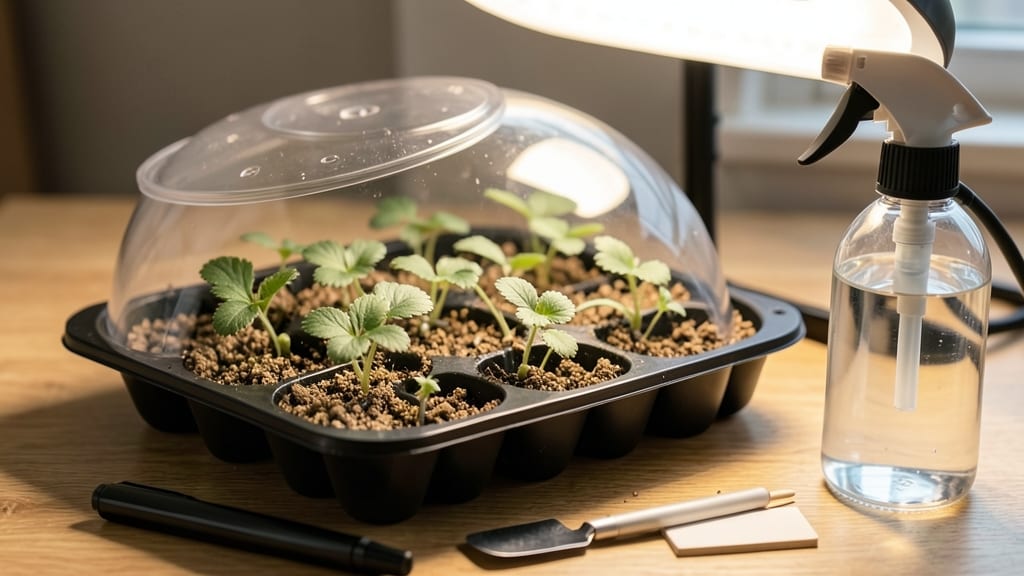
Germinating strawberry seeds indoors can turn your kitchen counter into a tiny greenhouse where fast-sprouting adventures begin. 🌱 The key? Mimicking the warm, moist conditions strawberries need to break dormancy—something store-bought plants never deliver.
My first batch took just 10 days to crack the soil, and the secret lies in scarification, the right soil mix, and a little patience.
You’ll need a seed tray with drainage, a 50/50 mix of peat moss and perlite, and a heat mat set to 70°F—no fancy equipment, just the right setup.
Strawberry seeds are stubborn, so soak them overnight to soften their tough coats, then plant them 1/8-inch deep in damp soil. Cover the tray with plastic wrap to trap humidity, but leave it slightly ajar for airflow—this balance prevents mold while encouraging germination.
Once those first green shoots appear (usually in 7-14 days), move them to a bright windowsill or under grow lights for 12-14 hours of light daily. Thin seedlings to 2 inches apart to avoid competition, and keep the soil consistently moist but never soggy.
The real magic happens when you transplant them into individual pots—now you’ve got a head start on a bountiful harvest next summer. This method works for any strawberry variety, from sweet alpine types to classic June-bearing favorites.
Just remember: slow starts are normal, and mold is the enemy—air circulation is your best friend. With these tricks, you’ll outpace nursery plants and grow strawberries that taste like childhood summers.
📚 In This Guide
- What you need
- Instructions
- Tips and common mistakes
- Wrapping up and next steps
What you need
- ● Strawberry seeds: Fresh, high-quality seeds (1–2 tbsp for a small tray). Look for heirloom or organic varieties for best results!
- ● Seed-starting mix: A lightweight, sterile blend (1–2 cups per tray). Avoid garden soil—it’s too dense and may harbor pathogens.
- ● Containers: Seed trays with drainage holes (10x20 inches) or
- ● Small pots (2–3 inches in diameter) with drainage holes (1–2 per seed).
- ● Spray bottle: Fine-mist for gentle watering (avoid over-saturating seeds!).
- ● Plastic wrap or humidity dome: Keeps moisture locked in (clear wrap works in a pinch!).
- ● Grow lights or sunny windowsill: 12–16 hours of bright, indirect light daily. LED grow lights (12–24W) are ideal for consistency.
- ○ Heating mat (optional but helpful): A seedling heat mat (70–85°F range) speeds up germination by 30–50%.
- ● Fine-tip tweezers: For delicate seed placement (no need to dig—just drop them on the soil surface!).
- ● Labels & markers: Track varieties (e.g., "Albion" or "Seascape").
- ● Fertilizer (after sprouts appear): A balanced, water-soluble option (5-5-5 or 10-10-10) diluted to half-strength.
- ○ Fan (optional): A small clip-on fan (on low) prevents damping-off disease by improving air circulation.
- ○ Thermometer/hygrometer (optional): Monitor soil temp (70–75°F ideal) and humidity (80–90% during germination).
Step-by-step instructions for germinating strawberry seeds indoors
Fast-sprouting strawberry seeds need precise warmth and moisture—here’s how to create the perfect microclimate.
🌱 Step 1: Prepare the Seed Starting Mix and Containers
Fill a small container with a sterile seed-starting mix—strawberry seeds need loose, airy soil to prevent rot. I use a 4-inch square tray for my 4 servings because it keeps seeds compact yet accessible. Moisten the mix until it’s damp like a wrung-out sponge, but not dripping. Press it down lightly so the surface is firm enough to hold seeds in place.
Here’s the thing—strawberry seeds are tiny, so precision matters. I sprinkle them on the surface rather than burying them. A toothpick helps space them ¼ inch apart in neat rows. Cover them with just a thin dusting of soil—no more than 1/16 inch—or they’ll struggle to reach light. Mist the surface gently with a spray bottle until evenly damp.
💧 Step 2: Create a Humid, Warm Germination Environment
Strawberry seeds germinate fastest at 70-75°F, so I place the tray on a seedling heat mat set to 75°F. Without this, germination can take 3-4 weeks instead of the 7-10 days I’ve seen with heat. Cover the tray with clear plastic wrap to trap humidity—condensation on the wrap means you’ve got it right.
Check daily but resist the urge to water. The plastic wrap retains enough moisture that the soil stays consistently damp. If you notice black mold on the soil surface, that’s damping-off—remove the wrap immediately, let the soil dry slightly, and restart with fresh mix. You’ll see the first tiny sprouts peeking through in just 5-7 days if conditions are perfect.
☀️ Step 3: Provide Gentle Light and Gradual Airflow
Once sprouts appear, remove the plastic wrap and move the tray under a grow light set to 14-16 hours daily. Strawberry seedlings are sensitive to legginess—keep the light 2-3 inches above them and raise it as they grow. You’ll know the light is right when seedlings grow compact and dark green, not stretched and pale.
After 10-14 days, when seedlings have 2-3 true leaves, start daily airflow training. Open a window near the tray for 10 minutes to toughen them up. This prevents shock when they move outdoors later. Watch for wilting—if leaves droop, they need more humidity. A quick misting restores them instantly.
✂️ Step 4: Thin and Transplant for Stronger Growth
When seedlings reach 1 inch tall, thin to the strongest 2 per cell using scissors to avoid disturbing roots. The remaining plants should have bold stems and vibrant leaves. Transplant them into 2-inch pots with fresh potting mix, burying up to the first true leaves—this encourages root development along the stem.
Real talk: Strawberry seedlings grow slowly at first, but patience pays off. Keep them in pots for 6-8 weeks before hardening off. By then, they’ll be ready to handle cooler temps and direct sunlight. The key is consistency—water when the top inch feels dry, and they’ll reward you with vigorous, disease-resistant plants come spring.
Tips & tricks for fast strawberry seed germination
These precision-based tricks will help you achieve those 5-7 day sprouts instead of waiting weeks.
Soil Texture Matters: The sterile seed-starting mix should feel like a wrung-out sponge—not bone-dry, not dripping. I press it down just enough to hold seeds in place without compacting. Too dense and seeds suffocate; too loose and they drift. For extra aeration, mix in 10% perlite by volume to prevent damping-off. This creates the perfect balance of moisture retention and airflow.
Heat Consistency is Key: That 75°F heat mat setting is non-negotiable for fast germination. I place a thermometer directly on the soil surface to verify—some heat mats run hotter than advertised. If your home stays below 70°F, consider a seedling heat pad with adjustable settings. The moment you see condensation on the plastic wrap, you've nailed the humidity balance. This consistent warmth cuts germination time from 3-4 weeks to just 7-10 days.
Light Positioning Technique: When moving seedlings under the 14-16 hour grow light, position it 2-3 inches above the tallest sprouts. I adjust the height daily as they grow—this prevents leggy, weak stems. The light should cast minimal shadow when held at arm's length. For best results, use a full-spectrum LED grow light which mimics natural sunlight more effectively than basic fluorescent bulbs.
Thinning Strategy: When seedlings reach 1 inch tall, use sharp scissors to cut rather than pull—this prevents disturbing roots of neighboring plants. I keep the strongest 2 per cell based on stem thickness and leaf vigor. The discarded seedlings can be composted or transplanted into separate pots if you want extra plants. This selective thinning ensures each remaining seedling gets optimal nutrients and light.
Pro Tips for Germinate Strawberry Seeds Indoors
- These precision-based tricks will help you achieve those 5-7 day sprouts instead of waiting weeks.
- Soil Texture Matters: The sterile seed-starting mix should feel like a wrung-out sponge—not bone-dry, not dripping.
- Heat Consistency is Key: That 75°F heat mat setting is non-negotiable for fast germination.
Frequently asked questions
Got questions about germinating strawberry seeds indoors?
You’re not alone! Here are some of the most common concerns—plus quick, actionable answers to keep your tiny greenhouse thriving.
How long does it take for strawberry seeds to germinate indoors?
Patience is key! Most strawberry seeds sprout within 14–30 days under ideal conditions (warmth, humidity, and light). If you’ve waited 4+ weeks with no sprouts, try reassessing moisture, temperature, or seed viability. Pro tip: Some varieties, like Alpine strawberries, germinate faster (7–14 days) than larger-fruited types.
Can I germinate strawberry seeds in winter?
Winter is a great time to start seeds indoors—just mimic spring conditions. Use a heat mat (70–80°F) or place trays on top of a fridge (warm side) to compensate for cooler air. Supplement with a grow light (12–16 hours/day) to prevent leggy seedlings. Bonus: Fewer pests and easier temperature control!
Are there cheaper alternatives to buying strawberry seeds?
Yes! Skip the seed packets and try these budget-friendly hacks:
- Save seeds from store-bought berries: Clean, dry, and refrigerate seeds for 1–2 weeks to break dormancy before planting.
- Ask local growers: Many strawberry farms or gardeners share seeds for free (just cover shipping!).
- Use seed swaps: Check Facebook groups, Seed Swaps, or gardening forums.
Warning: Store-bought berries may yield hybrid (non-true) varieties, but you’ll still get fun, unpredictable plants!
Why are my strawberry seeds moldy or rotting?
Mold or rot usually means too much moisture or poor airflow. Fix it fast:
- Check your container: Use well-draining soil (50% peat/perlite mix) and pots with drainage holes.
- Adjust watering: Keep soil consistently moist (not soggy). Bottom-watering (pouring water into the tray) helps.
- Improve ventilation: Prop open seed trays or use a small fan on low to circulate air.
- Replant healthy seeds: Discard moldy soil and seeds—don’t risk spreading fungus.
If mold persists, try hydrogen peroxide (3%) as a soil drench (1 tsp per cup of water) to kill pathogens.
Should I transplant seedlings right after germination?
Hold off! Let seedlings grow their first true leaves (not the tiny seed leaves) and reach 2–3 inches tall before transplanting. Use a soft spoon or butter knife to avoid damaging roots. Harden them off for 5–7 days by placing outdoors in shade before full sun exposure. Pro tip: Tag seedlings with toothpicks if you’re growing multiple varieties to track them!
Wrapping up and next steps
Germinating strawberry seeds indoors is a rewarding journey that unlocks a world of homegrown sweetness! With patience, the right tools, and a few pro tips, you’ve got everything you need to coax those tiny seeds into thriving seedlings. 🌱
Now that you’re armed with knowledge, it’s time to take action. Start by setting up your mini greenhouse or seed tray this weekend—your future strawberry plants are waiting!
Once your seedlings sprout, remember to nurture them with love (and maybe a little extra warmth). Happy growing, and may your harvest be plentiful! 🍓✨
Pro tip: Document your progress with photos—it’s a fun way to track growth and celebrate milestones!