
Blooming
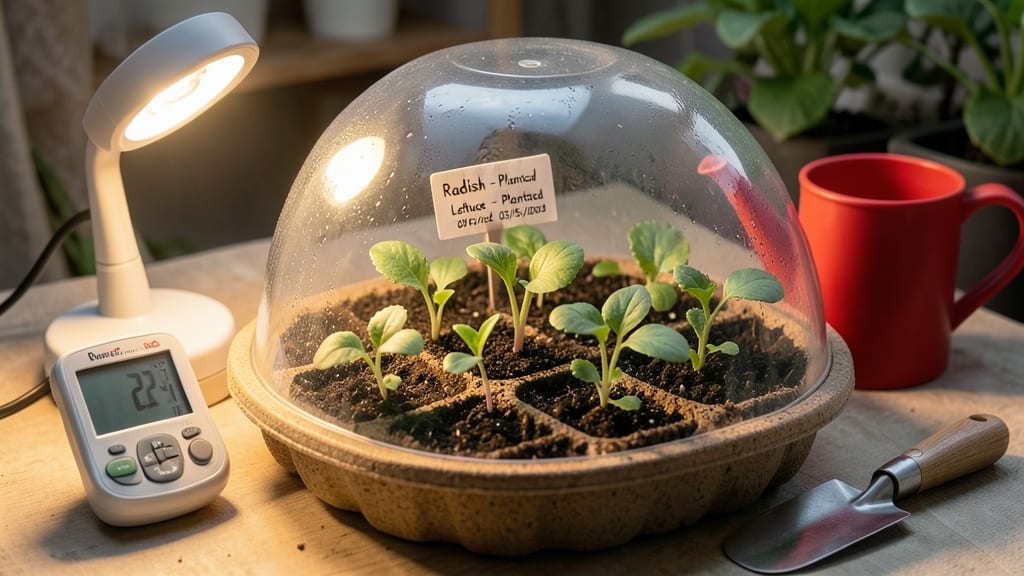
Indoor seeds typically sprout within 3 to 14 days, with fast growers like radishes emerging in just 3–5 days while slower varieties such as beans may take up to 14 days. Creating the right conditions—consistent warmth, proper moisture, and adequate light—can cut sprouting times significantly.
When you're growing seeds indoors, timing depends more on the seed type than anything else. 🌱 For example, herbs like basil and cilantro often sprout within 5–7 days, while leafy greens such as spinach or arugula can appear in as little as 3 days.
The key is maintaining a soil temperature between 65–75°F—too cold slows germination, while too much heat can dry out the seeds before they even start. I've found that using a seedling heat mat helps speed up the process for slower varieties, cutting their sprouting time by nearly half.
Light exposure also plays a surprising role—some seeds (like beans) need darkness to germinate, while others (like lettuce) thrive with gentle light from the start. 💡 Always check the seed packet for specific needs, as this small detail can mean the difference between rapid growth and stalled progress.
Pro tip: Keep your seeds consistently moist but not soggy, as overwatering can suffocate them before they even break through the soil.
💡 In This Article
- Germination Speed Factors for Indoor Seed Sprouting
- Fastest-Sprouting Seeds for Indoor Gardening Beginners
Germination speed factors for indoor seed sprouting
The biological process of seed germination begins when water activates enzymes that break down stored nutrients in the seed. For indoor growing, the most critical factor is temperature—most seeds germinate best between 65–75°F. Below 50°F, enzymes slow down dramatically, delaying sprouting by days or even weeks.
For example, tomato seeds at 50°F may take 21 days to sprout, while at 75°F, they emerge in just 7–10 days. 🌡️ This is why using a seedling heat mat (which maintains 75–80°F) can cut germination time nearly in half for slower varieties like beans.
Moisture balance is equally crucial—seeds need consistent dampness (not soggy conditions) to activate their metabolic processes. Too little water halts germination, while excess oxygen deprivation can cause rot. I've found that misting seeds lightly twice daily with a spray bottle keeps the soil evenly moist without waterlogging.
The ideal moisture level is like a wrung-out sponge: damp but not dripping. Light requirements vary wildly: some seeds (like beans) need complete darkness to germinate, while others (like lettuce) benefit from gentle light immediately.
This is why seed packets specify "light required" or "dark preferred"—ignoring this detail can delay sprouting by 3–5 days.
Seed dormancy types also play a role. Some seeds have natural inhibitors that prevent premature germination, requiring scarification (light scratching) or stratification (cold treatment) before they'll sprout.
For example, apple seeds need 60–90 days of cold stratification to break dormancy, which is why they're rarely grown indoors. 🌱 Understanding these biological triggers helps explain why some seeds seem stubborn—it's not just about warmth and water, but also unlocking the seed's internal clock.
Humidity levels matter too, especially in dry indoor environments. A humidity dome (plastic wrap over seedlings) maintains 80–90% humidity, which can accelerate germination by 2–3 days for sensitive seeds like peppers. Without this, the soil surface dries too quickly, creating a barrier that seeds can't penetrate.
I've seen basil seeds take 10 days to sprout in dry air versus just 5 days with proper humidity control. This is why many indoor growers use clear plastic containers with lids until sprouts appear.
Finally, seed age affects speed—fresh seeds (harvested within 1–2 years) germinate faster than old ones. For instance, a 2-year-old packet of radish seeds might take 7 days instead of the usual 3–5 days.
This is why seed packets list "best by" dates: the older the seed, the more its germination rate declines. Storing seeds in a cool, dry place (32–41°F) preserves viability for years, but for indoor growing, always use the freshest seeds you can find. 💫