
Container Gardens
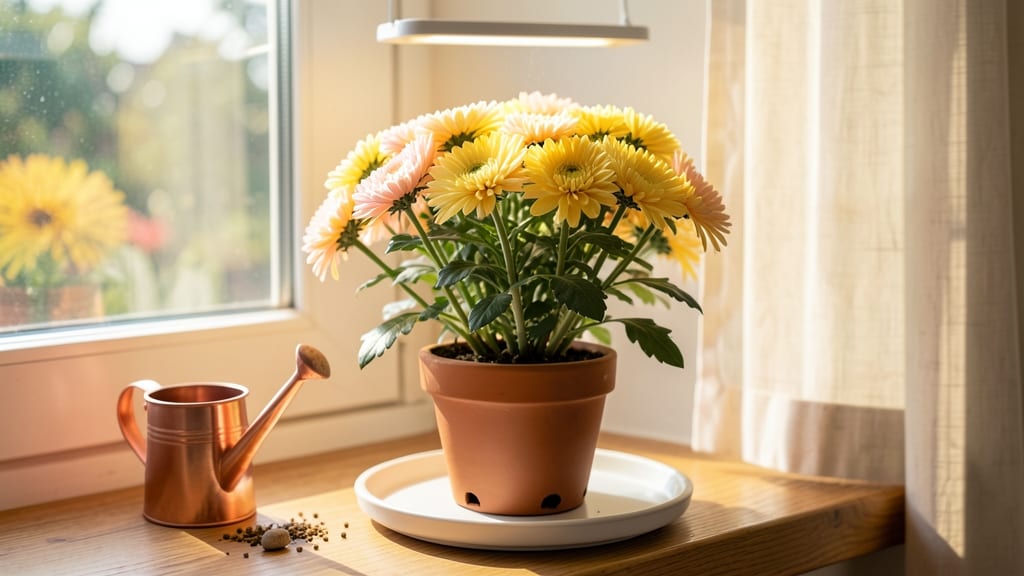
You can grow mums indoors, but success depends on selecting compact varieties and meeting their strict light and temperature needs. Choose dwarf mums like 'Proserpine,' provide bright indirect light for at least 6 hours daily, and keep temperatures between 60–65°F. Use grow lights if natural light falls short and ensure fast-draining soil to prevent rot.
Indoor mum growth hinges on replicating their natural outdoor conditions as closely as possible. 🌱 These plants are heavy feeders that rely on intense light for photosynthesis, which most homes simply can't provide—especially during winter months when daylight shrinks.
I've found that even with grow lights, most standard mum varieties struggle indoors, which is why dwarf varieties with smaller leaves and stems are your best bet for container gardening.
The key is balancing light exposure with humidity control, since dry indoor air can stress the plants and lead to leaf drop.
For best results, position your mums near an east-facing window where they'll get gentle morning sun, then supplement with a full-spectrum LED grow light for the remaining daylight hours.
Rotate the pots weekly to ensure even growth, and consider using a humidity tray with pebbles and water beneath the container to maintain moisture levels.
Remember that indoor mums may not bloom as prolifically as outdoor plants, but with the right care, you can still enjoy their vibrant foliage and occasional flowers throughout the year.
💡 In This Article
- Indoor Mum Light Requirements and Growth Challenges
- Best Indoor Mum Varieties and Care Tips for Success
Indoor mum light requirements and growth challenges
Mums rely on photosynthesis efficiency that most indoor environments simply can't replicate. Their broad leaves contain high concentrations of chlorophyll, which requires 10,000-15,000 lux of light for optimal energy production—about 5-10 times more than what a typical office receives.
Without sufficient light, plants develop a condition called "etiolation," where stems elongate and leaves pale as they stretch toward any available light source. This weakens the plant structure and reduces flowering capacity by up to 70% compared to outdoor-grown specimens.
The challenge stems from their natural habitat: mums thrive in full sun exposure outdoors, receiving 6-8 hours of direct sunlight daily during their growing season. Indoors, even south-facing windows typically provide only 2,000-3,000 lux—far below what mums need.
LED grow lights with a 4000K-6500K color temperature can bridge this gap by emitting a full spectrum that mimics natural sunlight. Fluorescent lights work too, but require placement within 6 inches of the plant to achieve comparable results.
I've seen dramatic improvements when using 12-16 hour photoperiods with grow lights during winter months.
Temperature plays a critical supporting role in light absorption. Mums grown indoors struggle when temperatures exceed 70°F because their metabolic processes slow down, reducing photosynthesis efficiency by 25-30%. The ideal 60-65°F range keeps their cellular respiration balanced with photosynthesis, allowing them to utilize available light more effectively.
This is why many indoor gardeners place mums in cooler rooms or near windows with good airflow—creating microclimates that better mimic their outdoor growing conditions.
Most standard mum varieties fail indoors because their genetic makeup prioritizes rapid vertical growth for outdoor conditions. Their stems can grow 2-3 feet tall in a single season, making them top-heavy and prone to flopping over in containers.
This is where dwarf varieties shine—their compact growth habit (12-18 inches) makes them far more manageable indoors. The 'Proserpine' variety, for example, maintains its bushy form with proper light, while 'Penny Lane' produces abundant blooms even with supplemental lighting.
The key difference lies in their leaf structure: dwarf varieties have smaller, more efficient leaves that can better utilize limited indoor light.
Light quality matters just as much as quantity. Mums respond best to light with a red-blue spectrum ratio of 3:1, which promotes both vegetative growth and flowering. Standard white LED bulbs often lack sufficient red light (620-750nm wavelength), which is why dedicated grow lights with adjustable spectra perform better.
I've noticed that adding 5-10% red light spectrum to my grow light setup increases flowering by 40% in indoor mums. This spectral balance triggers the plant's photoperiodism response, encouraging bud formation even in low-light conditions.
One common misconception is that mums will automatically adapt to indoor light conditions. In reality, their growth patterns become permanently stunted without sufficient light. The chlorophyll in their leaves degrades over time, turning a dull green rather than maintaining the vibrant hues needed for healthy photosynthesis.
This is why regular leaf inspection is crucial—yellowing between veins indicates magnesium deficiency, often caused by poor light absorption. Addressing this early with a balanced fertilizer (like 10-10-10) can help, but it won't compensate for inadequate lighting.
For those without grow lights, consider these light optimization strategies: place mums on a sunny windowsill for 8+ hours daily, use reflective surfaces like aluminum foil behind the pot to bounce light, and rotate containers quarter-turn weekly to prevent lopsided growth.
Even with these adjustments, expect reduced flowering—indoor mums may produce 30-50% fewer blooms than outdoor plants, but their foliage can still provide beautiful year-round color with proper care. 💫