
Container Gardens
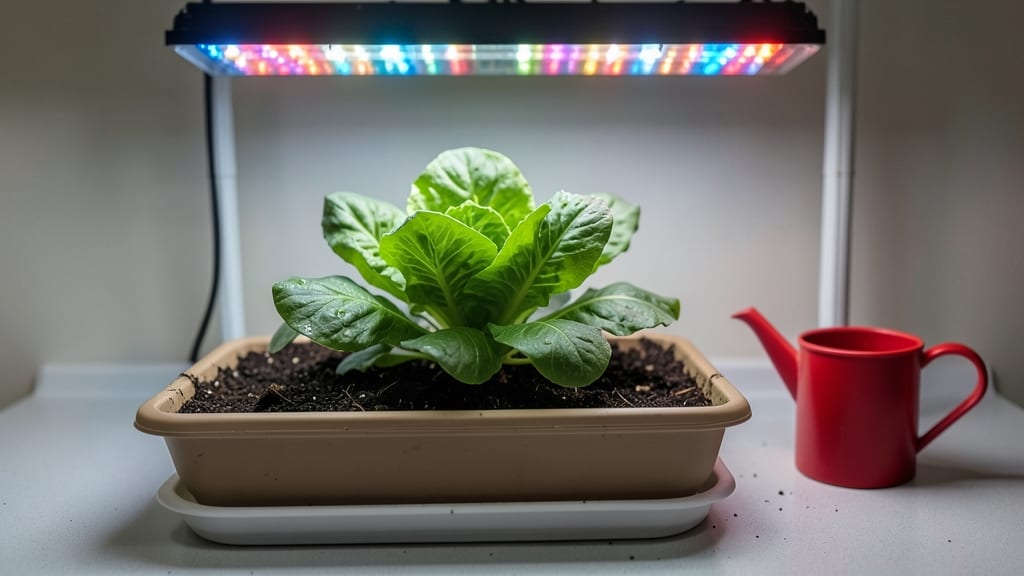
Growing lettuce indoors gives you crisp greens year-round without a backyard. 🌱 I’ve turned my kitchen windowsill into a mini harvest zone using just a grow light and a few simple supplies—no fancy setup required.
The key is matching your lettuce’s love for cool conditions and bright light, even when your apartment’s natural light falls short.
You’ll need a shallow container, well-draining potting mix, and a light source—whether it’s a sunny window or a basic LED grow bulb. Butterhead and leaf lettuce varieties thrive indoors because they bolt less easily than romaine.
Start with seeds or transplants, and you’ll see baby leaves ready to harvest in just 4 weeks, with continuous cut-and-come-again harvests after that.
The payoff is fresh, tender greens that taste better than anything from the store. No more wilting bags of lettuce in your fridge—just a steady supply of crisp, homegrown leaves. Plus, the process is simple enough that even my black thumb can’t kill it.
Works in small spaces, from sunny kitchens to basement setups. Here’s how to set it up without the guesswork—no green thumb required.
📚 In This Guide
- What you need
- Instructions
- Tips and common mistakes
- Wrapping up and next steps
What you need
- ● Container: A shallow tray, pot, or even a repurposed container (8–12 inches in diameter) with drainage holes.
- ● Potting Mix: A well-draining, seed-starting mix (1–2 gallons, depending on container size). Avoid garden soil—it’s too dense!
- ● Lettuce Seeds: Choose leaf varieties (like Buttercrunch or Romaine) or seed packets labeled for indoor growing. A small packet (100–200 seeds) is plenty.
- ○ Grow Lights (Optional but Recommended): LED grow light (12–15 watts per square foot) or a full-spectrum bulb (60W–100W).
- ● Adjustable light stand (if not using a built-in fixture).
- ● Watering Can or Spray Bottle: A gentle sprayer prevents disturbing seeds.
- ○ Fertilizer (Optional): Balanced liquid fertilizer (5-5-5 or 10-10-10) for a mid-cycle boost.
- ● Access to a sunny windowsill or a grow light setup (6–8 hours of light daily).
- ● Consistent temperature (60–70°F / 15–21°C). Avoid drafts or heat sources.
- ● Patience! Lettuce sprouts in 5–7 days and is ready to harvest in ~4 weeks.
Step-by-step instructions for growing lettuce indoors
Here's how I grow crisp, ready-to-harvest lettuce in just 4 weeks—no greenhouse needed.
🌱 Step 1: Prepare Containers and Soil for Germination
Use 4-inch diameter pots with drainage holes for each lettuce plant. I like shallow containers because lettuce roots don't need much depth—4-6 inches is plenty. Fill each pot with 2-3 inches of moistened seed-starting mix (never garden soil—it's too dense). Press the soil down gently until it's firm but not compacted, so seeds have good contact.
Here's the thing—lettuce seeds are tiny, so I sprinkle them directly on the soil surface. Don't cover them with soil; they need light to germinate. Just press them lightly into the surface so they stay in place. Aim for 3-4 seeds per pot—you'll thin to the strongest sprout later. Keep the soil damp but not soggy; a spray bottle works best to avoid disturbing seeds.
💧 Step 2: Create Ideal Germination Conditions
Place the pots in a warm spot with 65-70°F temperatures. A sunny windowsill or under a grow light works perfectly. Lettuce seeds germinate fastest when kept consistently moist—cover the pots with a clear plastic dome or plastic wrap to trap humidity. Check daily and mist with water if the soil surface feels dry to the touch.
You'll see the first sprouts in 5-10 days. That's when the magic starts! Once 50% of seeds have sprouted, remove the dome immediately—lettuce seedlings rot quickly in overly humid conditions. From now on, keep the soil lightly moist but never waterlogged. Overwatering is the #1 killer of young lettuce.
☀️ Step 3: Provide the Right Light for Leafy Growth
Lettuce needs 12-14 hours of light daily to grow compact and flavorful. A south-facing window might work, but most homes don't get enough intensity—you'll see leggy, pale plants stretching toward the light. Instead, use a full-spectrum LED grow light positioned 4-6 inches above the plants. Adjust the height as they grow to maintain that distance.
Watch for first true leaves (the second set after the initial seed leaves). That's your signal to start rotating the pots a quarter turn daily—this prevents plants from leaning toward the light. Strong lettuce has dark green leaves with crisp texture; weak light produces thin, yellowing leaves. If you notice this, move the light closer or increase daily hours.
🌿 Step 4: Thin and Maintain for Harvest-Ready Plants
When seedlings have 2 sets of true leaves (about 3 weeks in), thin to the strongest plant per pot. Use clean scissors to snip the weaker stems at soil level—pulling can disturb roots. This gives your chosen plant room to develop a sturdy base. After thinning, water lightly to settle the soil around the remaining plant.
Feed with half-strength liquid fertilizer every 2 weeks to encourage leaf production. I use fish emulsion because it's gentle but effective. Keep the soil consistently moist—lettuce wilts quickly when dry. If the center leaves start to yellow, it's a sign of overwatering or poor drainage. Adjust your watering to keep the soil evenly damp but not soggy.
✂️ Step 5: Harvest for Continuous Yields
Leaf lettuce like butterhead or romaine is ready to harvest in 4-5 weeks when leaves reach 3-4 inches. Cut outer leaves first with clean scissors, leaving the inner leaves to keep growing. This "cut-and-come-again" method gives you multiple harvests per plant over 6-8 weeks.
For head lettuce like iceberg, wait until the head feels firm when gently squeezed. Harvest the entire head at once. Store loose leaves in a plastic bag with a paper towel to absorb moisture, and keep them in the fridge for up to 1 week. Real talk: the first harvest is the most exciting—crisp, homegrown lettuce beats store-bought every time!
Tips & tricks for perfect indoor lettuce growth
These little details make all the difference between sad, leggy lettuce and crisp, vibrant harvests.
Container Selection: Lettuce roots are shallow, so avoid deep pots—they'll just sit in damp soil and rot. I use 4-inch diameter pots with drainage holes to prevent soggy roots. If you're short on space, try 6-pack seedling trays for a compact setup. The key is ensuring the pot depth matches the 4-6 inch root zone mentioned in Step 1.
Light Placement Hack: For the 12-14 hours of light requirement, position your grow light on a timer if you're not able to manually adjust it daily. I set mine for 6 AM to 8 PM to mimic natural daylight. If using a south-facing window, rotate your pots every 2 hours instead of just daily—this prevents uneven growth toward the light source.
Germination Troubleshooting: If your seeds aren't sprouting within 10 days, check two things: soil temperature and moisture. Lettuce seeds need 65-70°F soil temps to germinate properly. Place your pots on a seedling heat mat if your home stays cooler. Also, avoid overwatering—the seeds need moisture but not saturation. A spray bottle keeps the soil damp without drowning the seeds.
Fertilizer Timing: The 2-week feeding schedule with half-strength liquid fertilizer is perfect, but here's the trick: always water your plants first, then apply fertilizer. This prevents fertilizer burn on young roots. I mix my fish emulsion with water in a spray bottle for even distribution. After fertilizing, give the soil a light rinse to wash away any excess fertilizer from the surface.
Pro Tips for Growing Lettuce Indoors
- These little details make all the difference between sad, leggy lettuce and crisp, vibrant harvests.
- Container Selection: Lettuce roots are shallow, so avoid deep pots—they'll just sit in damp soil and rot.
- Light Placement Hack: For the 12-14 hours of light requirement, position your grow light on a timer if you're not able to manually adjust it daily.
Frequently asked questions
Got questions about growing lettuce indoors? You’re not alone! Here are answers to the most common concerns to help you grow crisp, fresh lettuce—even without a sunny windowsill.
How much light does indoor lettuce really need?
Lettuce thrives with 6–8 hours of bright light daily. If natural light is weak, supplement with a grow light (LED or fluorescent) 12 inches above plants. Avoid direct midday sun—it can scorch tender leaves. Rotate trays occasionally for even growth!
Can I grow lettuce indoors in 4 weeks?
Yes! Fast-maturing varieties like Buttercrunch or Black Seeded Simpson can be ready in 3–4 weeks with ideal conditions (warmth, light, and moisture). Start with seeds or young seedlings to speed up the process. Pro tip: Harvest outer leaves first to extend the harvest window!
Why is my indoor lettuce turning bitter or bolting?
Bitter taste or premature bolting (flowering) usually means too much heat or light. Keep temps between 60–65°F and avoid hot spots. If using grow lights, ensure they’re not too close (12–18 inches away). Varieties like Romaine or Looseleaf are more heat-tolerant.
What’s the best indoor container for lettuce?
Use shallow containers (4–6 inches deep) with drainage holes to prevent root rot. Best options:
- Window boxes (for sunny spots)
- Self-watering planters (for consistency)
- Colanders or trays (for hydroponic setups)
Ensure the container is at least 6 inches wide per plant for proper airflow.
What if I don’t have a sunny window?
No problem! Use a grow light on a timer (14–16 hours/day) to mimic sunlight. Full-spectrum LED bulbs are energy-efficient and effective. Place lights 12–18 inches above plants and adjust as they grow. Bonus: Try a hydroponic kit for faster, mess-free growth!
Wrapping up and next steps
Growing lettuce indoors isn’t just possible—it’s rewarding! 🌱 With the right setup, you can enjoy crisp, homegrown greens in as little as four weeks, even without a sunlit balcony.
Whether you’re a beginner or a seasoned gardener, this method proves that fresh produce is always within reach—no matter your space.
Ready to take the next step? Start with a single container, experiment with your favorite varieties, and soon, you’ll be sharing your indoor harvest with friends or treating yourself to a fresh, guilt-free salad. Happy growing! 🌿