
Container Gardens
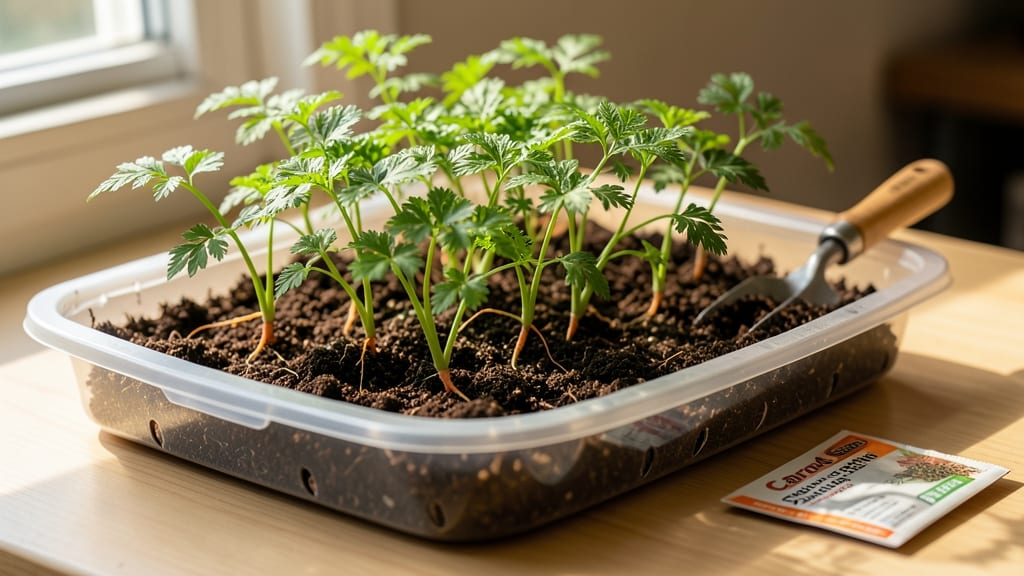
Growing carrots indoors means sweet, crunchy roots year-round—no garden required. 🌱 I’ve grown them in my sunless apartment using just a south-facing window and a few clever tricks that keep them straight and flavorful, not woody or forked.
The secret is choosing short varieties like ‘Paris Market’ or ‘Little Finger’ (they stay under 6 inches long) and giving them 6+ hours of bright light daily. A simple LED grow light on a timer works wonders when natural light falls short.
Too little light? Your carrots will stretch tall and pale—no one wants skinny, bitter roots. With the right setup, you’ll harvest bright orange, crisp roots in 60-70 days, perfect for snacking straight from the pot.
The soil stays moist but not soggy, and you’ll avoid the dreaded forking that plagues many indoor growers. Works in small spaces, on balconies, or even kitchen counters—just keep the soil loose and the light consistent. Here’s how to set it up without the guesswork.
📚 In This Guide
- What you need
- Instructions
- Tips and common mistakes
- Wrapping up and next steps
What you need
- ● Carrot Seeds: Choose a short variety like Paris Market or Little Finger (4-6 inches long at maturity). Aim for 10-15 seeds per container.
- ● Growing Containers: Wide, shallow trays (12" x 24" or larger) or individual pots (at least 8 inches deep for longer varieties).
- ● Drill drainage holes in the bottom if using pots!
- ● Potting Soil: 2-3 gallons of well-draining, seed-starting mix (avoid garden soil—it’s too dense!).
- ● Grow Lights: A full-spectrum LED grow light (12-16 inches above plants) or a south-facing window with at least 6 hours of sunlight daily.
- ● Watering Can or Spray Bottle: For gentle, even moisture (avoid soggy soil!).
- ● Plant Labels & Marker: To track varieties and planting dates.
- ● Seedling Heat Mat: Speeds up germination (especially useful in cool homes).
- ● Fertilizer: A balanced, water-soluble fertilizer (diluted to half-strength) every 3-4 weeks.
- ● Organic Mulch: A thin layer of straw or coconut coir to retain moisture.
- ● Humidity Dome: Keeps seeds cozy until sprouting (DIY with plastic wrap!).
Step-by-Step instructions for growing carrots indoors
Here’s how I grow sweet, crunchy carrots indoors with just a few simple tools and sunlight tricks.
🪴 Step 1: Choose the Right Containers and Soil
Carrots need deep, loose soil to grow straight roots, so skip shallow pots. Use 12-inch deep containers (like long wooden boxes or tall plastic bins) to accommodate their full length. Line the bottom with 2 inches of coarse sand or gravel for drainage—carrots rot quickly in soggy soil.
Fill the rest with a lightweight seed-starting mix (never garden soil—it’s too dense). I blend mine with 20% perlite to keep it airy. Moisten the mix until it’s damp but not dripping, then press it down lightly to remove air pockets. The goal is firm but not compacted soil—this prevents roots from forking.
🌱 Step 2: Sow Seeds Properly for Straight Roots
Carrot seeds are tiny and slow to germinate, so I scatter them ¼ inch deep in rows spaced 2 inches apart. Use a toothpick or pencil to make shallow furrows—this keeps seeds evenly spaced and prevents overcrowding. Tap the seed packet gently to release seeds one at a time; planting too many in one spot leads to weak, tangled roots.
Cover lightly with a sprinkle of soil, then mist the surface with water until evenly moist. Place the container in a warm spot (70-75°F)—a seedling heat mat speeds up germination if your home runs cooler. Expect sprouts in 14-21 days, but don’t give up if they take longer; carrots are patient growers.
☀️ Step 3: Maximize Light for Sweetness and Crunch
Carrots need 6-8 hours of direct sunlight daily to develop their signature sweetness and crisp texture. A south-facing window works if you rotate the container quarter-turn daily to prevent leaning. For dimmer spaces, supplement with a grow light (LED or fluorescent) kept 6 inches above the plants for 12-14 hours daily. Raise the light as they grow to avoid leggy stems.
Watch for pale, elongated seedlings—this means they’re stretching for light. If you see this, move the container closer to the window or light immediately. Yellowing leaves? It’s often a sign of too much water or poor drainage, so let the top inch of soil dry out between waterings.
💧 Step 4: Water Gently and Keep Soil Loose
Carrots need consistent moisture but hate soggy soil. Water deeply every 2-3 days until water runs out the drainage holes, then wait until the top inch feels dry before watering again. Use a spray bottle or watering can with a fine rose to avoid disturbing the soil surface—carrots push through compacted dirt, leading to crooked roots.
Every 2 weeks, loosen the soil around seedlings with a wooden skewer or fork to prevent matting. This keeps roots straight and aerated. If you notice leaf yellowing or stunted growth, flush the soil with water to remove excess salts from tap water—carrots are sensitive to buildup.
✂️ Step 5: Thin and Harvest for Perfect Roots
When seedlings reach 2 inches tall, thin them to 3 inches apart in rows. Use scissors or fingers to snip excess seedlings at soil level—pulling risks disturbing roots. This gives remaining carrots room to thicken. Harvest baby carrots (about ½ inch diameter) in 6-8 weeks, or wait 10-12 weeks for full-sized roots.
To check readiness, gently brush soil away from the top—carrots should be ½-1 inch thick and bright orange. Pull from the top, twisting slightly. If resistance builds, wait a few more days. Store harvested carrots in a plastic bag in the fridge for up to 2 weeks to keep them crisp.
Tips & tricks for perfect indoor carrot growth
These simple tricks will help you avoid common pitfalls and grow carrots that rival your grocery store favorites—right on your windowsill.
Container Depth Matters: If you're using a repurposed container like a plastic bin, make sure it's at least 12 inches deep—this is non-negotiable for full-sized carrots. Shallow pots will give you stubby, deformed roots. I've tried using 8-inch containers, and while they work for baby carrots, they're frustrating for anyone hoping for that classic carrot shape.
Soil Texture is Everything: The 20% perlite mix in Step 1 isn't just about drainage—it's about creating the perfect loose texture that prevents forking. If your soil feels compacted after pressing it down, add another 5% perlite and mix thoroughly. You'll notice the difference immediately when seedlings emerge straighter and stronger.
Light Rotation Secret: That daily quarter-turn rotation in Step 3 isn't just about preventing leaning—it's about giving all sides of your seedlings equal exposure to light. I've found that rotating every morning after watering helps maintain that perfect vertical growth. For windows with uneven light distribution, rotate twice daily for even better results.
Germination Patience Pays Off: Those 14-21 days for sprouts might feel like an eternity, but don't rush it! I've learned to mark my calendar when I plant and set reminders for the 21-day mark. The key is maintaining that consistent 70-75°F warmth—if your home runs cooler, consider using a small space heater near the container (just not too close!) to speed things along.
Pro Tips for Growing Carrots Indoors
- These simple tricks will help you avoid common pitfalls and grow carrots that rival your grocery store favorites—righ...
- Container Depth Matters: If you're using a repurposed container like a plastic bin, make sure it's at least 12 inches...
- Soil Texture is Everything: The 20% perlite mix in Step 1 isn't just about drainage—it's about creating the perfect l...
Frequently asked questions
Got questions about growing carrots indoors? You’re not alone! Here are answers to the most common queries to help you cultivate sweet, crunchy roots without a garden.
Can I grow carrots indoors without a grow light?
While possible, it’s tricky! Carrots need 6-8 hours of bright light daily. A sunny windowsill (south-facing) can work, but a grow light ensures consistent growth. Without one, roots may grow leggy or bitter. If you’re committed, try short varieties like ‘Paris Market’—they tolerate lower light better.
How long does it take for indoor carrots to mature?
Indoor carrots typically take 60-80 days to harvest, depending on the variety. Baby carrots (like ‘Little Finger’) mature in 50-60 days, while full-sized roots (e.g., ‘Danvers’) need the extra time. Check seed packets for specifics—patience pays off for sweeter flavor!
Why are my indoor carrots growing green and leafy but no roots?
This usually means too much light or shallow soil. Carrots need deep containers (12+ inches) and consistent moisture. If leaves dominate, reduce light slightly or thin seedlings. Loose, well-draining soil is key—compact soil can stunt root growth. Try mixing in perlite or sand!
What’s the best container for indoor carrot growing?
Use deep pots (10-12 inches) or fabric grow bags—carrots hate root-bound spaces! Drill drainage holes to prevent rot. Avoid wide, shallow containers; they encourage forked or stunted roots. For multiple carrots, space seeds 2 inches apart in rows 4 inches apart.
Are indoor-grown carrots as nutritious as outdoor ones?
Yes! Indoor carrots retain vitamin A, fiber, and antioxidants just like outdoor ones. The main difference? Controlled conditions can reduce pests, so no need for pesticides. For extra sweetness, let them mature fully—harvesting too early can dull flavor. Store in the fridge for up to 2 weeks!
| Quick Fixes for Common Issues |
|---|
| Problem: Wilting leaves |
| Solution: Check soil moisture—carrots need consistently damp (not soggy) soil. Mist leaves if humidity is low. |
| Problem: Leggy, weak plants |
| Solution: Move closer to light or add a grow bulb. Thin seedlings to 2 inches apart for better airflow. |
| Problem: Forked or hairy roots |
| Solution: Loosen soil with a fork before planting. Avoid overcrowding—roots need space to grow straight! |
Wrapping up and next steps
Growing carrots indoors is totally doable—even if your space is small or sunlight is limited! With the right containers, soil, and sunlight hacks, you can enjoy homegrown, sweet, and crunchy carrots year-round.
Whether you’re a beginner or a seasoned gardener, this guide proves that fresh veggies don’t need a backyard—just creativity and a little patience.
Now that you’re armed with tips, why not take the next step? Start with a small batch, experiment with varieties, and share your progress with fellow indoor gardeners. Your kitchen—and taste buds—will thank you! 🌱✨