
Vegetables
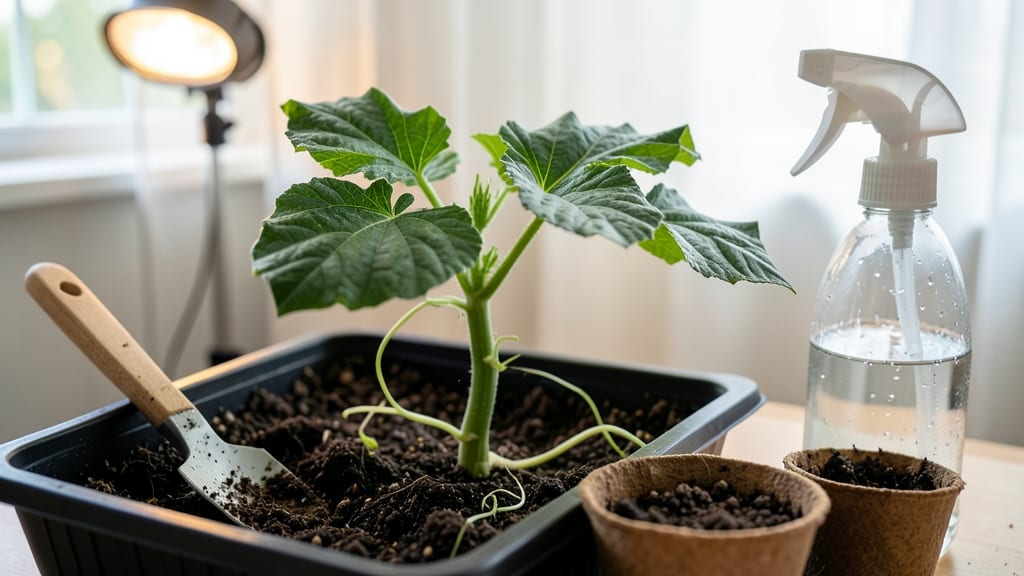
You can start squash indoors for warm-season varieties like zucchini or summer squash, but it requires precise timing and transplanting techniques to prevent shock. Use seed-starting trays with heat mats and move seedlings outdoors only after all frost risk has passed and soil temperatures reach 60°F+.
Indoor squash starting works best with bush varieties or compact hybrids, which handle transplanting better than vining types.
The key is replicating their natural growing conditions—warm soil and consistent moisture—while avoiding overcrowding in trays. 🌱 I’ve found that beginning seeds 4-6 weeks before your last frost date gives them enough time to develop strong roots before facing outdoor conditions.
Just remember: squash roots are delicate, so use biodegradable pots to minimize disturbance when transplanting.
For optimal results, maintain 70-85°F soil temperatures during germination and keep seedlings under grow lights for 12-14 hours daily. Harden off plants gradually by exposing them to outdoor conditions for 1-2 hours per day over a week before transplanting. This slow adaptation reduces transplant shock significantly.
💡 In This Article
- Best Squash Varieties for Indoor Starting
- Indoor Squash Seedling Care Timeline
Best squash varieties for indoor starting
Not all squash varieties handle indoor starting equally well. Bush squash types like Bush Early Gold or Eight Ball zucchini are ideal because their compact growth habit and shorter vines (typically 3-4 feet) make them less sensitive to root disturbance during transplanting.
These varieties also mature faster—often in 45-55 days—giving you a head start before outdoor conditions become favorable. In contrast, vining squash like Straightneck or Yellow Crookneck develop extensive root systems that are far more delicate and prone to shock when moved. 🌱
The key difference lies in their root structure: bush varieties develop a shallower, more fibrous root system that recovers better from container confinement, while vining types grow deep, taproots that can take weeks to reestablish after transplanting.
For example, a zucchini plant started in a 4-inch cell tray with a heat mat at 80°F will germinate in 5-7 days and develop a sturdy root ball ready for transplanting, whereas a butternut squash seedling (a vining type) may struggle with the same conditions due to its aggressive root growth.
Always check seed packets for "transplant-friendly" labels—this is your best indicator of success.
Another critical factor is seedling size at transplanting. Aim for seedlings with 2-3 true leaves and a stem thickness of about 1/8 inch—this balance ensures they’re large enough to handle outdoor conditions but not so big that their roots become pot-bound.
Overcrowding in trays can lead to "leggy" seedlings that are weak and prone to disease. I’ve found that spacing seeds 1 inch apart in trays and thinning to 2 inches once they sprout prevents this issue entirely. 🌿
Hybrid varieties like Patio Star or Gold Rush are specifically bred for container growing, making them excellent choices for indoor starts. These hybrids often include disease resistance and faster germination rates, which is a game-changer if you’re working with limited space or shorter growing seasons.
For instance, Gold Rush zucchini seeds germinate in just 4-5 days at 85°F soil temperature, compared to 7-10 days for heirloom varieties. This speed gives you a critical advantage in early planting.
If you’re growing squash in cooler climates, consider compact hybrid varieties like Black Beauty eggplant (yes, it’s a squash relative!) or Sweet Dumpling squash, which thrive in containers and tolerate slightly lower temperatures (65°F+) better than traditional zucchini.
These varieties also produce smaller fruits that are easier to harvest indoors before transplanting, reducing the risk of overgrowth and stress on young plants. 🌟