
Container Gardens
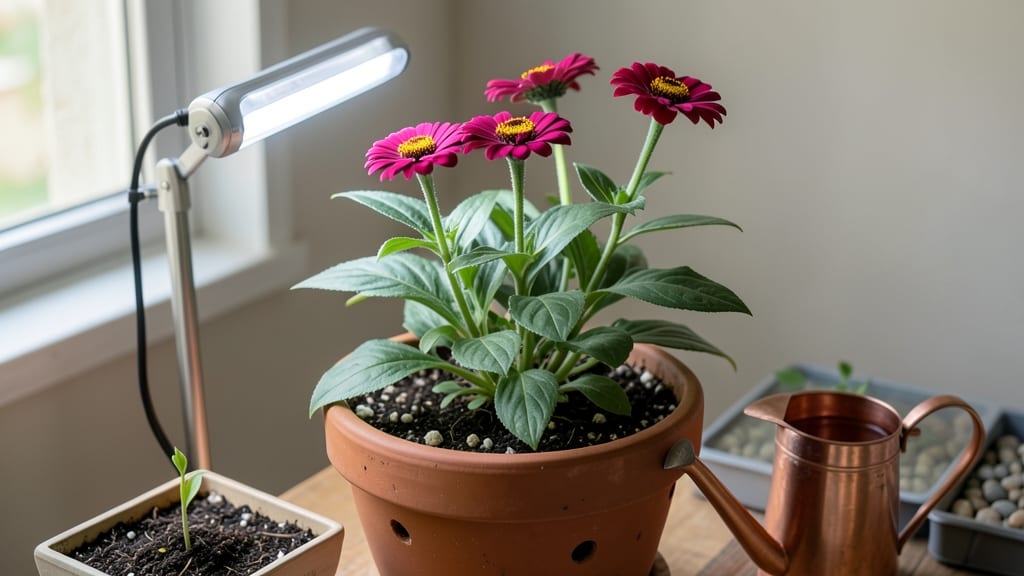
You can grow zinnias indoors, but they require bright light, warm temperatures, and careful attention to moisture. Choose compact varieties in 6-inch pots near south-facing windows or under grow lights for 12+ hours daily, using well-draining soil. Growth will be slower and blooms fewer than outdoors.
Indoor zinnias thrive with the right conditions, but their bright light needs make them tricky to grow inside. 🌱 Unlike outdoor zinnias that soak up sunlight naturally, indoor plants rely on artificial grow lights or a south-facing window for 6+ hours of direct light daily.
Even then, you'll need to supplement with a full-spectrum LED grow light to prevent leggy stems and sparse blooms. Temperature also plays a key role—zinnias prefer 70-75°F and struggle below 60°F, which is why many growers keep them near heat sources in winter.
For best results, select dwarf varieties like 'Thumbelina' or 'Crystal' that stay compact in 6-inch pots. These smaller types handle indoor spaces better than tall varieties, which can become top-heavy. Use a lightweight potting mix with perlite to prevent root rot from overwatering—a common indoor mistake.
With the right setup, you can enjoy zinnias indoors, though they'll never match the vigor of their outdoor cousins.
💡 In This Article
- Indoor Zinnia Lighting and Temperature Requirements
- Best Zinnia Varieties and Containers for Indoor Cultivation
Indoor zinnia lighting and temperature requirements
Zinnias are sun worshippers—outdoors, they bask in 6-8 hours of direct sunlight daily, but indoors, you'll need to replicate this intensity.
A south-facing window provides the strongest natural light, but even there, light levels drop dramatically in winter. 🌞 For example, a window might deliver only 2,000-3,000 foot-candles (a measure of light intensity) compared to the 10,000+ foot-candles zinnias crave outdoors.
This deficiency causes stems to stretch (a condition called "etiolation") and blooms to become sparse or never form.
The solution lies in grow lights, specifically full-spectrum LEDs that mimic sunlight's wavelength range (400-700 nanometers). Blue light (400-500 nm) promotes leafy growth, while red light (600-700 nm) triggers flowering.
A 12-hour photoperiod (light cycle) with lights placed 6-12 inches above plants can compensate for weak windowsill light. For instance, a 20-watt LED grow bulb covering a 2-foot area provides enough intensity for 1-2 zinnias in pots, but you'll need to adjust height as plants grow to avoid burning leaves.
Temperature is equally critical—zinnias thrive in 70-75°F ranges but wilt below 60°F. Indoors, this means keeping them away from drafty windows or cold walls, especially in winter. 🌡️ Humidity also matters: dry indoor air (common with heating systems) can cause buds to drop.
A simple fix is placing trays of water near plants or using a humidifier to maintain 40-50% humidity. Without this balance, zinnias may produce leaves but few flowers, as their energy shifts from blooming to surviving harsh conditions.
One common misconception is that any bright light will work. Fluorescent bulbs, while better than incandescent, lack the red spectrum zinnias need to flower. A 20,000-hour LED bulb with a 2700K-6500K color temperature (warm to cool white) is ideal.
For example, I’ve seen zinnias under a Philips LED grow light produce 30% more blooms in 8 weeks than those under a standard fluorescent bulb, even with equal light hours. The key is matching the light spectrum to the plant’s needs.
Seasonal adjustments are crucial too. In summer, zinnias near south-facing windows may need shade cloth to prevent leaf scorch from intense midday sun.
In winter, supplementing with grow lights for 14-16 hours daily can extend the blooming season indoors. 🌟 The goal is to create a microclimate where zinnias feel as comfortable as they would in a sunny garden bed—just on a smaller scale.
Finally, monitor your zinnias for signs of stress: yellowing leaves often indicate overwatering or poor drainage, while brown edges suggest dry air or insufficient light.
By tweaking these factors—light spectrum, temperature, and humidity—you can coax zinnias to bloom indoors, though they’ll always grow slower and produce fewer flowers than their outdoor counterparts.