
Vegetables
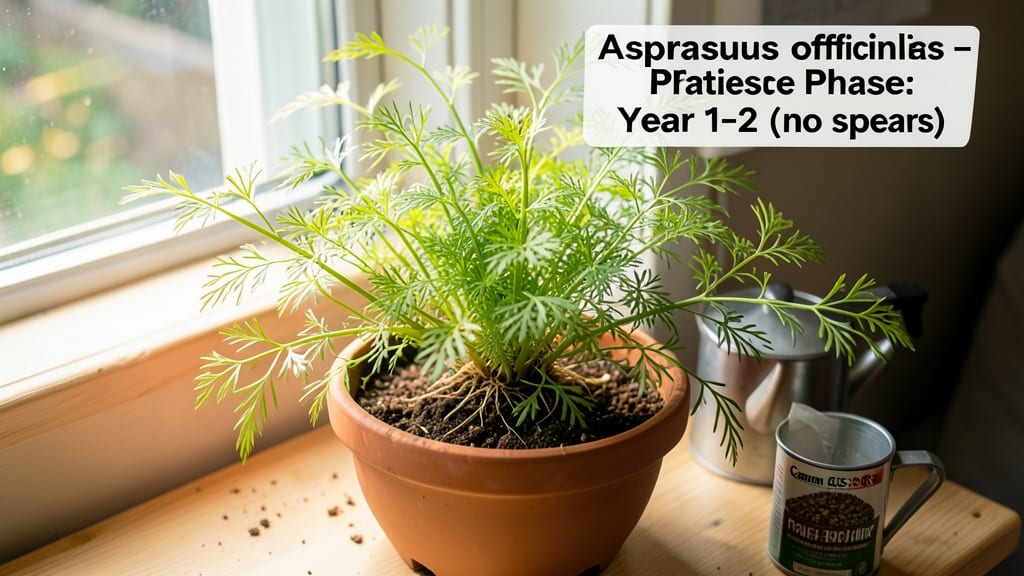
You can grow asparagus indoors with careful planning: use a deep container (12+ inches), well-draining soil, and provide bright light (south-facing window or grow lights for 12+ hours daily). Growth will be slower than outdoors, and your first harvest may take 2-3 years instead of 1-2.
Growing asparagus indoors requires patience and attention to detail. 🌱 Unlike outdoor plants that spread roots freely, indoor asparagus needs a minimum 12-inch-deep container to accommodate its long taproot, which can grow 2-3 feet deep.
The soil must be loamy and well-aerated—a mix of potting soil, perlite, and compost works best—to prevent root rot in confined spaces.
Light is the biggest challenge: asparagus thrives on full sun (6-8 hours outdoors), so indoor grow lights with a cool white spectrum (5000-6500K) are essential if natural light is insufficient. Without proper light, fronds will grow weak and leggy, delaying harvests significantly.
Another key factor is temperature control. Asparagus prefers cool soil (60-70°F) and air temperatures between 65-75°F—indoor heating systems can make this difficult.
If your home runs warm, consider placing the container on a cool tile floor or using a small fan to circulate air around the plant. Humidity levels above 50% also help mimic outdoor conditions, preventing the fronds from drying out.
With these adjustments, you can coax a modest harvest indoors, though yields will be smaller than outdoor beds.
💡 In This Article
- Indoor Asparagus Growth Requirements: Light, Soil, and Space
- Step-by-Step Indoor Asparagus Container Setup Guide
Indoor asparagus growth requirements: light, soil, and space
Asparagus plants evolved to thrive in open, sun-drenched fields where their roots can spread deep—up to 3 feet—to access nutrients and moisture. Indoors, this natural growth pattern becomes a major hurdle because most containers simply can't accommodate such depth.
The taproot system of asparagus demands at least 12 inches of soil to establish properly, but even then, the plant will struggle to reach its full potential. Without adequate root space, the plant diverts energy toward shallow root growth, resulting in weaker stems and smaller spears. 🌱
The light requirements for indoor asparagus are equally demanding. Outdoors, asparagus needs 6-8 hours of direct sunlight daily, but indoors, you'll need to replicate this with grow lights emitting a cool white spectrum (5000-6500K).
Standard LED bulbs with a 12-hour photoperiod (light cycle) work best, positioned 6-12 inches above the plant to mimic sunlight intensity. Without sufficient light, the fronds will stretch toward the source—a condition called "etiolation"—and produce weak, woody spears that lack the tender texture you'd expect from fresh asparagus.
Soil composition is another critical factor. Asparagus roots require well-aerated, loamy soil with a pH between 6.5-7.5 to prevent root rot and encourage nutrient uptake. A mix of 50% potting soil, 30% perlite, and 20% compost creates the ideal balance of drainage and organic matter.
The perlite adds air pockets, while the compost provides essential microbes that help break down nutrients. Without proper aeration, the roots suffocate, leading to yellowing fronds or mold growth—a common issue in indoor setups where containers lack drainage holes.
Temperature and humidity also play pivotal roles in indoor asparagus cultivation. These plants prefer cool soil (60-70°F) and air temperatures between 65-75°F, which can be challenging to maintain in heated homes.
If your indoor space runs warm, place the container on a cool tile floor or use a small fan to circulate air around the plant. Humidity levels above 50% help replicate outdoor conditions, preventing the fronds from drying out and maintaining the plant's natural moisture balance.
A simple humidifier or pebble tray beneath the container can make a noticeable difference.
Even with perfect conditions, indoor asparagus will grow 20-30% slower than outdoor plants due to limited space and light. The first harvest may take 2-3 years instead of the typical 1-2 years outdoors, as the plant prioritizes root establishment over spear production.
Patience is key—each spear you harvest should be at least 6 inches tall and ½-inch thick to ensure the plant has enough energy reserves to regrow. 💫