
How To
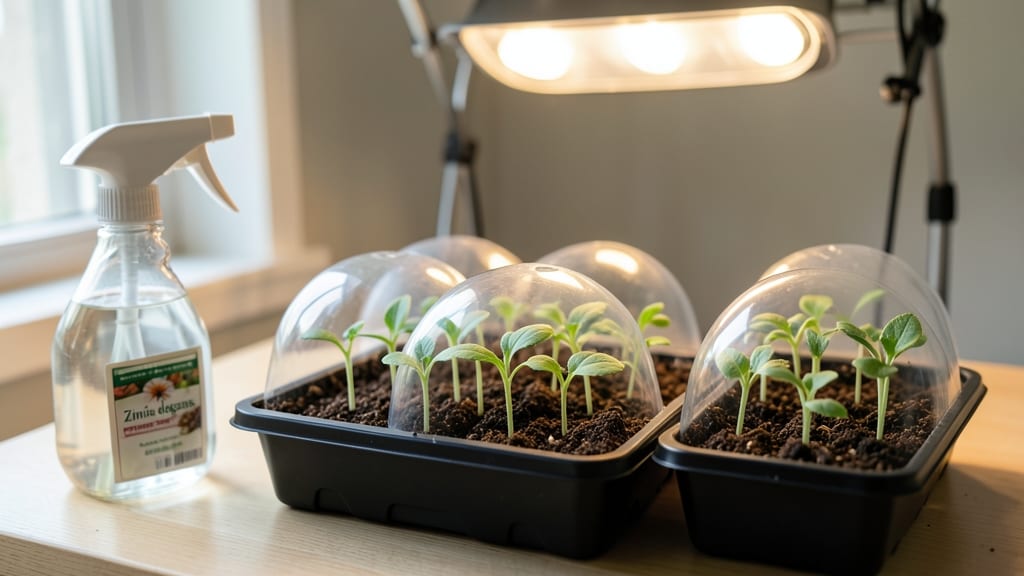
Starting zinnia seeds indoors 6-8 weeks before your last frost is the golden rule for summer-long blooms that 🌼 brighten up your garden.
Picture this: You’ve got a tray of tiny seedlings, eager to burst into color—but if you start too early, they’ll stretch like overcaffeinated toddlers, and too late?
You’ll miss the peak blooming window. The trick is timing it just right so those zinnias hit their 60-75 day maturity window when the weather warms up.
Most gardeners in Zone 6a (like me!) start seeds in early March, but your exact date depends on your frost date and how quickly you can transition them outdoors. Too soon, and you’ll waste space; too late, and you’ll be left with sad, leggy plants.
Below, I’ll walk you through the exact 8-week timeline—including how to adjust for early or late frosts, the best light setup for seedlings, and pro tips to keep them thriving until transplant time. Let’s get those zinnias blooming like clockwork!
Optimal indoor starting dates by US hardiness Zones (with 8-Week pre-bloom rule)
Zinnias thrive when started indoors with precision timing tailored to your USDA hardiness zone. The 8-week pre-bloom rule ensures your seedlings reach maturity just as your garden warms up—no more leggy, overcrowded plants or missed summer blooms.
I’ve mapped out zone-specific start dates (Zones 3-10) to align with your last frost date and local heat patterns.
The key is balancing seedling strength with transplant readiness. Zinnias need 60-75 days to bloom from seed, but starting too early risks weak seedlings, while late starts may cut your flowering season short.
High-altitude gardeners (like those in Zone 5 at 5,000+ ft) need adjustments—add 1-2 weeks to account for cooler soil temps.
Pro Tip: Use your average last frost date as your anchor, then subtract 8 weeks. For example, if frost typically ends on May 1, start seeds by March 4. But verify this with your local Cooperative Extension Service for hyper-local accuracy.
Here’s how to apply this to your zone—plus adjustments for high-altitude or extended summer areas where you can push for fall blooms.
For high-altitude gardeners (e.g., Denver, CO or Flagstaff, AZ), add 1-2 weeks to your start date. Cooler soil temps slow germination, so begin seeds indoors by February 15 in Zone 5 if you’re above 5,000 ft.
In contrast, Zone 10 gardeners can start seeds as early as November for spring blooms or July for fall displays.
If you’re in a short-season zone (like Zone 4), opt for dwarf varieties (e.g., 'Crystal' or 'Lilliput')—they mature in 50-55 days, giving you a head start. For longer seasons (Zones 7-10), stagger plantings every 2 weeks to extend your bloom time from early June to frost.
Watch for transplant shock when moving seedlings outdoors. Harden them off for 7-10 days by placing them in a sheltered spot with morning sun only. Avoid transplanting when night temps dip below 50°F—zinnias are tender and won’t thrive.
In Zone 9-10, you can push the envelope: Start a second round of seeds in July for fall blooms that last until the first frost. Just ensure your seedlings get 12+ hours of light daily—a grow light is a game-changer here.
Remember, zinnias love heat. If your spring is cool, delay planting until soil temps hit 60°F+—even if it means blooms start slightly later. The trade-off? Bigger, brighter flowers and fewer leggy stems.
How to calculate your exact zinnia seed starting window (step-by-step)
Calculating your zinnia seed starting window ensures vibrant blooms from early summer to frost. Since zinnias need 60-75 days to mature and 70°F+ for germination, timing is everything.
Here’s how to pinpoint your perfect start date using just three key factors: local frost dates, heat requirements, and your desired bloom timeline.
First, find your average last frost date—this is your deadline for transplanting seedlings outdoors. Zinnias thrive in warm soil, so aim to have them ready 2-3 weeks before your last frost to avoid transplant shock.
For example, if your last frost is April 15, your seedlings should be hardened off by April 1.
Now, work backward 6-8 weeks from your transplant date. This gives you your indoor seed starting window. For our April 1 example, that means starting seeds between February 15 and March 1.
Adjust this window based on your zinnia variety—dwarf types (60 days) can start later, while tall varieties (75 days) need an earlier head start.
- Step 1: Find your last frost date (check local USDA zone maps or ask your cooperative extension service).
- Step 2: Subtract 2-3 weeks for hardening off (acclimating seedlings to outdoor conditions).
- Step 3: Count back 6-8 weeks from your transplant date to determine your indoor start window.
- Step 4: Adjust for heat requirements—zinnias need 70°F+ soil to germinate. Use a heat mat if your home stays below this.
- Step 5: Write down your start date, transplant date, and bloom timeline on a garden calendar for reference.
Don’t forget to account for light requirements—zinnias need 12+ hours of light daily to prevent leggy seedlings. If your windowsill doesn’t provide enough light, supplement with a grow light for 14-16 hours/day. This ensures your seedlings grow strong and stocky, ready for transplanting.
Once you’ve calculated your start date, mark it on your garden calendar and set reminders for watering, fertilizing, and hardening off 1-2 weeks before transplanting. For example, if you start seeds on February 28, begin hardening off on March 24 and transplant on April 1.
For a downloadable checklist, visit our resources page and print the Zinnia Seed Starting Tracker. It includes daily tasks like watering, thinning seedlings, and monitoring for pests—so you’ll never miss a step. With this timeline, you’ll enjoy continuous blooms from July to frost! 🌼