
Planting
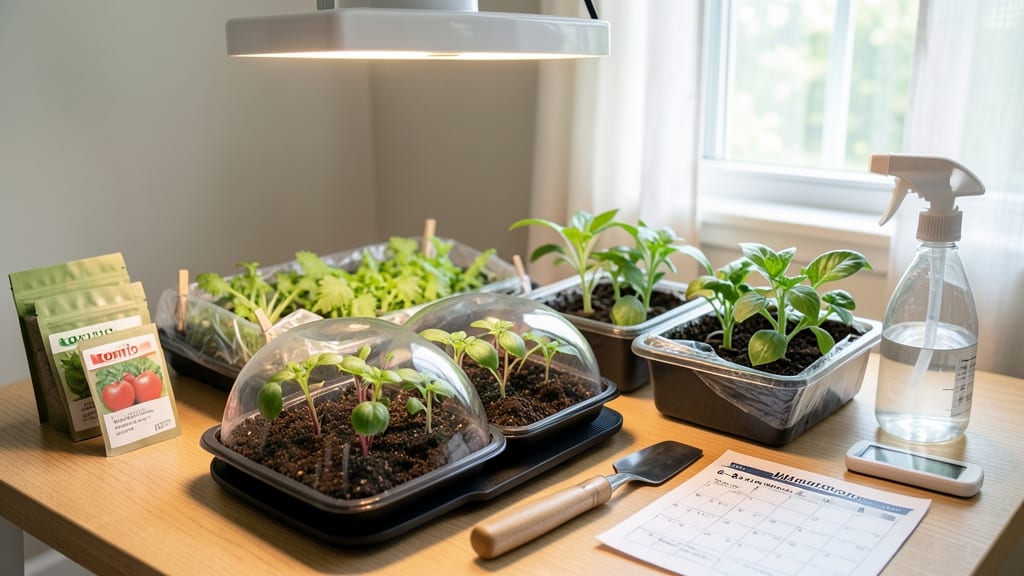
Starting seeds indoors in Illinois means timing them 6-8 weeks before your last frost date—typically by late February to early March for most regions.
Get this wrong, and you’ll either have leggy seedlings begging for space or a garden bed full of weeds while your tomatoes still look like babies. The key? Knowing your USDA Zone 5a-6b frost dates and adjusting for the slow growers (like peppers) versus the fast finishers (like lettuce).
Below, I’ll walk you through how to calculate your exact seed-starting window, account for Illinois’ regional frost variations, and avoid the three biggest mistakes that turn seedlings into sad, stunted plants.
You’ll leave here with a customizable timeline, a frost-date calculator, and the confidence to transplant perfectly timed seedlings—no more guessing games.
Illinois frost dates by region: when to start seeds indoors for maximum yield
Understanding Illinois' frost dates is the first step to planning your indoor seed-starting schedule. The state's last average frost date ranges from early April in southern regions to mid-May in northern areas, creating a 6-week window for transplanting warm-season crops.
For gardeners in Chicago or Northern Illinois, this means starting seeds indoors as early as late February, while those in Southern Illinois can begin in early March.
These regional differences are critical because seedlings need 6-8 weeks of indoor growth before transplanting. For example, tomatoes and peppers—both heat-loving plants—require the longest indoor period, while herbs like basil can tolerate slightly later starts.
Using a frost-date calculator helps adjust these timelines for early or late seasons, which Illinois experiences frequently.
Here’s how to use Illinois’ frost dates to plan your seed-starting schedule:
| Region | Avg. Last Frost Date | Start Indoors (Tomatoes/Peppers) | Start Indoors (Herbs) | Transplant Window |
|---|---|---|---|---|
| Northern IL (Chicago, Rockford) | Mid-May | Late February - Early March | Early March - Mid-March | Mid-May - Early June |
| Central IL (Springfield, Peoria) | Early May | Early March | Mid-March | Early May - Mid-May |
| Southern IL (Carbondale, Marion) | Mid-April | Late February | Early February - Early March | Mid-April - Early May |
For Northern Illinois, where frost can linger until mid-May, I recommend starting tomato seeds in late February to ensure they’re ready by late May.
In Southern Illinois, where the climate is milder, you can begin as early as late February, but be mindful of potential late frosts in early April. Adjust these timelines by 1-2 weeks if you experience an early or late frost in previous years.
Herbs like basil and cilantro are more forgiving and can be started slightly later, typically 4-6 weeks before your last frost date. This gives you flexibility if your indoor space is limited or if you prefer to focus on other crops first.
Always monitor your seedlings for signs of overcrowding or nutrient deficiencies, which can delay growth and affect transplanting readiness.
Use a seed-starting calculator to fine-tune these dates based on your specific plant varieties and indoor growing conditions. For example, peppers often need an extra week indoors compared to tomatoes because they grow more slowly.
If you’re using grow lights, ensure they provide 14-16 hours of light daily to prevent leggy seedlings, which can set back your transplanting schedule.
Another key adjustment is accounting for soil temperature. Most seeds germinate best in soil that’s 65-75°F. If your indoor space is cooler, consider using a seedling heat mat to speed up germination.
This is especially important in Northern Illinois, where indoor temperatures can drop significantly in early spring.
For cool-season crops like lettuce or spinach, you can start seeds indoors as early as January, but these are better suited for direct sowing in early spring.
Focus your indoor efforts on warm-season crops like tomatoes, peppers, and herbs, which thrive with the longer daylight hours of late spring and summer.
Finally, keep an eye on Illinois Extension’s planting calendar, which provides updated frost dates and regional adjustments. This resource is invaluable for gardeners who want to maximize their yield and avoid common pitfalls like transplant shock or slow growth due to poor timing.
By aligning your indoor seed-starting schedule with Illinois’ frost dates, you’ll give your seedlings the best possible start—and set yourself up for a bountiful harvest once the last frost has passed. 🌱
Seed-starting timeline calculator: exact weeks before transplant for Illinois gardens
Calculating your indoor seed-starting dates in Illinois requires precision—especially when balancing plant maturity with frost-free windows. Start by identifying your last average frost date (typically mid-April in Northern Illinois, late April in Southern Illinois). Then work backward using each plant’s days to maturity and weeks needed indoors.
For example, tomatoes (80–90 days to maturity) need 6–8 weeks indoors before transplanting. If your last frost is April 15, start seeds between February 15–March 1. Adjust for warm-season crops like peppers (75–90 days) or cool-season crops like lettuce (30–50 days), which can start later.
Use this backward planning method for all crops: subtract weeks indoors from your transplant date (typically 2 weeks after last frost). For instance, if you want tomatoes to fruit by July 4, transplant by June 15, then start seeds by April 25.
Adjust for early/late seasons by ±1–2 weeks based on weather forecasts.
Pro tip: Download my free Illinois seed-starting template (link below) to customize schedules by crop type and region. It includes grow-light adjustments for Northern Illinois’ shorter daylight hours in early spring. Download Template.
Don’t forget to account for seedling hardening (1–2 weeks of acclimation) before transplanting. Harden off seedlings by gradually exposing them to outdoor conditions (wind, sun) to prevent shock. Start with 2–3 hours/day in partial shade, then increase to full sun over 7–10 days.
With this timeline calculator, you’ll avoid the heartbreak of bolting broccoli or stunted tomatoes—and enjoy a bountiful harvest tailored to Illinois’ variable climate. Happy planting! 🌱