
How To
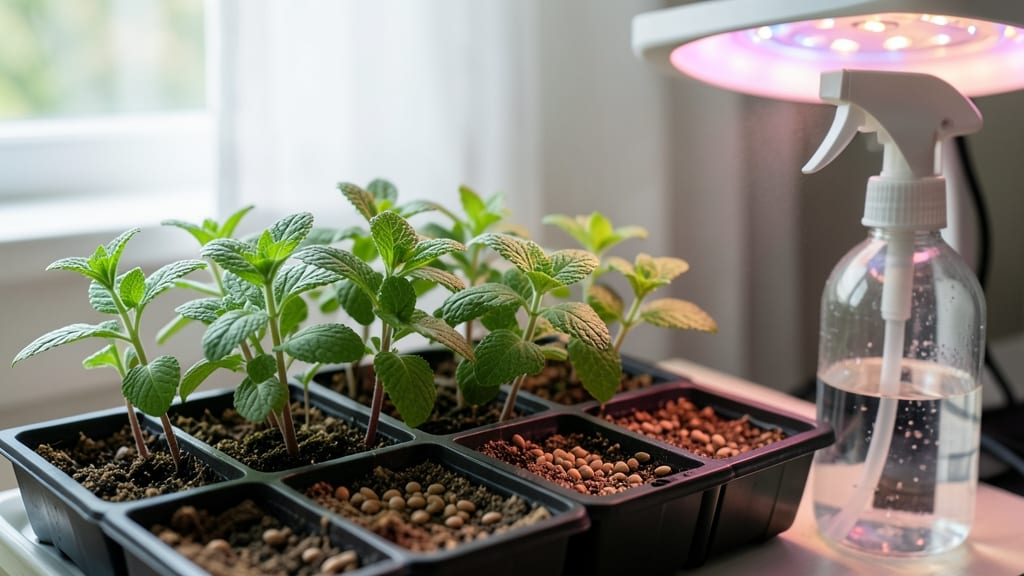
To start mint seeds indoors, aim for 6-8 weeks before your last frost date—typically February to March in most USDA Zone 6a regions.
Timing your mint seed start indoors can mean the difference between a thriving herb garden and a frustrating wait for germination—especially when mint’s delicate roots need the perfect head start. Get it wrong, and you’re either stuck with leggy seedlings or racing against a warm spring that outpaces your plants.
Mint seeds germinate fastest in consistent warmth (65-75°F) and bright, indirect light, but they also need time to develop sturdy roots before transplanting. The key is balancing your local frost dates with these ideal conditions—too early, and you’ll waste energy; too late, and you’ll miss the growing season.
Below, I’ll walk you through how to calculate your exact starting window, the critical factors that speed up germination, and the common mistakes that kill mint seeds before they even sprout. Ready to grow fast, healthy mint?
How to calculate your mint seed starting window using frost dates
Getting your mint seeds to sprout indoors at the right time ensures strong, healthy seedlings ready for transplant. Since mint thrives in warm soil and can’t handle frost, timing is everything.
The key is working backward from your last frost date while accounting for mint’s 10-14 day germination window and 6-8 week indoor growth phase.
First, find your average last frost date for your USDA hardiness zone. For example, in Zone 6a (like much of the Midwest), the last frost typically falls around April 15.
If you’re unsure, check your local agricultural extension service or use a frost date calculator online. This date marks when mint seedlings can safely move outdoors.
Next, subtract 6-8 weeks from your last frost date to determine your indoor seed-starting window. For Zone 6a, that means starting seeds between February 15 and March 1.
This window ensures seedlings are 4-6 inches tall with 4-6 sets of leaves before transplanting, giving them the best chance to establish roots quickly.
Mint seeds germinate best in 65-75°F soil, so if your home stays cooler than this, consider using a seedling heat mat to speed up germination. Place your seed trays in a sunny, warm spot (like a south-facing windowsill) and keep soil consistently moist but not soggy.
Overwatering is a common pitfall that can drown seeds or cause damping off.
| Step | Action | Key Detail |
|---|---|---|
| 1 | Find your last frost date | Check USDA Zone 6a: April 15 |
| 2 | Subtract 6-8 weeks | Zone 6a window: Feb 15–Mar 1 |
| 3 | Add 10-14 days for germination | Start seeds Feb 1–Feb 15 for earliest sprouts |
| 4 | Hardening off seedlings | Begin 2 weeks before transplant (early April) |
| 5 | Transplant after soil warms to 60°F | Typically late April–early May in Zone 6a |
If you live in a warmer climate (like Zone 8-10), you can start mint seeds as early as January or even late December, since frost risks are minimal.
Conversely, in colder zones (Zone 4-5), aim for late March to avoid seedlings outgrowing their containers before the last frost. Always err on the side of starting earlier rather than later—mint seedlings can handle being slightly root-bound but struggle if transplanted too early.
For regions with unpredictable frost patterns, like the Pacific Northwest or Mountain West, use a row cover or cold frame to extend your growing season. This lets you transplant mint seedlings 2-3 weeks earlier than your official last frost date, giving your plants a head start.
Just be prepared to remove the cover if daytime temperatures rise above 70°F to avoid overheating.
Pro tip: Label your seed trays with the sowing date and variety (e.g., peppermint, spearmint). Mint seeds are tiny, and germination can be slow, so tracking progress helps you stay organized.
If you’re starting multiple batches, stagger them 1-2 weeks apart to ensure a steady supply of fresh seedlings for transplanting over a 2-3 week window.
Finally, monitor your seedlings’ progress closely. Mint seeds typically sprout within 10-14 days, but some varieties (like chocolate mint) may take up to 21 days.
If you don’t see sprouts after 3 weeks, gently check for seeds that may have been buried too deep or didn’t make contact with the soil. Thin seedlings to 3-4 inches apart once they develop their first true leaves to prevent competition.
With the right timing and care, your mint seedlings will be ready to transplant just as the soil warms up—setting you up for a bountiful harvest of fragrant leaves by summer. Happy growing! 🌿
Critical factors that affect mint seed germination speed indoors
Starting mint seeds indoors requires precision—especially when it comes to germination speed. While mint seeds typically sprout in 10-14 days, several factors can accelerate or delay this process by weeks.
Understanding these variables ensures your seedlings emerge strong and ready for transplanting. The right balance of temperature, humidity, light, and seed depth creates the perfect environment for fast, reliable germination.
Mint thrives in consistent conditions, but even small deviations can stall growth. For example, temperatures below 60°F slow germination, while humidity below 70% can dry out seeds before they sprout.
Each of these factors acts like a gear in a clock—when they align, your mint seeds will germinate in record time. Let’s break down the critical elements that control your germination timeline.
🌱 Numbered Highlights: Speed Up Mint Germination Indoors
- 🌡️ Temperature (65-75°F): Use a seedling heat mat to maintain consistent warmth—mint seeds germinate fastest at 70°F. A drop below 60°F can delay sprouting by 5-7 days.
- 💧 Humidity (70-80%): Cover seeds with a humidity dome or plastic wrap to retain moisture. Low humidity causes seeds to dry out, halting germination entirely.
- 🌱 Seed Depth (1/8 inch max): Plant mint seeds too deep, and they’ll struggle to break through the soil. Press seeds lightly into moist, well-draining soil for fastest results.
- ☀️ Light Exposure (Indirect, 12+ hours): Mint seeds don’t need light to germinate, but seedlings do. Place trays under grow lights or near a south-facing window immediately after sprouting.
- 🌿 Soil Moisture (Consistently damp): Overwatering suffocates seeds, while underwatering dries them out. Use a spray bottle to keep soil evenly moist—never soggy.
One of the biggest mistakes gardeners make is assuming mint seeds are hardy like tomatoes. In reality, they’re delicate and sensitive to environmental shifts. For instance, if your home runs cool at night, a seedling heat mat becomes non-negotiable.
Even a 5°F drop below the ideal range can push germination from 10 days to 3 weeks. Test your setup with a thermometer to avoid surprises.
Light is another often-overlooked factor. While mint seeds germinate in darkness, seedlings need 12+ hours of light daily to prevent leggy growth. Without enough light, your mint will stretch toward the nearest window, weakening its stem and delaying harvest by 2-3 weeks.
Invest in a full-spectrum grow light if natural light is limited—it’s the fastest way to ensure sturdy, healthy seedlings.
Finally, don’t underestimate the power of seed freshness. Older mint seeds (over 1 year) germinate 30-50% slower than fresh ones. If you’re using saved seeds, soak them in lukewarm water for 24 hours before planting to jumpstart the process.
This simple trick can shave 3-5 days off your germination timeline.
By mastering these five critical factors, you’ll transform your mint seeds from slow starters to fast-growing powerhouses. The difference between a 2-week wait and a 4-week struggle often comes down to attention to detail.
Start with a heat mat, humidity dome, and grow light, and watch your mint seedlings emerge in record time. 🌿