
Container Gardens
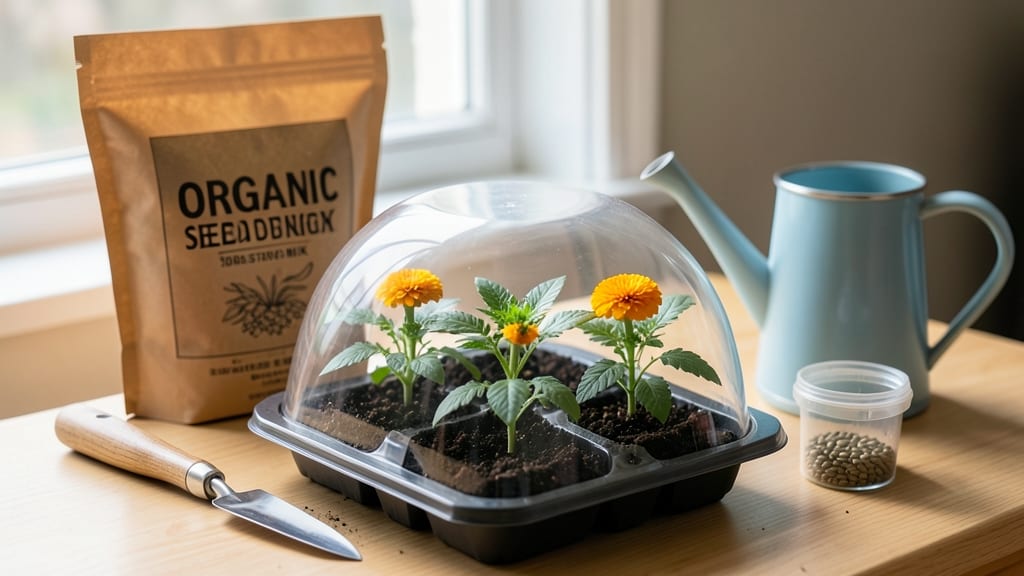
Start marigolds indoors about 6-8 weeks before your last frost date to ensure vibrant blooms by summer.
Timing your marigold seeds indoors can mean the difference between vibrant summer blooms and a disappointing garden—get it wrong, and you’ll miss peak flowering season entirely.
For most gardeners in USDA Zone 6a, that means planting seeds in early March, giving them enough time to grow sturdy seedlings before transplanting outdoors in late April.
Below, I’ll walk you through the exact steps for seed starting, how to read your local frost charts, and when to transition those seedlings outside for a garden full of cheerful 🌼.
Exact weeks before last frost to start marigolds indoors by USDA zone
Getting your marigold seeds indoors at the right time ensures they’ll bloom beautifully by summer. Since marigolds thrive in warm soil, starting too early can lead to leggy seedlings, while waiting too late may delay flowering.
The ideal window is 3 to 10 weeks before your last frost date, depending on your USDA zone and local climate. Let’s break down the exact timing for each zone so you can plan with confidence.
Marigolds need warm soil to germinate well—aim for soil temperatures between 70°F and 85°F. If your zone has a short growing season, starting 8 to 10 weeks before frost gives seedlings enough time to mature.
In warmer zones, 3 to 6 weeks is often sufficient. Always check your local frost chart or use a frost calculator for precise dates.
For example, gardeners in USDA Zone 3 (like Minnesota or Montana) should start marigolds indoors by late February to early March to transplant after the last frost in mid-May. Meanwhile, those in Zone 10 (like Southern California) can wait until early March and plant directly outdoors without indoor starts.
Here’s a quick reference for your zone, including soil temperature needs and ideal start dates:
To calculate your exact start date, use this simple formula: Last frost date minus weeks before frost = start date. For instance, if your last frost is April 15 and you’re in Zone 6 (6 weeks before frost), start seeds by March 1.
Adjust for cooler springs by adding 1-2 extra weeks.
If you’re unsure about your last frost date, check the National Weather Service or your local cooperative extension office. Many garden centers also provide frost date maps for your area. Pro tip: Use a seedling heat mat if your home stays below 65°F to speed up germination.
Once you’ve nailed down your start date, use seed-starting trays with drainage holes and a light source (grow lights or a sunny windowsill). Keep soil moist but not soggy, and maintain temperatures between 70°F and 85°F for best results.
With the right timing, your marigolds will reward you with bold blooms all summer long!
For extra insurance, consider starting a second batch 2-3 weeks later to extend your blooming season. This works especially well in cooler zones where the first planting might struggle with early-season chill. Happy planting!
Signs your marigold seedlings are ready for transplanting (and how to avoid common mistakes)
Knowing when to transplant marigold seedlings is crucial for strong plants that thrive in your garden. Look for 2-3 sets of true leaves—these are the deep green leaves that appear after the initial seed leaves.
This stage usually occurs 4-6 weeks after sowing, depending on your growing conditions. Seedlings should be at least 2-3 inches tall with sturdy stems, not fragile or stretched.
Another key indicator is root development. Gently squeeze the base of the pot—if roots are circling or growing through drainage holes, they’re ready. Healthy roots should fill about 60% of the root ball without being root-bound.
Ignoring this sign can lead to transplant shock, where roots struggle to adapt to outdoor soil.
⚠️ callout warning ⚠️
Watering seedlings 24 hours before transplanting helps reduce stress, but don’t drown them. Soggy roots suffocate and rot. Instead, water deeply only when the top inch of soil feels dry. Use a spray bottle for gentle moisture if seedlings are in small pots.
Leggy seedlings are a red flag—these are plants that stretch toward light, growing tall and weak with long, thin stems and small leaves. This happens when seedlings don’t get enough light (6+ hours daily) or are overcrowded. If your marigolds look leggy, harden them off immediately and transplant into deeper soil to support their stems.
Hardening off is a 7-10 day process where you gradually expose seedlings to outdoor conditions. Start with 1-2 hours of shade on day one, then increase exposure by 1-2 hours daily. Avoid direct midday sun during the first few days to prevent sunburn.
Use a lightweight shade cloth if your climate is hot or windy.
Finally, check the weather forecast before transplanting. Avoid transplanting when temperatures dip below 50°F (10°C) or during heavy rain.
Morning or late afternoon are the best times to move seedlings, as the soil is cooler and evaporation is slower. Water thoroughly after transplanting to help roots settle into the new soil.
With these signs and precautions, your marigold seedlings will transition smoothly to the garden, setting the stage for bold, continuous blooms all summer. 🌼