
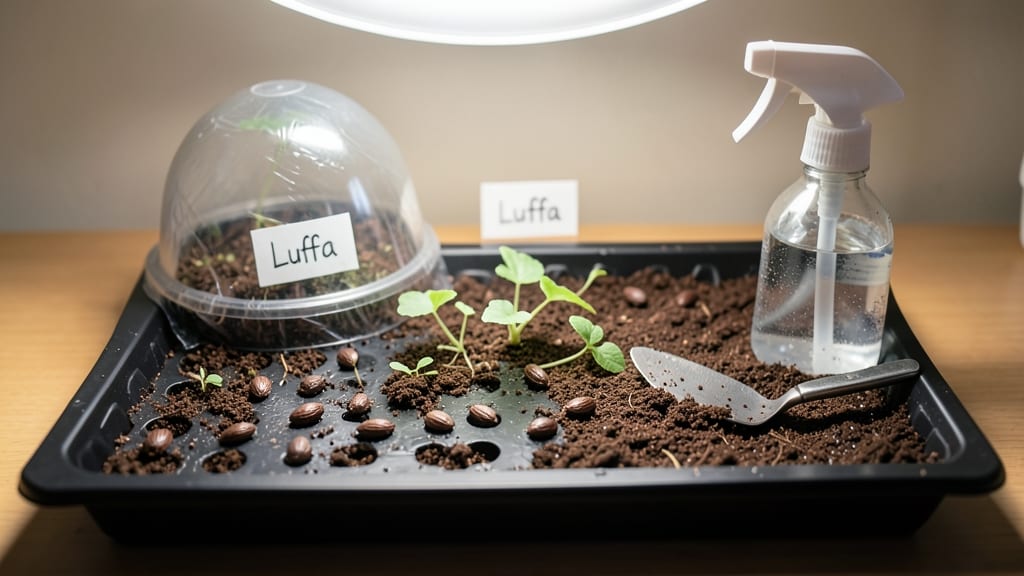
When to Start Luffa Seeds Indoors: 8-Week Prep for Fast-Growing Vines

How To

When to Start Luffa Seeds Indoors: 8-Week Prep for Fast-Growing Vines

Starting luffa seeds indoors 8-10 weeks before your last frost is the secret to fast-growing vines that outpace the season.

Picture this: you’re racing against time, and those 30-foot vines need every warm day to mature. Miss the window, and you’ll end up with sad, underdeveloped plants—or worse, no harvest at all.

But get it right, and you’ll be harvesting those sponge-like gourds by late summer, ready for bath sponges or even gourmet dishes.

Here’s the deal: luffa thrives in warmth and needs a long season, so timing your indoor start is everything. Whether you’re in USDA Zone 6a or a warmer climate, the key is counting backward from frost date.

Too early, and your seedlings stretch like overcooked noodles; too late, and your plants won’t have enough time to vine, flower, and fruit before the cold sets in.

In this guide, I’ll walk you through the exact 8-week schedule for your region, plus pro tips for seed prep, container setups, and transplanting without shock. No more guesswork—just a lush, productive luffa patch by harvest time.

Optimal indoor starting times for luffa seeds by climate zone

Luffa gourds thrive with an 8-week indoor head start, but your exact timing depends on your USDA climate zone. Starting too early risks leggy seedlings, while waiting too long may leave your plants vulnerable to late spring frosts.

I’ve broken down the perfect indoor start windows for zones 3 through 11, including how to calculate your last frost date and adjust for early or late seasons.

Most gardeners aim to transplant luffa seedlings outdoors 2-3 weeks after the last frost, when soil temperatures reach at least 70°F (21°C). Since luffa vines need 120-180 days to mature, counting backward from your frost date ensures your plants are ready to harvest before cold snaps arrive.

For example, in Zone 5, where the last frost typically hits around May 15, I start seeds indoors on March 15 to give them an 8-week buffer.

Here’s the key: Zone 3-5 gardeners should start seeds in late February to early March, while Zones 6-8 can begin in mid-February. In warmer Zones 9-11, you can even start as early as January—but be cautious of heat stress if indoor temperatures exceed 85°F (29°C).

Below is a zone-by-zone comparison to simplify your planning.

Signs your luffa seeds are ready for transplanting outdoors

Knowing when to move your luffa seedlings outside is critical—they need to be strong enough to handle outdoor conditions but not so large they struggle in their new home. Luffa plants are fast-growing vines, but rushing the transplant can lead to shock or stunted growth.

Pay attention to three key indicators: leaf development, stem thickness, and root structure.

First, your seedlings should have 3-4 sets of true leaves—those are the larger, mature leaves that come after the initial seed leaves. These leaves signal the plant has developed a strong root system and can support vigorous growth.

If you’re still seeing mostly seed leaves, hold off on transplanting. Luffa plants thrive on sunlight, so these leaves help them photosynthesize efficiently once outdoors.

✅ Luffa Transplant Checklist

  • Leaf Count: 3-4 sets of true leaves
  • Stem Thickness: Pencil-sized (½ inch) or thicker
  • Root System: Roots filling 50%+ of the pot
  • Hardiness: Survived 2-3 weeks of cooler indoor temps (50-60°F)

🌱 Pro Tip: Acclimate seedlings to outdoor temps over 5-7 days before transplanting.

Next, check the stem thickness. A ready-to-transplant luffa seedling should have a stem that’s at least ½ inch thick—about the diameter of a pencil. Thinner stems may not support the plant’s rapid growth once outdoors. Gently squeeze the stem to test its sturdiness.

If it feels soft or easily bends, it’s not ready yet. Thick stems also indicate the plant has developed a robust vascular system, which is essential for transporting water and nutrients.

Don’t forget to inspect the root system. Gently remove the seedling from its pot and check for roots that have filled at least 50% of the root ball. Healthy roots should be white or light tan, not mushy or black (a sign of rot).

If roots are circling tightly or growing out of drainage holes, it’s a sign the plant is root-bound and needs repotting before transplanting. Overcrowded roots struggle to absorb water and nutrients efficiently once outside.

Common pitfalls like overcrowding or nutrient deficiencies can delay transplant readiness. If your seedlings are leggy (long, thin stems with few leaves), they’ve likely been stretched toward light. To fix this, move them to a sunnier spot or use a grow light for 12-14 hours daily.

Yellowing leaves can signal nitrogen deficiency, which you can address with a balanced fertilizer (like 5-10-10) applied lightly to the soil.

Finally, ensure your seedlings have hardened off—a process of gradually exposing them to outdoor conditions. Start by placing them outside in partial shade for 2-3 hours a day, then slowly increase exposure over 5-7 days.

This helps them adapt to wind, sunlight, and temperature fluctuations. Once they’re thriving outdoors during the day and retreating indoors at night, they’re ready for their permanent spot in the garden.

Transplant on a cool, overcast day to reduce stress. Bury the seedlings deeper than they were in pots—up to the first set of true leaves—to encourage root growth. Water thoroughly after transplanting and keep the soil consistently moist for the first week.

With these signs in mind, your luffa plants will transition smoothly and start climbing toward their 20-30 foot potential in no time! 🌿

★★★★★4.6(9 reviews)
Categories How To
USDA Zone Last Frost Date Indoor Start Window Transplant Ready Notes
3 May 20 Late March May 10 Use grow lights; extend season with row covers.
4 May 5 Early March April 25 Hardening off is critical; monitor night temps.
5 April 15 Mid-February April 10 Ideal for most gardeners; balance sun exposure.
6 March 30 Late January March 15 Early starts risk heat stress; use fans.
7 March 10 Mid-January February 28 Long growing season; consider succession planting.
8 February 15 Early January February 10 Minimal frost risk; prioritize trellising.