
How To
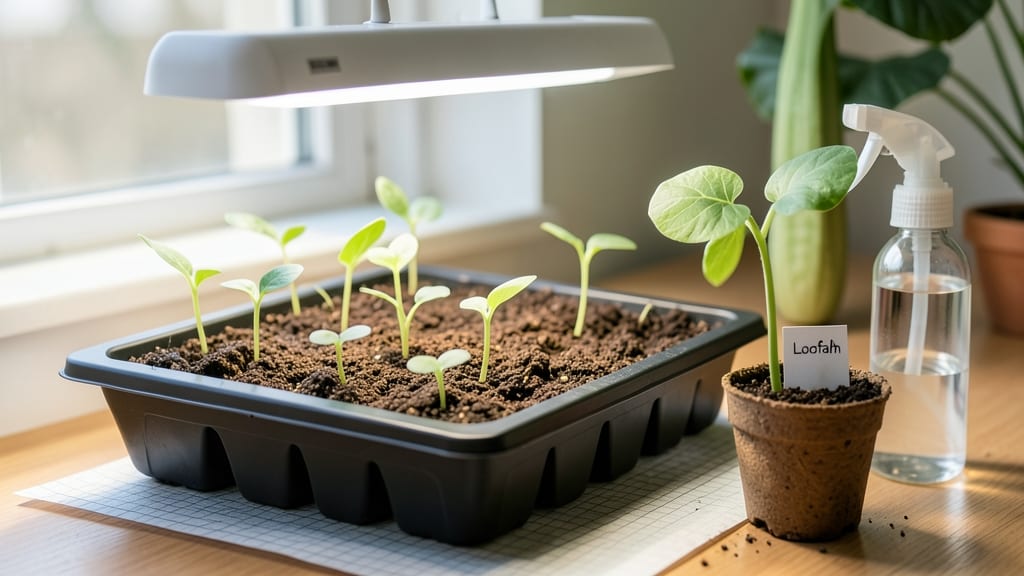
To start loofah seeds indoors, aim for late winter to early spring — about 4-6 weeks before your last frost date, which ensures they’re ready to transplant when the weather warms up.
Timing is everything with loofahs 🍈 — start too early, and you’ll waste space; too late, and your plants won’t mature in time. Whether you’re in a cold climate or just eager to extend your harvest, getting this right makes the difference between a thriving vine and a missed opportunity.
Most gardeners in USDA Zone 6 (like me!) kick off seeds in February or March, but your exact window depends on your local frost-free date.
For example, if your last frost is April 15, you’d start seeds around March 1 to give them enough time to grow strong before moving outdoors.
Below, I’ll break down the exact steps for indoor germination, how to adjust for your region, and the 3 critical factors that determine whether your loofahs will thrive or struggle. No guesswork — just a straightforward plan for year-round harvests.
Optimal indoor starting times for loofah seeds by climate zone
Loofahs thrive with 120-150 days of warm growing conditions, making precise timing critical for indoor starts. Your USDA zone and last frost date determine when to begin seeds—too early wastes space, while late starts risk immature plants.
Here’s how to calculate your perfect window for zones 3-10, with adjustments for early, mid, and late starts.
First, find your average last frost date (check local almanacs or USDA frost maps). Loofahs need 60-90 days indoors before transplanting outdoors. Subtract this from your frost date to pinpoint your indoor start window.
For example, in Zone 5 (last frost: May 15), aim for March 15-April 1 starts.
Pro tip: Use a grow light for 14-16 hours daily to mimic summer sun. Without adequate light, seedlings stretch weakly—critical for loofahs that need strong vines to support heavy fruits. Test your setup 2-3 weeks before starting seeds to troubleshoot light issues early.
| USDA Zone | Last Frost Date | Early Start (Cold Climates) | Mid Start (Standard) | Late Start (Warm Climates) | Transplant Ready |
|---|---|---|---|---|---|
| Zones 3-4 | May 10-20 | February 15-March 1 | March 15-April 1 | April 15-May 1 | April 15-May 15 |
| Zones 5-6 | April 20-May 10 | March 1-April 1 | March 15-April 15 | April 15-May 1 | May 15-June 1 |
| Zones 7-8 | March 15-April 15 | January 15-February 15 | February 15-March 15 | March 15-April 1 | April 15-May 15 |
| Zones 9-10 | February 15-March 15 | November 1-December 15 | December 15-January 15 | January 15-February 15 | March 1-April 1 |
Note: Adjust for early or late varieties if available. Always harden off seedlings for 7-10 days before transplanting.
For Zone 3-4 gardeners, early starts in late February prevent stunted growth from short seasons. Use heat mats (70-75°F soil temp) to speed germination—loofah seeds need warmth to break dormancy.
In Zones 9-10, you can start as early as November for a year-round harvest, but prioritize late starts (January-February) to avoid overcrowding.
Watch for seedling legginess, a sign of insufficient light. If stems exceed 6 inches before true leaves appear, supplement with a T5 grow light 2-3 inches above seedlings.
Loofahs are fast growers once established, but weak starts struggle to recover. Thin seedlings to 12 inches apart in containers to prevent competition.
Transplant outdoors only after soil temps reach 70°F+ and nighttime temps stay above 55°F. In Zones 3-6, use black plastic mulch to warm soil and extend the growing season. Mark your calendar for 60 days before transplanting—this ensures loofahs reach maturity before frost.
Extension tip: Succession plant loofahs every 2-3 weeks for continuous harvests. Since they’re vining plants, train them along trellises or fences to save space. In containers, use 5-gallon pots with drainage holes—loofah roots need room to spread.
Remember: Loofahs are tropical plants at heart. If your indoor temps drop below 60°F, growth stalls. Use a space heater near seedlings if needed, but avoid drafts. With the right timing, you’ll enjoy homegrown loofahs year-round
3 Critical factors that determine your loofah seed starting date
Timing your loofah seed start indoors is like planning a 120-day race—begin too early, and you’ll run out of space; too late, and your plants won’t finish before frost.
The key is balancing three critical factors: your last frost date, your indoor grow light setup, and loofah’s maturity window. Get this right, and you’ll enjoy harvests even in short seasons.
First, loofahs need 120-150 days to mature from seed to harvest. That means if your growing season ends on October 15, you must start seeds by mid-June for outdoor planting—or earlier if you’re growing indoors to extend the season.
But this timeline shifts dramatically based on your climate zone and indoor setup.
📌 Here’s your step-by-step guide:
- Find your zone: Look up your USDA hardiness zone (e.g., Zone 5-7 = April 15-May 1 last frost).
- Count backward: Subtract 120-150 days from your first frost date to get your indoor start window.
- Example: If frost hits October 30, start seeds by June 20-July 10.
- Natural light? South-facing windows give 6+ hours/day—ideal for early starts (e.g., February-March).
- Grow lights? Add 12-16 hours/day of full-spectrum LED to extend the season into April-May.
- Limited space? Use reflective surfaces (foil, white paint) to maximize light efficiency.
- Zone 3-4? Start indoors by March 1 and use grow lights until June 1 for transplant.
- Zone 5-7? Ideal window: April 15-May 1 (aligns with 60-day indoor prep).
- Zone 8+? Direct-sow March-April or start indoors February for early harvests.
For gardeners with limited space, prioritize smaller varieties like ‘Tiger Loofah’ (matures in 100-120 days) and use vertical trellises to save room. If you’re in a short-season zone, focus on one harvest cycle and start seeds as close to your last frost date as possible.
Pro tip: Test your setup first! Germinate a few seeds in February to gauge how quickly they grow under your lights. If seedlings get leggy (tall and weak), they need more light or less time under lights. Adjust before committing to your full batch.
Remember, loofahs are warm-season plants—they hate cold soil. Even if your indoor seedlings are thriving, wait until soil temps hit 70°F+ before transplanting outdoors. Use a soil thermometer to avoid shocking your plants.