
Propagation
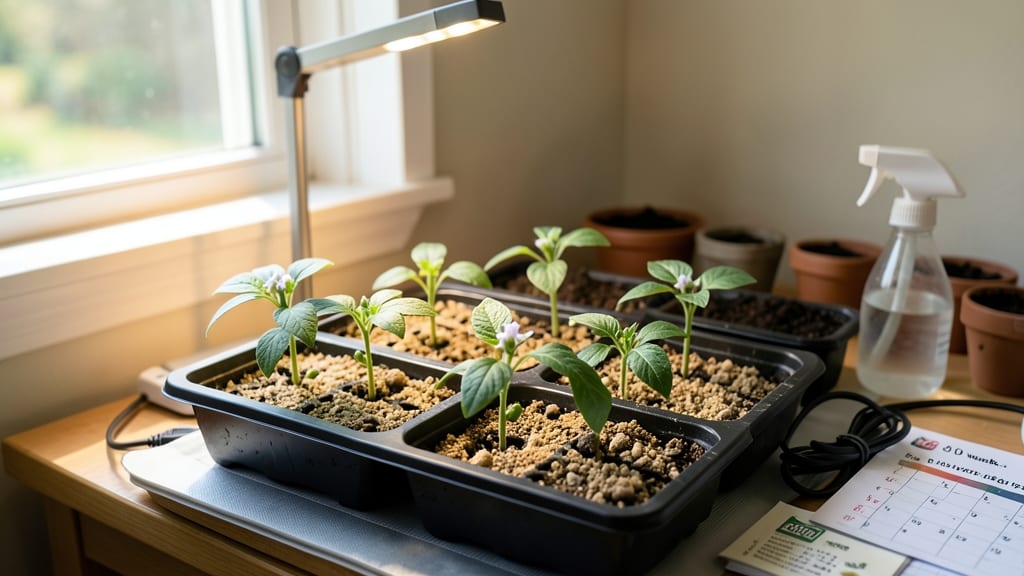
Starting hot pepper seeds indoors 8–12 weeks before your last frost is the key to a summer full of fiery, homegrown heat—but miss the window, and you’ll either waste space or watch your plants bolt in the heat.
Picture this: You’ve got a sunny windowsill and a bag of Carolina Reaper seeds, but if you plant too early, your seedlings will stretch like overcaffeinated teenagers, weak and leggy. Too late, and your peppers won’t ripen before the first frost sneaks in.
The 8-week rule balances both, giving your 🌶️ enough time to grow strong roots and a sturdy frame before they hit the garden.
This schedule isn’t just about dates—it’s about climate. In Zone 6a, that means late February or early March for most varieties, but if you’re in the South, you might push it to January for an earlier harvest.
We’ll break down the exact math, plus how to adjust for fast-growing Thai peppers or slow-and-spicy Reapers.
By the end, you’ll know exactly when to crack open those seed packets, how to tweak your timeline for your region, and the 3 critical care stages that turn tiny seeds into spice-packed plants ready for your kitchen—or your brave friends’ taste tests.
Optimal indoor seed starting dates by climate Zone: a 8-Week countdown
Hot peppers need precise timing to thrive, especially when starting indoors. The 8-week rule ensures seedlings are robust enough for transplanting after your last frost date.
Your USDA climate zone dictates when to begin—warmer zones like Zone 10 start earlier, while colder Zone 3 needs a head start in January. Miss the window, and your Carolina Reaper might never ripen!
First, check your last frost date (find it via USDA maps or local extensions). Count backward 8-12 weeks—this is your indoor seed-starting window. For example, if frost ends May 15, start seeds by March 1.
Adjust for slow varieties (e.g., 120+ days) by adding extra weeks. Pro tip: Use a seedling heat mat to speed germination in cooler zones.
| USDA Zone | Last Frost Date | Start Seeds Indoors | Transplant Outdoors | Notes |
|---|---|---|---|---|
| 3-4 | May 1-15 | March 1-15 | May 15-30 | Use heat mat; extend season with row covers. |
| 5-6 | April 15-30 | February 1-15 | April 30-May 15 | Hardening off critical; protect from late frosts. |
| 7-8 | March 15-April 1 | January 15-February 1 | April 15-May 1 | Longer growing season; can start later for fall crops. |
| 9-10 | January 15-February 15 | November 1-December 15 | February 15-March 15 | Minimal frost risk; focus on heat tolerance. |
Zone 3-4 gardeners should start seeds by March 1 to avoid stunted growth from transplant shock. Use grow lights for 14-16 hours/day to prevent leggy seedlings. In Zone 5-6, begin by February 1—this gives your jalapeños enough time to mature before first frost in October.
For Zone 7+, you can push it to January or even late December for early harvests.
Adjust your schedule if you’re growing fast-maturing varieties like Thai Bird’s Eye (60 days) versus slow growers like Habanero (100+ days). For example, a 70-day variety in Zone 10 can start as late as January 15, while a 120-day variety needs a November 1 start.
Always verify days to maturity on seed packets!
Don’t forget hardening off—acclimate seedlings to outdoor conditions 7-10 days before transplanting. Start with 2-3 hours/day in shade, then gradually increase sun exposure. Skip this step, and your peppers will bolt or wilt under stress.
In Zone 9-10, you can even transplant year-round with proper shade cloth during peak heat.
For extended harvests, stagger your plantings. Start a second batch 4-6 weeks after the first to enjoy peppers through fall and early winter. This works especially well in Zone 8+, where mild winters allow for winter crops.
Just ensure your seedling trays have drainage holes to prevent root rot—a common killer of young peppers.
Protect your investment with row covers or greenhouses if late frosts threaten. Even in Zone 6, a May frost can devastate unprotected plants. Monitor soil temperatures—peppers prefer 70°F+ for optimal growth. Use a soil thermometer to confirm readiness before planting.
Finally, keep a gardening journal to track your seed-starting dates and outcomes. Note which varieties thrive in your zone and adjust future schedules accordingly. With this 8-week countdown, you’ll be harvesting homegrown heat like a pro—no more wasted space
Critical growth stages in 8 weeks: light, heat, and fertilizer requirements
Hot pepper seedlings demand precise care during their first 8 weeks indoors to develop into robust plants ready for transplanting. Each stage requires specific light exposure, temperature control, and nutrient timing to prevent common pitfalls like leggy stems or damping-off.
Understanding these critical phases ensures your seedlings grow strong and healthy.
During the first 2 weeks, your seeds need warmth (75-85°F) and moisture to germinate. Place trays under grow lights or in a sunny window, but avoid direct sunlight that can overheat soil. Once sprouted, reduce heat slightly to 70-75°F to prevent stress.
Here’s your week-by-week breakdown for optimal growth:
-
1
Weeks 1-2: Germination
Keep soil warm (75-85°F), moist, and under grow lights (12-14 hrs/day). -
2
Weeks 3-4: Seedling Stage
Provide 14-16 hrs light/day and fertile soil (balanced 5-10-10). -
3
Weeks 5-6: Vegetative Growth
Increase light to 16+ hrs/day and fertilize lightly (every 2 weeks). -
4
Weeks 7-8: Hardening Off
Reduce water slightly and acclimate to outdoor temps for 1 week.
At week 3, seedlings need 14-16 hours of light daily to prevent leggy stems. Use full-spectrum LED grow lights if natural light is insufficient.
Keep soil moist but avoid overwatering, which causes damping-off. A balanced fertilizer (5-10-10) applied lightly at week 4 supports early root and leaf growth.
By week 5, your seedlings should have 2-3 sets of true leaves. Increase light to 16+ hours and fertilize again to encourage compact growth.
If stems appear weak, reduce light slightly to slow elongation. At this stage, prune lower leaves to improve air circulation and reduce disease risk.
During weeks 7-8, focus on hardening off by gradually exposing seedlings to outdoor conditions. Start with 2-3 hours/day in partial shade, then increase exposure. Reduce watering slightly to toughen stems.
By week 8, your seedlings should be 4-6 inches tall with 4-6 true leaves, ready for transplanting after the last frost.
Monitor for pests like aphids or fungal issues (e.g., powdery mildew) during this period. Isolate affected plants and treat with neem oil or insecticidal soap if needed. With proper care, your hot peppers will thrive and produce a fiery harvest.