
When to Start Garden Seeds Indoors: Zone-Specific Timing for Peak Success

Tools

When to Start Garden Seeds Indoors: Zone-Specific Timing for Peak Success

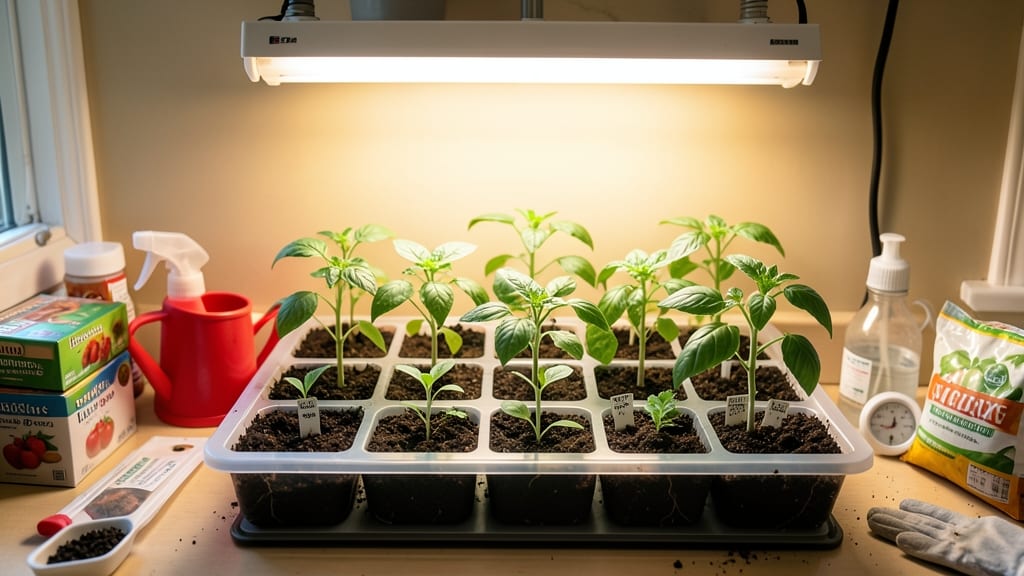
Starting garden seeds indoors at the right time means the difference between bursts of healthy seedlings and a tray of sad, leggy failures.

Timing is everything in gardening—start your seeds indoors too early, and you’ll face leggy seedlings; too late, and you’ll miss the outdoor planting window. The secret to thriving plants lies in knowing the exact zone-specific schedule for your region.

If you’re in Zone 6a, like me, that window is February to early March for most cool-season crops, but heat lovers like tomatoes need a later start.

I’ll walk you through how to calculate your perfect dates, adjust for your local frost risks, and avoid the common mistakes that derail even the most eager gardeners.

By the end, you’ll have a clear step-by-step timeline, a checklist for tracking progress, and the confidence to transplant strong, ready-to-grow seedlings into your garden—no guesswork included.

Zone-by-zone indoor seed starting timeline for vegetables, herbs, and flowers

Getting your seeds indoors at the right time means the difference between a bountiful harvest and a sad, leggy pile of seedlings. Every USDA Hardiness Zone has unique frost dates, and starting too early or late throws off your entire growing season.

For example, tomatoes in Zone 3 need a head start by February, while peppers in Zone 10 can wait until March. Let’s break down the exact month-by-month schedule for your zone to avoid common mistakes.

First, know your last frost date—this is the backbone of your indoor seed starting plan. Most seed packets list how many weeks before transplanting you should start seeds indoors. For cool-season crops like lettuce or spinach, you can start them just 4-6 weeks before the last frost.

But warm-season crops like tomatoes or basil need 6-8 weeks indoors to mature before the soil warms up. Below, I’ve organized a zone-specific timeline so you can plan with confidence.

How to calculate your local seed starting window (even without zone data)

Not every gardener has their USDA zone memorized—but that doesn’t mean you can’t nail your indoor seed starting schedule. The key is understanding your local frost dates and each plant’s maturity timeline.

Even without hard zone data, you can create a custom schedule using just three pieces of information: your average last frost date, your first frost date, and the days to maturity for your chosen seeds.

For example, if you live in a region where the last frost typically hits April 15 and your tomatoes need 85 days to bear fruit, you’ll need to start seeds indoors 12 weeks before April 15—around January 1.

This method works for cool-season crops like lettuce too, but with a twist: they thrive in cooler temps, so you might start them earlier or even outdoors in fall.

Step-by-Step Seed Starting Calculator

  1. Step 1: Find your average last frost date. Check local weather records, ask neighbors, or use a frost calendar (many extension offices provide these).
  2. Step 2: Identify your plant’s days to maturity. This is listed on seed packets (e.g., 60 days for basil, 120 days for peppers).
  3. Step 3: Subtract 4-8 weeks from your last frost date. This gives your indoor start window. For heat-loving crops (tomatoes, peppers), use the longer end (8 weeks). For cool-season crops (lettuce, spinach), use 4-6 weeks.
  4. Step 4: Adjust for seedling age. Most seeds need 2-4 weeks to sprout and grow strong enough for transplanting. Start early for slow germinators like carrots.
  5. Step 5: Test your schedule. Plant a trial batch of seeds 2 weeks early to see how they develop. Use a grow light if natural light is weak.
Pro Tip: Download our free seed-starting worksheet to track your dates and adjust as needed. (Link in resources below!)

One common mistake? Assuming all plants follow the same timeline. Peppers and eggplants need longer indoor growing time than radishes or green onions. Always double-check seed packets for specific recommendations. For instance, basil can handle cooler temps and grows faster, while tomatoes bolt if rushed.

Don’t overlook local microclimates either. If you’re in a valley or near a large body of water, frost dates may shift by 1-2 weeks. Observe your garden over a few years to refine your schedule.

For example, if your neighbors’ frost hits April 10 but yours is April 20, adjust your start dates accordingly.

Once you’ve nailed your indoor start window, use a seedling heat mat to speed up germination for slow starters like parsley or dill. For fast growers like arugula, you can even direct-sow outdoors 2-3 weeks before your last frost.

The goal? Healthy, robust seedlings ready to thrive when they hit the garden.

Start with 5-10 seeds per pot to ensure success, and thin to the strongest seedling once they sprout. Keep a seedling journal to track which varieties perform best in your climate. Over time, you’ll develop a personalized seed-starting system that outperforms generic zone charts.

★★★★★4.5(13 reviews)
Categories Tools
Plant Type Zone 3 Zone 4-5 Zone 6-7 Zone 8-9 Zone 10
Tomatoes Feb 15 - Mar 1 Mar 1 - Mar 15 Mar 15 - Apr 1 Apr 1 - Apr 15 Feb 15 - Mar 1
Peppers Mar 1 - Mar 15 Mar 15 - Apr 1 Apr 1 - Apr 15 Apr 15 - May 1 Mar 1 - Mar 15
Lettuce Mar 1 - Mar 15 (indoor) Mar 15 - Apr 1 (indoor) Apr 1 - Apr 15 (indoor) Oct 1 - Oct 15 (fall) Aug 15 - Sep 1 (fall)
Basil Mar 15 - Apr 1 Apr 1 - Apr 15 Apr 15 - May 1 May 1 - May 15 Mar 15 - Apr 1
Marigolds Mar 1 - Mar 15 Mar 15 - Apr 1 Apr 1 - Apr 15 Apr 15 - May 1 Feb 15 - Mar 1
Spinach Feb 15 - Mar 1 (indoor) Mar 1 - Mar 15 (indoor) Mar 15 - Apr 1 (indoor) Sep 1 - Sep 15 (fall) Aug 1 - Aug 15 (fall)
Cucumbers