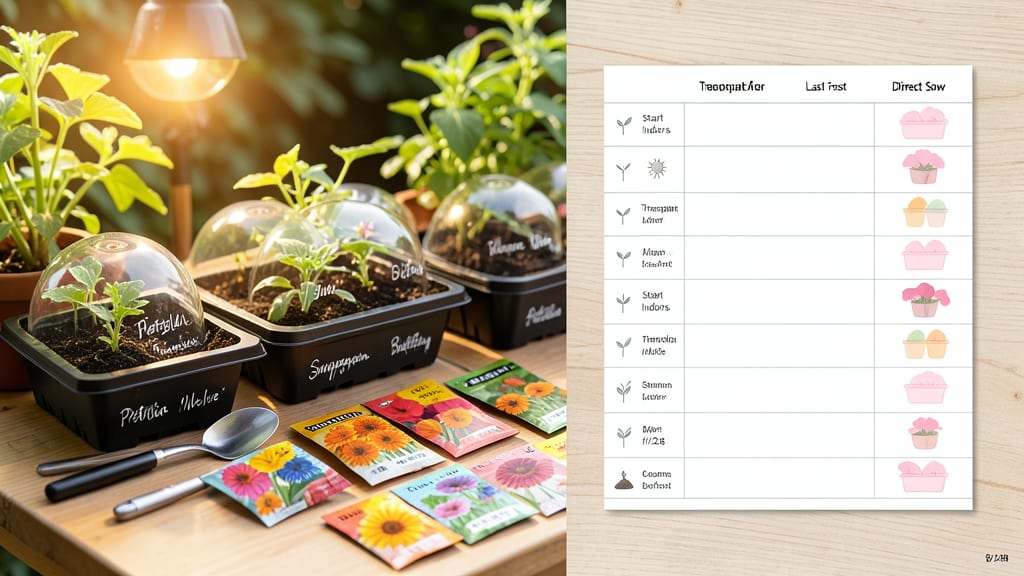
Using a when to start flower seeds indoors chart ensures vibrant blooms by summer—6–8 weeks before your last frost date is the golden rule for most varieties 🌸.
Picture this: leggy, pale seedlings sprawling toward a window because you started too early, or tiny, stunted plants struggling to catch up when you waited too long. Timing is everything, and this chart makes it effortless to plan by variety and your local climate.
From cold-hardy annuals like petunias to heat-loving zinnias, we’ll break down exactly when to sow each type, plus how to adjust for early springs, late frosts, or even Southern Hemisphere growing seasons.
You’ll walk away with a clear schedule, pro tips for transplanting, and a printable chart to keep on your seed-starting desk—no guesswork, just gorgeous flowers.
Indoor flower seed starting chart by variety and last frost date
Getting your flower seeds off to the right start indoors means timing them perfectly with your last frost date.
Whether you're in zone 3 with a late spring or zone 10 where winters are mild, knowing when to sow each variety ensures you avoid overcrowded seedlings or late-season blooms. Below is your go-to chart for popular annuals, organized by their ideal weeks-to-start and cold sensitivity.
For cold-hardy flowers like snapdragons or pansies, you can start seeds earlier—even in zone 3—because they tolerate cooler temperatures. Meanwhile, heat-sensitive varieties like petunias or impatiens need a later start to avoid bolting or wilting in summer heat.
Always adjust for your local last frost date—check your USDA zone for accuracy.
Use this chart as a seed-starting timeline to plan your indoor setup, including grow lights and seedling trays. Most flowers prefer 65°F soil temps and bright light for germination. Once seedlings reach 2-3 inches tall, they’ll need 12-16 hours of light daily to prevent legginess.
| Flower Variety |
Cold-Hardy? |
Weeks to Start Indoors (Zones 3-7) |
Weeks to Start Indoors (Zones 8-10) |
Notes |
| Petunias |
No |
8-10 weeks |
6-8 weeks |
Heat-sensitive; avoid early starts |
| Marigolds |
Yes |
6-8 weeks |
4-6 weeks |
Tolerates cool soil; great for succession planting |
| Zinnias |
No |
8-10 weeks |
6-8 weeks |
Loves heat; start late in cold zones |
| Snapdragons |
Yes |
10-12 weeks |
8-10 weeks |
Bolt-resistant; ideal for early starts |
| Cosmos |
Yes |
6-8 weeks |
4-6 weeks |
Drought-tolerant; fast-growing |
| Impatiens |
No |
8-10 weeks |
6-8 weeks |
Shade-loving; avoid direct sun indoors |
| Pansies |
Yes |
8-10 weeks |
6-8 weeks |
How to adjust your flower seed starting schedule for early or late seasons
When Mother Nature throws curveballs like early springs or late frosts, your flower seed starting schedule needs flexibility. The standard 6-8 weeks before last frost rule works for average conditions, but extreme weather demands adjustments.
My secret? Using grow lights and strategic hardening techniques to keep seedlings strong and ready for whatever the season brings.
First, identify your local frost patterns. Check your USDA zone and note if your area has shifted recently. For example, Zone 5 gardeners might see last frost dates creeping earlier by 1-2 weeks per year.
Adjust your schedule accordingly—if frost arrives late, delay starting heat-sensitive flowers like petunias or geraniums until after the typical April 15 window.
Here’s how to tweak your timeline for early or late seasons:
-
1
Early Spring? Start slow-growing flowers (e.g., snapdragons, hollyhocks) 4-6 weeks earlier under grow lights (14-16 hours/day). Use cool-temperature settings (60-65°F) to prevent legginess.
-
2
Late Frost Risk? Delay starting heat-lovers (e.g., zinnias, marigolds) until 2 weeks after your average last frost. Opt for fast-growing varieties (e.g., cosmos, bachelor’s buttons) to bloom sooner.
-
3
Extreme Heat? Start shade-tolerant flowers (e.g., impatiens, coleus) indoors 10-12 weeks early and harden off gradually over 2 weeks to avoid transplant shock. Use shade cloth outdoors after transplanting.
-
4
Hardening Off is critical! Begin 10-14 days before transplanting by moving seedlings outdoors for 1-2 hours daily, increasing time by 30 minutes each day. Protect from direct wind and harsh sun with shade or a cloche.
-
5
Transplant Shock Prevention: Water seedlings thoroughly 24 hours before transplanting and use rooting hormone for delicate varieties. Bury stems deeper than potted soil level to encourage new root growth.
Pro tip: Keep a seed starting journal to track adjustments year over year. Note which flowers thrive with early starts and which struggle in heat.
For example, my zinnias always bolt if started too early in Zone 7, so I now wait until May 1—no matter what the chart says!
Don’t let unpredictable weather derail your garden dreams. With these tweaks, you’ll have healthy seedlings and vibrant blooms no matter the season’s surprises. Happy growing! 🌱
★★★★★4.5(14 reviews)
|