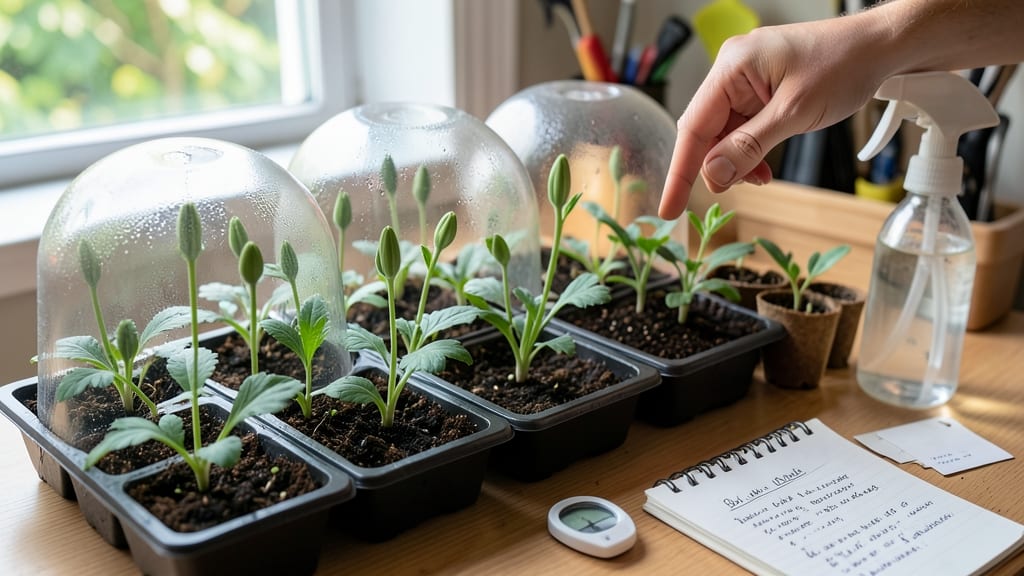
Starting delphinium seeds indoors8-10 weeks before your last frost date is the secret to those towering 🌸 blooms you’ve always dreamed of.
Picture this: You’ve got a tray of tiny delphinium seeds, and you’re staring at your calendar, wondering if you’re about to turn them into sad, leggy shadows or sturdy, blooming giants.
The difference? Timing. Get it wrong, and you’ll either be babysitting seedlings for months or scrambling to get them outdoors before the heat zaps their potential.
In USDA Zone 6, that means kicking off your indoor garden in early February—just as the first hints of spring start to creep in. But here’s the catch: Every zone has its own sweet spot, and even within a zone, microclimates can shift your window by weeks.
Too early, and your seedlings will stretch toward the light like they’re auditioning for a ballet; too late, and you’ll miss the chance to transplant them before the ground warms up.
Below, I’ll break down the exact frost-date math for your zone, how to adjust for tall varieties (because those 6-foot stems need time to bulk up), and the three mistakes that turn promising starts into heartbreaking flops. Let’s get those seeds sprouting right.
Optimal indoor starting times for delphinium seeds by USDA zone
Delphiniums thrive when started indoors at the right time—too early, and your seedlings will stretch painfully toward light; too late, and you’ll miss the bloom window. Since delphiniums need 8-10 weeks of indoor care before transplanting, your USDA zone dictates when to begin.
For example, gardeners in Zone 3 must start seeds by early February, while those in Zone 10 can wait until March. The key? Calculating your last frost date and working backward.
Most seed packets suggest starting delphiniums 10-12 weeks before your last frost. However, since delphiniums are tall and top-heavy, I recommend adding an extra 1-2 weeks to ensure sturdy stems.
For instance, if your last frost is May 15, aim to transplant seedlings by May 10—meaning you should start seeds indoors by March 1-15.
Here’s how to customize your timeline: First, find your USDA zone and last frost date (check the USDA Plant Hardiness Zone Map). Then, subtract 10-12 weeks for standard varieties or 12-14 weeks for tall varieties like 'Pacific Giant.'
For example, Zone 5 gardeners with a May 10 last frost should start seeds by February 20-25.
USDA Zone
Last Frost Date
Start Indoors (Standard)
Start Indoors (Tall Varieties)
Transplant Ready
Zone 3
May 10
Feb 25 - Mar 5
Feb 15 - Feb 25
May 5 - May 10
Zone 4
May 1
Feb 20 - Mar 1
Feb 10 - Feb 20
Apr 25 - May 1
Zone 5
April 15
Feb 15 - Feb 25
Jan 30 - Feb 10
Apr 10 - Apr 15
Zone 6
April 1
Jan 30 - Feb 10
Jan 15 - Jan 30
Mar 25 - Apr 1
Zone 7
March 15
Jan 15 - Jan 25
Jan 1 - Jan 15
Mar 10 - Mar 15
Zone 8
February 15
Dec 20 - Jan 10
Dec 1 - Dec 20
Feb 10 - Feb 15
Zone 9
January 15
Nov 20 - Dec 10
Nov 1 - Nov 20
Jan 10 - Jan 15
Zone 10
December 15
Oct 20 - Nov 10
Oct 1 - Oct 20
Dec 10 - Dec 15
How to adjust your starting timeline for tall delphinium varieties
Tall delphinium varieties like 'Pacific Giant' or 'Black Night' can reach 4-6 feet tall, but their towering stems need extra time to develop strength.
Standard seed-starting charts often suggest 8-10 weeks indoors, but for these giants, I recommend pushing that window earlier—especially if you want maximum bloom height and stem resilience.
Delphinium seedlings are delicate and prone to transplant shock, so starting too late risks stunted growth. Conversely, beginning too early can lead to leggy, weak seedlings that flop under their own weight. The key is balancing seedling maturity with outdoor hardening before your last frost date.
Start 2-4 weeks earlier than standard charts for tall varieties (e.g., 10-12 weeks indoors total). Their longer growth cycle requires extra time for root and stem development.
Prioritize stem strength over early blooms. Delay flowering fertilizers until after transplanting to avoid weak stems that snap in wind or rain.
Hardening off longer (2-3 weeks) is critical. Tall delphiniums need gradual acclimation to prevent transplant shock that stunts their vertical growth.
Adjust for your zone. In USDA Zone 5 or colder, start by late January; in Zones 7-10, February works. Use your last frost date as your anchor.
Use taller trays (4+ inches deep) to support long taproots. Shallow containers restrict root growth, leading to top-heavy, unstable plants.
If you’re growing dwarf varieties (2-3 feet), you can stick to the standard 8-10 week timeline. But for standard or tall types, I’ve found that adding 2-4 extra weeks indoors makes a dramatic difference in stem thickness and bloom height.
For example, my 'Blue Lake' delphiniums hit 5 feet when started 12 weeks early, versus just 3 feet with a 10-week start.
Another pro tip: Stake seedlings early (even indoors) to encourage upright growth. Use toothpicks or bamboo stakes beside each seedling to train stems vertically. This mimics outdoor conditions and reduces flopping later.
I also avoid bottom watering once seedlings sprout—top watering keeps the crown dry, preventing rot in those long, sensitive stems.
Finally, don’t forget that light intensity affects timing. If your indoor setup lacks 12+ hours of light, you’ll need to start seeds even earlier to compensate. Supplement with grow lights for 14-16 hours/day to ensure stocky, not stretched, seedlings.
With the right adjustments, your tall delphiniums will reward you with showstopping height and bold blooms all season.