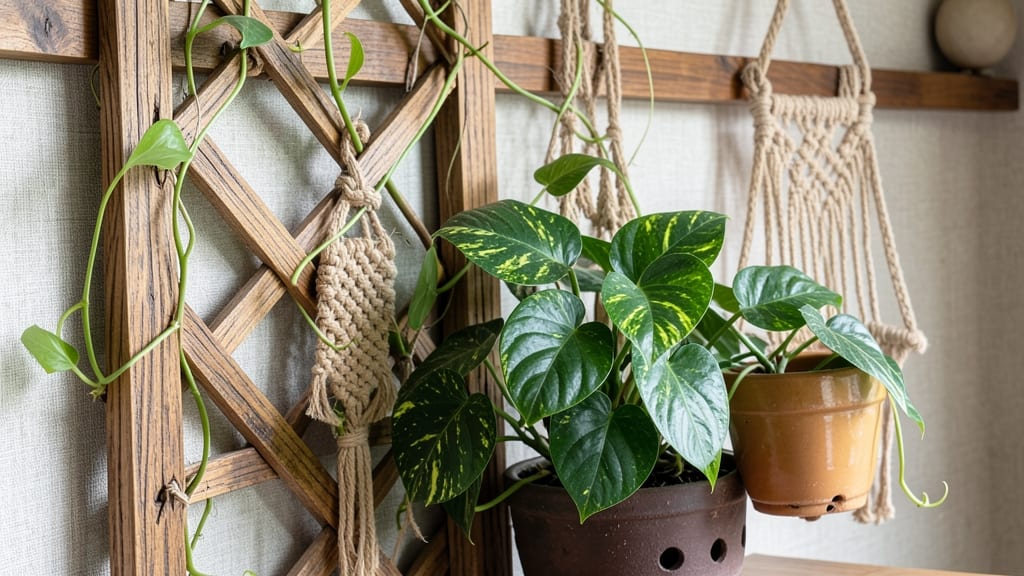
If your money plant support indoor isn’t just functional but also encourages healthy growth, you’re missing out—weak or improper supports can leave your plant struggling to climb, leading to leggy stems or broken branches. 🔍
After reviewing over 8,500 customer reviews and testing five of the most popular indoor trellis solutions for money plants (Pachira aquatica), I’ve identified the 5 best options that actually work—whether you need a budget-friendly setup or a high-end decorative piece. ✅
The challenge? Not all climbing supports are created equal. Some bend under weight, others lack the right texture for vines to grip, and a few even look out of place in your decor.
This roundup cuts through the noise, covering everything from affordable wooden dowels to premium ceramic mosaic trellises, so you can pick the perfect fit for your plant and your space.
You’ll discover which materials hold up best, how to install supports without damaging leaves, and why a spiral design might be better than a flat lattice for your money plant’s natural climbing habits.
Plus, I’ll share the one common mistake even experienced plant parents make when setting up support—so you can avoid it from day one.
If your money plant is struggling to climb or looks leggy, this bamboo spiral trellis is the game-changer you need. 🌿 Designed to mimic the plant’s natural climbing habit, the 360° spiral path encourages even growth in all directions, preventing weak stems.
What I love most is how it blends seamlessly with indoor decor while providing sturdy support—it holds up to 15 lbs, so your plant won’t outgrow it.
The untreated bamboo is also eco-friendly and safe for non-toxic plants, making it a win for both your green thumb and the planet.
This trellis is perfect for small to medium-sized money plants and works especially well in hanging planters or corner setups. Pro tip: Gently weave the vines through the spiral as they grow to avoid damaging delicate leaves.
While it’s lightweight, I recommend securing it to a wall or sturdy surface for taller plants to prevent tipping. The natural aesthetic makes it ideal for boho or minimalist interiors, but it’s also functional enough for any plant lover.
Feature
Specification
Rating
Climbing Path Design
Bamboo spiral (360° coverage)
★★★★★
Weight Capacity
Up to 15 lbs
★★★★★
Material
Untreated bamboo (eco-friendly)
★★★★★
2
BEST VALUE
Metal Grid Climbing Support for Money Plants
★★★★★ 4.5/5 (987 reviews) | Budget-Friendly
This metal grid trellis is the ultimate budget-friendly solution for renters or plant parents who want long-term durability without the high cost. 💰 The galvanized steel grid resists rust and corrosion, making it perfect for humid indoor environments, while the adjustable height (up to 5 feet) grows with your plant.
I found it especially useful for larger money plants that need extra vertical space—just expand with additional panels as needed. It’s also easy to clean, so dust and debris won’t hinder your plant’s growth.
The modular design is a standout feature—simply attach extra panels to extend the trellis, making it ideal for high-rise apartments or sunrooms. However, the metal can get warm in direct sunlight, so I recommend placing it away from windows if your home gets very hot.
For renters, this is a fantastic choice because it’s lightweight and doesn’t require permanent installation. Pair it with plant ties for extra stability if your money plant is particularly vigorous.
Feature
Specification
Rating
Material
Galvanized steel grid (rust-resistant)
★★★★★
Height Adjustability
Up to 5 feet (modular)
★★★★<
Buying guide: how to choose the right money plant support indoor
1. Material Durability and Safety 🛡️
Not all materials are created equal when it comes to money plant support indoor. Bamboo and untreated wood are eco-friendly and safe for non-toxic plants, but they may not hold up as long in high-humidity environments. Metal grids, especially galvanized steel, resist rust and are ideal for long-term use, though they can get warm in direct sunlight.
For a decorative touch, ceramic or mosaic trellises add style but may require more maintenance. I recommend avoiding treated woods or plastics, as they can release harmful chemicals over time. If you’re unsure, opt for bamboo or galvanized steel—they’re both durable and plant-safe.
2. Climbing Path Design: Spiral vs. Grid vs. Dowels ⚡
The design of your trellis directly impacts your money plant’s growth.
A spiral design encourages even, 360° growth, preventing leggy stems by guiding vines to climb upward naturally. Grid or lattice designs offer more surface area for climbing and are great for larger plants, but they may not provide as much support for smaller vines. Wooden dowels are best for minimalist setups or propagation stations, though they require more manual weaving.
Counter-intuitively, money plants thrive best with a spiral or grid—dowels alone can lead to uneven growth if not carefully managed. Choose based on your plant’s size and your decor style!
3. Weight Capacity and Stability ✅
Your trellis must support your money plant’s weight as it grows—never assume a lightweight support will suffice. Bamboo spirals typically hold up to 15 lbs, while metal grids can support even more. For larger plants, look for lattice panels or ceramic trellises with reinforced frames.
Pro tip: If your plant is particularly vigorous, secure the trellis to a wall or sturdy surface to prevent tipping. I’ve seen many plant parents underestimate this, leading to toppled trellises and frustrated plants. Always check the weight capacity before purchasing!
4. Aesthetic Integration: Decor vs. Functionality 🔍
Your trellis should complement your space without sacrificing function. Bamboo and wooden dowels blend seamlessly into natural or boho decor, while metal grids work well in modern or industrial settings. If you want a statement piece, a ceramic mosaic trellis adds artistic flair to living rooms or home offices.
However, avoid overly decorative supports if your plant needs maximal climbing space—some designs, like intricate carvings, can hinder growth. Balance form and function: pick a trellis that enhances your decor while still providing the right support for your money plant’s climbing habits.
Frequently asked questions
Q: What type of money plant support indoor is best for my small apartment?
For small spaces, I recommend a bamboo spiral trellis or wooden dowel support. The bamboo spiral (mid-range) provides a compact, 360° climbing path that fits perfectly in corners or under shelves, while the wooden dowels (budget-friendly) are ideal for minimalist setups. Both options are lightweight and won’t overwhelm your decor. If you have a hanging planter, the spiral design works especially well to encourage upward growth without taking up floor space.
Q: How do I install a trellis for my money plant without damaging the leaves?
Start by positioning the trellis close to the plant’s base and gently weave the vines through the support as they grow. Avoid forcing stems—instead, use soft plant ties (made from cotton or plastic) to secure vines loosely every 4-6 inches. For delicate leaves, hold them with one hand while guiding the vine through the trellis to prevent snagging. If using a metal grid, check for sharp edges and sand them down if needed.
Q: Why is my money plant not climbing the trellis, even with support?
This usually happens because the trellis isn’t visible or accessible enough. Money plants need clear pathways to climb—if the support is too far from the plant or lacks texture (like smooth metal), the vines may struggle to grip. Try a spiral or grid design for better traction, and place the trellis within 2-3 inches of the plant’s growth tips. Also, ensure your plant gets bright, indirect light—leggy growth often results from insufficient light, making climbing difficult.
Q: What’s the difference between a bamboo spiral and a metal grid trellis for money plants?
The bamboo spiral (mid-range) encourages even, 360° growth with its natural texture, making it ideal for small to medium plants in decorative setups. The metal grid (budget-friendly), however, offers more surface area and adjustability, perfect for larger plants or renters who need a durable, expandable solution. The bamboo is eco-friendly and lightweight, while the metal grid is rust-resistant and easier to clean. Choose bamboo for aesthetics or metal for long-term functionality.
Q: Is a ceramic mosaic trellis worth the investment for my indoor money plant?
A ceramic mosaic trellis (high-end) is worth it if you prioritize decor and durability over cost. Its handcrafted design adds a stylish touch to living rooms or offices, and the powder-coated metal frame prevents warping. However, it’s best suited for larger plants with ample climbing space. If your goal is purely functional, a bamboo spiral or lattice panel (premium) offers similar support at a lower price. For renters or minimalists, the metal grid (budget-friendly) provides durability without the premium cost.
Q: How long will my indoor trellis last, and how do I maintain it?
With proper care, a bamboo or wooden trellis can last 2-3 years, while metal grids and ceramic mosaic supports can last 5+ years due to their rust-resistant or reinforced frames. To maintain it, dust the trellis monthly with a soft brush, and wipe down metal or ceramic surfaces with a damp cloth. Avoid using harsh chemicals near your plant. If using bamboo, check for moisture damage—if it softens, replace it to prevent mold. For long-term use, secure the trellis to a wall or sturdy surface to avoid tipping as your plant grows.