
Size
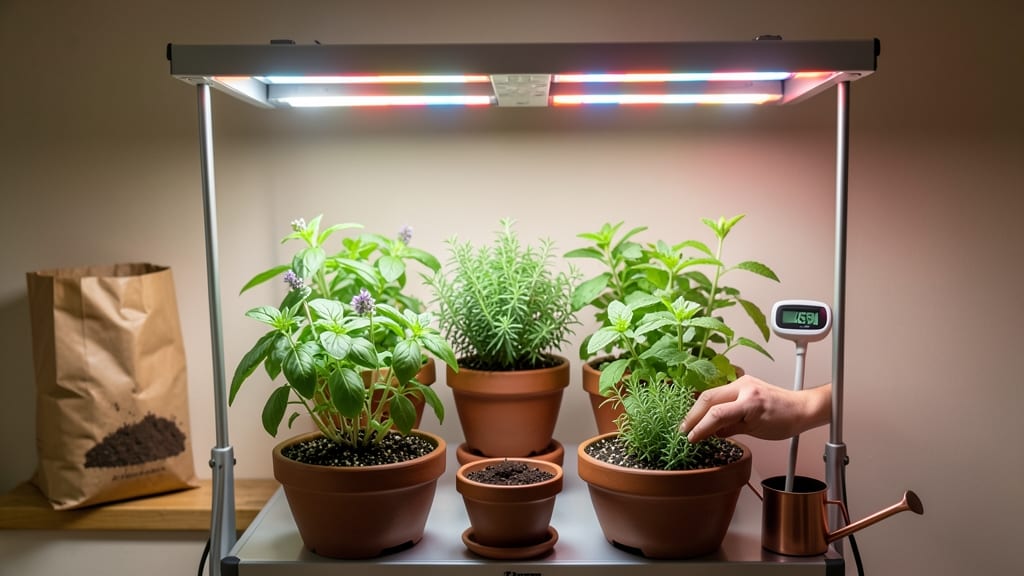
Your indoor herb garden just became prime herb-growing real estate with the right grow lights. 🌿 I’ve turned my own tiny balcony into a fragrant basil and parsley powerhouse using a simple setup that costs less than a single grocery-store herb bouquet—except mine never wilts.
The secret lies in matching your herbs’ needs to the light spectrum: blue for growth, red for flowering, and the perfect balance keeps leaves vibrant.
Most people overdo the light hours, but herbs like cilantro and mint thrive under 12-14 hours of gentle illumination—no need for 24/7 brightness that dries out soil.
By week 3, you’ll snip fresh leaves for cooking anytime, and the plants stay productive for 6+ months with proper pruning. The air smells like a Mediterranean market, and you’ll never buy sad supermarket herbs again.
Works for any sunny windowsill, dark corner, or even a basement—just adjust the light height as plants grow. Let’s get your herbs flourishing indoors!
📚 In This Guide
- What you need
- Instructions
- Tips and common mistakes
- Wrapping up and next steps
What you need
- ● Grow lights: Full-spectrum LED grow light (e.g., Samsung LM301B or Philips LED tubes) – 1–2 bulbs (depending on garden size). Look for 10,000–20,000K for greens or 4,000–6,500K for full-spectrum.
- ○ Light fixture: Adjustable clip-on or hanging fixture (e.g., LED grow light bar) with dimmable settings (optional but ideal).
- ● Growing containers: 4–6 pots (6–12" diameter) with drainage holes. Fabric grow bags or ceramic pots work well.
- ● High-quality potting mix: 1 bag of organic herb/vegetable mix (avoid garden soil—it compacts!).
- ● Herb seeds/seedlings: 4–6 plants (e.g., basil, parsley, mint, or cilantro). Starter seedlings save time!
- ● Watering can or spray bottle: 1 with a gentle mist setting to avoid overwatering.
- ○ Timer (optional but recommended): 1 for 12–16 hours/day light exposure (e.g., smart plug timer).
- ● Reflective surfaces: Aluminum foil or Mylar sheets to bounce light back onto plants (boosts efficiency!).
- ● Humidity tray: A shallow tray with pebbles + water to increase moisture (great for basil and mint).
- ● Nutrient-rich fertilizer: Fish emulsion or liquid seaweed for a monthly boost.
- ● Smart grow light: Wi-Fi-enabled lights (e.g., Growace) with customizable spectra and app control.
- ● Grow tent (for advanced setups): 18"–36" tall with a reflective interior to contain light and heat.
How to choose and position LED grow lights for indoor herb gardens
Here's the method I've used to keep basil, parsley, and cilantro thriving year-round—no south-facing window required.
☀️ Step 1: Select the Right LED Spectrum for Herb Growth
Herbs need a full-spectrum LED grow light that mimics natural sunlight, particularly in the blue (400-500nm) and red (600-700nm) wavelengths. Blue promotes leafy growth, while red encourages flowering (which herbs don’t need). Look for a light with a 10,000K color temperature—this balances both spectra for lush, compact foliage.
I avoid cheap "white" LEDs—they often lack the red spectrum herbs need. A dedicated grow light with adjustable spectra (like a 12:12 blue-red ratio) gives you the most control. Place the light 6-12 inches above plants initially, then adjust as they grow. You'll see the difference in 3-4 weeks with deeper green leaves and slower bolting.
🪴 Step 2: Position Lights for Even Coverage Across All Plants
Herbs grow best under 12-16 hours of light daily, so set a timer on your LED fixture. Position the light so it covers all 4 herb plants evenly—no shadows on the edges. I angle mine slightly (45 degrees) to prevent uneven growth toward the light source.
Rotate your pots a quarter turn every 2-3 days so all sides get equal exposure. You'll notice leggy stems if one side is closer to the light—this tells you to adjust the height or angle immediately. Keep the light 2-4 inches above the tallest leaves at all times to prevent burning.
⏰ Step 3: Adjust Height and Duration as Herbs Mature
Start with the light 6 inches above seedlings, then raise it 1 inch per week as plants grow. Herbs like basil and parsley tolerate closer proximity, but thyme and rosemary need more distance to avoid leaf scorch. Watch for yellowing or crispy edges—these are signs the light is too intense or too close.
Increase light duration to 14-16 hours daily once you see 4-6 true leaves. Herbs grown under shorter days (like 10 hours) will bolt prematurely. Use a smart plug to automate this—consistency is key. You'll harvest your first leaves in 4-6 weeks with proper light management.
💧 Step 4: Monitor Temperature and Prevent Overheating
LED grow lights shouldn’t get hot enough to cause issues, but cheap models or long runtimes can still raise ambient temperatures. Keep your herbs in a space with 65-75°F daytime temps—any hotter, and you’ll see wilting or stunted growth. I place a small fan nearby to circulate air without direct airflow on the plants.
If leaves start curling or developing brown tips, the light may be too close or the room too warm. Move the fixture up 2-3 inches and check your thermometer. Herbs like cool nights (55-65°F), so turn off the grow light for 8 hours if your space doesn’t drop naturally.
Tips & tricks for perfect indoor herb garden lighting
A few subtle adjustments can mean the difference between thriving herbs and leggy, sad plants. Here's what I've learned after years of experimenting with indoor herb gardens.
Spectrum Precision: While a 10,000K light is ideal, don't settle for cheap "full-spectrum" LEDs—they often lack the critical red wavelengths. I recommend investing in a light with adjustable spectra where you can dial in a 12:12 blue-red ratio. This balance prevents the purple tint some herbs develop when red light is insufficient, and you'll notice more vibrant green leaves within those first 3-4 weeks of growth. For budget options, look for lights labeled "grow lights" rather than generic "plant lights."
Rotation Technique: The quarter-turn rotation every 2-3 days in Step 2 isn't just about even growth—it's about preventing your herbs from growing toward the light source. I've seen basil plants lean so dramatically they nearly fall over when I forget this step. Use a small piece of tape on the pot rim to mark rotation progress, and always rotate clockwise to maintain consistency in your garden's layout. This simple habit keeps your herbs compact and prevents that "reaching" look.
Temperature Management: The 65-75°F daytime range is non-negotiable for optimal growth, but don't overlook the nighttime temperatures. Herbs like cilantro and parsley actually prefer cooler nights (55-65°F) to prevent bolting. If your space stays warm all night, consider moving your herb garden to a cooler location when the grow light is off. I've found that a small USB-powered fan running during nighttime hours helps maintain that ideal temperature difference without disturbing the plants.
Light Height Visual: When adjusting height in Step 3, use your hand as a guide. At 6 inches (seedling stage), your fist should fit comfortably between the light and plants. As you raise it 1 inch per week, your palm should fit instead. This visual cue helps prevent those crispy edges that appear when lights get too close. For herbs like thyme that are more sensitive, maintain at least 4 inches of distance once they mature—you'll see the difference in leaf texture immediately.
Pro Tips for Indoor Herb Garden Grow Lights
- A few subtle adjustments can mean the difference between thriving herbs and leggy, sad plants.
- Spectrum Precision: While a 10,000K light is ideal, don't settle for cheap "full-spectrum" LEDs—they often lack the critical red wavelengths.
- Rotation Technique: The quarter-turn rotation every 2-3 days in Step 2 isn't just about even growth—it's about preventing your herbs from growing toward the light source.
Frequently asked questions
Got questions about setting up an indoor herb garden with grow lights? You’re not alone! Here are answers to the most common queries to help you grow like a pro—no green thumb required.
What type of grow light is best for herbs?
For herbs, full-spectrum LED grow lights (like 6400K or 6600K) are ideal—they mimic sunlight and boost growth. Avoid cheap white LEDs; they lack the red and blue spectrums herbs crave. Look for lights with adjustable spectra to fine-tune for basil, mint, or parsley.
How long should I keep the grow lights on daily?
Herbs thrive on 12–16 hours of light per day. Use a timer for consistency—most LEDs last 10,000+ hours, so running them daily won’t drain your wallet. Pro tip: Mimic natural cycles by turning lights off at night to encourage rest (and better flavor!).
Are LED grow lights worth the investment over cheaper alternatives?
Yes! While CFLs or incandescent bulbs might seem budget-friendly, they waste energy and struggle to replicate sunlight. LEDs use 70% less power, last years, and deliver higher yields. Think of it as a long-term herb-growing hack—your wallet (and basil) will thank you.
Why are my herbs growing tall but leggy under the lights?
Leggy herbs usually mean too much distance or weak light. Keep lights 6–12 inches above plants (adjust as they grow) and ensure they’re 12–16” wide for even coverage. If using a single bulb, rotate plants weekly for balanced growth. Bonus: Boost intensity by adding a red-blue LED combo.
Can I use natural sunlight + grow lights for my indoor herbs?
Place your setup near a south-facing window (if available) and supplement with grow lights for 2–4 extra hours/day. This cuts electricity costs while preventing light burn from direct sun. Just monitor leaves—if they yellow, reduce light exposure.
Wrapping up and next steps
Growing fresh herbs indoors has never been easier—thanks to the right indoor herb garden grow lights! With LED spectrum lighting, you can cultivate lush, flavorful greens in even the smallest spaces, no matter the season.
Whether you're a seasoned gardener or just starting out, this setup gives you control over growth, flavor, and convenience.
🌱 Ready to dive in? Start by picking your herbs, setting up your lights, and monitoring progress—soon, you’ll be harvesting crisp basil, vibrant cilantro, or zesty parsley right from your kitchen! Your green thumb is just a light switch away.