
Propagation
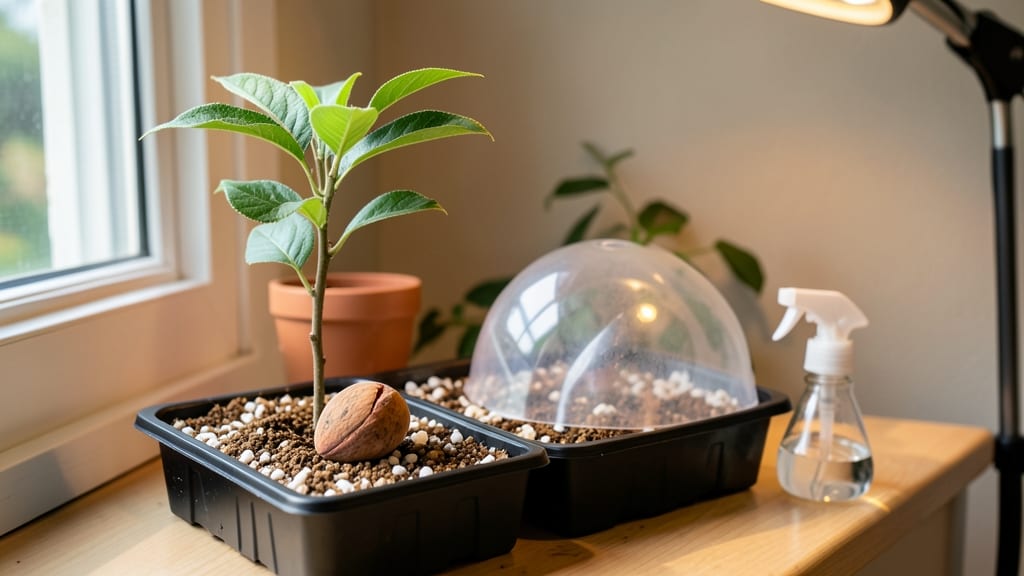
Growing peaches from seed indoors starts with a single pit and a sunny windowsill. 🌱 The process rewards patience—what begins as a tiny seed can grow into a tree that one day produces fruit, though it will need grafting to match the parent tree’s quality.
My first attempt took three months just to crack through the shell, but the satisfaction of watching those first leaves unfurl made every week worth it.
You’ll need a few simple supplies: a peach pit (fresh is best), a small pot with drainage, well-draining potting mix, and a heat mat or warm spot near a sunny window.
The key is warmth—peach seeds need consistent 70-80°F soil temperatures to germinate, which is why a heat mat helps speed things up. Without one, germination can take 6-12 months, but it’s still possible if you’re willing to wait.
Once sprouted, your seedling will need bright light (6+ hours daily) and careful watering—too much moisture drowns the roots, while too little stunts growth.
In 6-12 months, you’ll have a small tree ready for transplanting outside, though it won’t bear fruit for 5-7 years (and even then, it’ll need grafting to ensure quality peaches). The journey is slow, but the reward of watching a tree you grew from seed thrive is unmatched.
Fair warning: most homegrown peaches from seed won’t taste like store-bought varieties, but the process teaches patience and the joy of nurturing something from scratch. If you’re up for the challenge, here’s how to get started—and what to expect along the way.
📚 In This Guide
- What you need
- Instructions
- Tips and common mistakes
- Wrapping up and next steps
What you need
- ● Peach pit: 1 fresh, organic peach pit (avoid store-bought peaches treated with fungicides).
- ● Small pots: 2–3 4-inch diameter pots with drainage holes (plastic or biodegradable peat pots work well).
- ● Seed-starting mix: 1 bag of sterile, well-draining potting soil (avoid garden soil—it’s too dense!).
- ● Watering can or spray bottle: For gentle hydration (overwatering is the #1 killer of seeds!).
- ● Plastic wrap or humidity dome: To create a mini greenhouse effect.
- ○ Grow lights (optional but recommended): A full-spectrum LED bulb (12–16 hours/day) if natural light is weak.
- ● Scissors or knife: For carefully cutting the pit open (sterilize with rubbing alcohol first!).
- ● Toothpick or chopstick: To help place the seed in the soil.
- ○ Heat mat (optional): A seedling heat mat (70–80°F) to speed up germination.
- ● Fertilizer: A balanced, water-soluble fertilizer (5-5-5 or 10-10-10) for later stages.
- ● Spray bottle with water: For misting seedlings as they grow.
Step-by-step instructions for growing peaches from seed indoors
Here's my foolproof method for turning a single peach pit into a sturdy sapling ready for outdoor planting.
🌱 Step 1: Extract and Prepare the Seed
Grab a fresh, organic peach—no grocery store varieties, they're often treated to prevent sprouting. Cut the fruit open and remove the large, flat seed inside. Rinse it thoroughly under cool water to remove any remaining fruit residue, which can rot. Let it dry completely on a paper towel for 3-5 days in a warm spot.
Here's the thing—peach seeds have a hard outer shell that needs to soften before sprouting. After drying, wrap the seed in a damp paper towel and fold it into a loose packet. Place this inside a sealed plastic bag and refrigerate for 6-8 weeks. This mimics winter conditions and breaks seed dormancy. Check the towel weekly to keep it moist but not soggy.
🌱 Step 2: Plant the Stratified Seed
After cold treatment, fill a small pot—4-6 inches deep—with sterile seed-starting mix. Make a hole about 1 inch deep and place the seed inside, pointy end up. Cover it with about ½ inch of soil and gently pat it down. Peach seeds need light to germinate, so don't bury them too deeply.
Water the soil until it's evenly moist but not dripping. Place the pot in a warm spot—70-75°F—like on top of your refrigerator. Cover the pot with plastic wrap to retain moisture and warmth. Germination can take 3-6 weeks, so be patient. You'll see the first sign when a tiny white root appears, followed by the shoot breaking through the soil.
☀️ Step 3: Provide Light and Care for the Sprout
Once the seedling emerges, remove the plastic wrap immediately to prevent fungal growth. Move it to a south-facing window where it can get 6-8 hours of direct sunlight daily. If your window isn't sunny enough, supplement with a grow light placed 4-6 inches above the plant. You'll know it's getting enough light when the leaves are dark green and compact—not pale or stretched.
Water the seedling when the top inch of soil feels dry. Use room-temperature water and water at the base to avoid disturbing the delicate stem. Keep the soil consistently moist but never soggy. Fertilize lightly with a balanced liquid fertilizer (10-10-10) diluted to half strength once the seedling has 3-4 true leaves.
🪴 Step 4: Transplant and Encourage Strong Growth
When the seedling reaches about 6 inches tall and has 4-5 sets of leaves, it's time to transplant it into a larger pot—8-10 inches deep. Use the same seed-starting mix and gently loosen the roots before placing it in the new pot. Fill around the roots with soil and water thoroughly. This step helps prevent root binding, which can stunt growth.
Peach seedlings grow slowly at first, so don't rush it. Keep it in bright light and maintain consistent moisture. You'll notice new leaves emerging in 2-3 weeks if everything is right. At this stage, you can start training the seedling by gently tying the main stem to a small stake to encourage upright growth. This prevents it from becoming leggy and weak.
⏰ Step 5: Prepare for Outdoor Planting
After 12-18 months of indoor growth, your peach sapling should be 3-4 feet tall with a sturdy trunk. Before moving it outside, harden it off by placing it outdoors in a sheltered spot for 1-2 hours the first day, gradually increasing to full sun exposure over 10-14 days. This slow adjustment prevents shock and helps the plant adapt to outdoor conditions.
Choose a sunny spot in your yard with well-draining soil for planting. Peach trees need full sun (6+ hours daily) and plenty of space to grow—at least 20 feet from other trees or structures. Plant the sapling in early spring, after the last frost, and water it deeply to help it establish roots in its new home.
Tips & tricks for growing peaches from seed indoors
Turning a peach pit into a thriving sapling takes patience—but these little tricks will help you avoid common pitfalls along the way.
Seed Selection: Not all peaches make good seeds! Choose pits from fresh, organic peaches—avoid grocery store varieties, as they're often treated to prevent sprouting. The seed should be plump and free of cracks. If you're unsure, try multiple pits since not all will germinate. I've found that freestone peaches (like those with pits that separate easily) tend to sprout more reliably than clingstone varieties.
Stratification Success: The 6-8 week cold treatment is non-negotiable for breaking dormancy, but here's the secret: use a paper towel that stays consistently damp—not wet. I wrap mine in a loose packet and place it in a sealed bag with a tiny hole for airflow. Check weekly and mist with water if it feels dry. Too much moisture can cause mold, while too little prevents germination. The key is that perfect "wrung-out sponge" dampness.
Lighting Hacks: South-facing windows provide the best natural light, but if yours isn't sunny enough, grow lights are a game-changer. Place them 4-6 inches above the plant and use them for 12-14 hours daily to mimic summer sunlight. LED grow lights with a full spectrum (red and blue wavelengths) work best. You'll know your seedling is happy when its leaves are dark green and compact—not stretched or yellowing.
Transplanting Timing: Wait until your seedling reaches 6 inches tall with 4-5 sets of leaves before transplanting—this ensures it has enough energy to handle the stress. When moving to the larger 8-10 inch pot, gently loosen the roots with your fingers rather than cutting them. This encourages outward growth instead of creating a tangled root ball. Water thoroughly after transplanting to help the soil settle around the roots.
Pro Tips for Grow Peaches From Seed Indoors
- Turning a peach pit into a thriving sapling takes patience—but these little tricks will help you avoid common pitfalls along the way.
- Seed Selection: Not all peaches make good seeds!
- Stratification Success: The 6-8 week cold treatment is non-negotiable for breaking dormancy, but here's the secret: use a paper towel that stays consistently damp—not wet.
Frequently asked questions
Got questions about growing peaches from seed indoors? You’re not alone! Here are some of the most common concerns—and their answers—to help you navigate this rewarding (but patience-requiring) process.
How long does it take for a peach seed to germinate indoors?
Peach seeds typically sprout in 2 to 4 weeks when kept warm (around 70–80°F) and moist. Some varieties may take longer, especially if the seed is old or stored improperly. Pro tip: Use a seedling heat mat to speed things up!
Will my indoor-grown peach tree ever produce fruit?
Probably not in the first few years—peach trees grown from seed can take 5 to 10 years to bear fruit, if ever. Many seed-grown trees won’t match their parent’s quality. For faster (and tastier!) results, consider grafting a known variety later.
Can I grow a peach tree from store-bought peach pits?
Yes! Just clean, dry, and cold-stratify the pit (6–8 weeks in the fridge) before planting. Avoid pits from treated fruit (e.g., some grocery-store peaches), as chemicals may inhibit germination.
Why isn’t my peach seed sprouting? Troubleshooting tips.
Check these common issues:
- Too cold/dry: Move to a warmer spot (like near a sunny window) and keep soil moist.
- Rotten seed: If moldy or mushy, the seed may be bad—try another!
- No stratification: Peach seeds need a cold period to break dormancy. Skip this, and germination may fail.
When can I transplant my indoor peach sapling outside?
Wait until spring, after the last frost and when soil temps are above 60°F. Harden off your sapling by gradually exposing it to outdoor conditions over 1–2 weeks. Choose a sunny spot with well-draining soil—peaches love heat!
Wrapping up and next steps
Growing peaches from seed indoors is a rewarding journey that blends patience with the joy of nurturing life from scratch! 🌱 With the right tools, a little care, and a sunny windowsill, you’ve got everything you need to transform tiny seeds into sturdy saplings.
Remember, consistency is key—whether it’s keeping soil moist or providing the perfect light, your efforts will soon pay off with lush green growth.
Ready to take the next step? Once your seedlings are strong enough, consider transplanting them outdoors (when frost is no longer a threat) or sharing your newfound green thumb with fellow plant lovers. Happy growing—your future peach tree is counting on you! 🍑✨