
Container Gardens
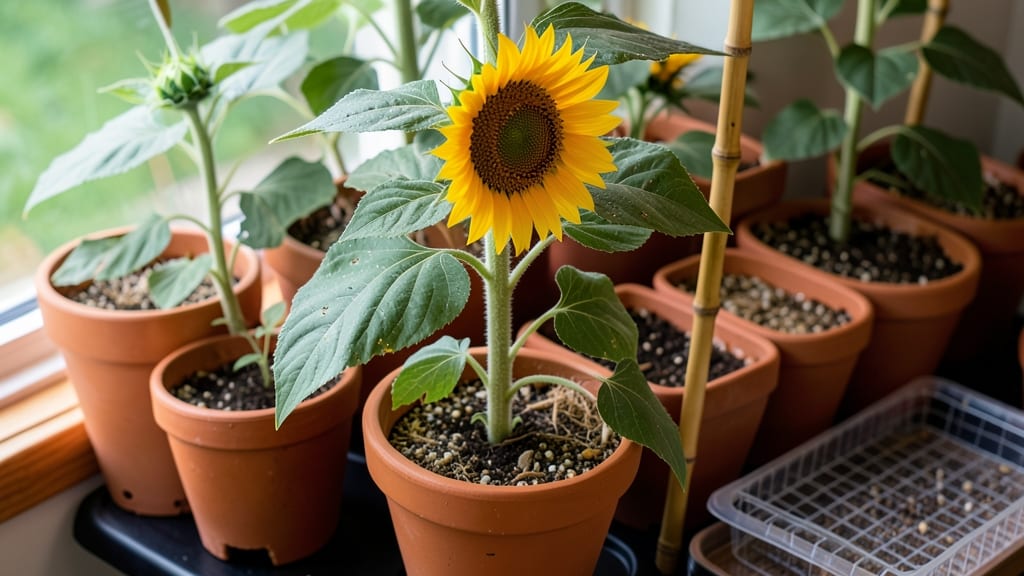
Growing sunflowers in pots indoors feels like cheating the system—towering blooms without a sunny yard. 🌻 I’ve turned my dim living room into a sunflower jungle by choosing the right varieties and giving them exactly what they need, even in low light.
The secret isn’t more sun; it’s smarter sunlight management and a few simple adjustments that make all the difference.
You’ll need dwarf or mini sunflower varieties (like ‘Teddy Bear’ or ‘Moulin Rouge’), containers with drainage, and a well-draining potting mix that stays moist but not soggy. A 5-gallon pot gives roots enough room to anchor while keeping the plant stable—no toppling giants here.
Place your pots near the brightest window (south-facing is ideal) or under a grow light for 6-8 hours daily. Sunflowers are forgiving, but they will lean toward the light like sun-worshipping worshippers.
Water when the top inch of soil feels dry, and fertilize every 2-3 weeks with a balanced liquid feed. You’ll see those first velvety green leaves in days, followed by a 6-foot stalk in weeks—not months.
The real magic? Watching the buds form even when your neighbors’ sunflowers wilt outside. No yard? No problem. With the right setup, your indoor sunflowers will outshine anything in the garden.
Here’s the kicker: these sunflowers thrive in spaces where other plants struggle. No direct sunlight? Use a grow light. Limited space? Choose compact varieties. The only real challenge is resisting the urge to overwater—sunflowers hate soggy feet.
Once you master this, you’ll be growing sunflowers in bathrooms, offices, or even basements. Let’s get those pots planted!
📚 In This Guide
- What you need
- Instructions
- Tips and common mistakes
- Wrapping up and next steps
What you need
- ● Sunflower seeds: Choose dwarf or medium varieties (e.g., 'Teddy Bear' or 'Moulin Rouge')—they thrive in pots! 🌱 (5–10 seeds per pot, depending on size)
- ● Containers: Pots with drainage holes, 12–18 inches deep and wide (one per plant for larger varieties). (Terra cotta or fabric pots work best!)
- ● Potting mix: Well-draining, nutrient-rich soil (avoid garden soil—it compacts!). (5–10 gallons per pot, depending on size)
- ● Drainage material: Small rocks, pebbles, or broken pottery (1–2 inches at the bottom of each pot).
- ○ Grow lights (optional but helpful): Full-spectrum LED lights (12–16 hours/day) if natural light is <12 hours/day.
- ● Fertilizer: Balanced liquid fertilizer (10-10-10 or 20-20-20) or slow-release granules. (Follow package instructions!)
- ● Plant supports: Stakes or cages (for taller varieties, 3–5 feet tall).
- ● Mulch: Straw or shredded leaves to retain moisture.
- ● pH test kit: Ensures soil pH is 6.0–7.0 (ideal for sunflowers).
- ● Spray bottle: For gentle watering (especially in early stages).
- ● Humidity tray: A shallow tray with pebbles and water to boost humidity in dry climates.
Step-by-step instructions for growing sunflowers in pots indoors
Here's how to coax those iconic blooms indoors without needing a sun-drenched yard.
🪴 Step 1: Select the Right Containers and Drainage
Choose pots that are at least 12 inches deep and 12 inches wide for each sunflower—these plants need room to develop strong taproots. I prefer terracotta pots because they wick away excess moisture, which sunflowers hate sitting in. Make sure each container has at least three drainage holes at the bottom to prevent root rot.
Line the bottom of each pot with 1-2 inches of gravel or broken pottery shards. This creates an air pocket that prevents waterlogging while still allowing excess moisture to escape. The key here is balance—you want drainage but not so much that water drains too quickly between waterings.
🌱 Step 2: Prepare the Soil and Plant Seeds
Fill the pots with a lightweight, well-draining potting mix designed for large plants. I blend mine with 20% perlite to improve aeration—sunflowers despise soggy soil. Moisten the mix until it feels like a damp sponge, but not dripping wet.
Plant 2-3 seeds per pot at a depth of about 1 inch, pressing them gently into the soil. Space them evenly around the pot's center. Water lightly after planting to settle the soil around the seeds. Here's the thing—sunflower seeds germinate best in 70-75°F soil, so if your home runs cooler, place the pots on a seedling heat mat for a few days until sprouts appear.
☀️ Step 3: Provide Optimal Light and Support
Sunflowers need 6-8 hours of bright, direct light daily to grow tall and sturdy. A south-facing window is ideal, but most indoor spaces won't provide enough intensity. Supplement with a grow light placed 12-18 inches above the plants for 14-16 hours per day. You'll notice leggy growth if the light is too far away—adjust the height until the stems stay compact.
As soon as the seedlings reach 6 inches tall, install a 6-foot tall bamboo stake or metal cage in the center of each pot. Gently tie the main stem to the support with soft plant ties every 4-6 inches as it grows. This prevents the heavy flower heads from snapping the stems later on.
💧 Step 4: Water and Fertilize for Maximum Growth
Water deeply when the top 2 inches of soil feel dry, but avoid letting the soil stay soggy. Sunflowers are drought-tolerant once established, but they need consistent moisture during their rapid growth phase. I water from the bottom by placing the pot in a saucer of water for 10-15 minutes—this encourages deep root development.
Start fertilizing with a balanced 10-10-10 liquid fertilizer when the plants reach 12 inches tall. Apply every 2-3 weeks during the growing season, but cut back to monthly once the flower buds form. Over-fertilizing at this stage can lead to excessive leaf growth at the expense of blooms.
⏰ Step 5: Encourage Blooming and Maintain Health
When the flower buds form, reduce watering slightly to prevent them from splitting. You'll know you're on track when the buds swell to about 3 inches across. At this stage, I move the pots to the brightest spot in the room—even indirect light helps the buds open fully.
Watch for aphids or spider mites, which love sunflowers' sap. If you spot them, spray the plants with a mix of 1 tablespoon neem oil per quart of water and repeat every 5-7 days until they're gone. A healthy sunflower will produce a single massive bloom that can reach 4-6 feet tall indoors with proper care.
Tips & tricks for growing towering sunflowers indoors
Here's what I've learned after growing sunflowers indoors—these simple adjustments make all the difference.
Container Depth Matters: The 12-inch depth requirement isn't arbitrary—sunflowers develop taproots that need room to grow. If you're using shallower pots, consider nesting them or using a deeper container with the smaller pot inside. I've seen sunflowers struggle in 8-inch pots, even with extra perlite, because the roots can't establish properly.
Temperature Tip for Germination: That 70-75°F soil temperature range is crucial for germination. If your home stays cooler, use a seedling heat mat for just 3-5 days until sprouts appear. I've tried planting without this and waited twice as long for germination—don't make that mistake! The heat mat gives seeds the jumpstart they need without requiring you to heat your whole home.
Light Positioning Strategy: For the 6-8 hours of direct light, position your sunflowers where they'll get morning sun first. This gradual exposure prevents shock. I rotate my pots 90 degrees every couple of days so all sides get even light—this creates more uniform growth. The grow light should stay on for 14-16 hours, but give the plants a 6-8 hour "night" period to rest and process nutrients.
Support System Insight: When installing the 6-foot stake at 6 inches tall, make sure it's centered in the pot. I've seen plants lean dramatically when the support wasn't properly aligned. Use soft plant ties that won't cut into the stems as they grow—nylon stockings work perfectly for this. The ties should be loose enough that you can fit a finger between them and the stem.
Pro Tips for Growing Sunflowers In Pots Indoors
- Here's what I've learned after growing sunflowers indoors—these simple adjustments make all the difference.
- Container Depth Matters: The 12-inch depth requirement isn't arbitrary—sunflowers develop taproots that need room to grow.
- Temperature Tip for Germination: That 70-75°F soil temperature range is crucial for germination.
Frequently asked questions
Got questions about growing sunflowers indoors? You’re not alone! Here are some of the most common concerns—and their solutions—to help your potted sunflowers thrive, even with limited sunlight.
Can sunflowers really grow well indoors without direct sunlight?
Yes, but they’ll need bright, indirect light for at least 6–8 hours daily. Place them near a south-facing window or supplement with a grow light (12–16 hours/day). Dwarf varieties like ‘Teddy Bear’ or ‘Moulin Rouge’ adapt best to low-light conditions. Without enough light, stems may stretch (a condition called etiolation) and flowers won’t open fully.
How long does it take for sunflowers to bloom indoors?
Indoor sunflowers typically bloom in 8–12 weeks from seed, but timing depends on variety and light exposure. Dwarf types may flower faster (6–8 weeks), while taller varieties could take longer. Pro tip: Start seeds indoors in early spring for summer blooms, or use pre-sprouted seeds to skip the germination wait.
What’s the best pot size for indoor sunflowers?
Choose a pot with a minimum diameter of 12–16 inches and depth of 12+ inches to support root growth. Larger pots (18+ inches) reduce the need for frequent watering but may require extra drainage holes. Warning: Overcrowding leads to weak stems—plant one seed per pot unless using dwarf varieties.
Why are my sunflower leaves turning yellow or drooping?
Yellow leaves often signal overwatering or nutrient deficiency. Let the top 1–2 inches of soil dry out between waterings, and use a balanced liquid fertilizer (like 10-10-10) every 2–3 weeks. Drooping can also mean thirst—check soil moisture and ensure proper drainage. Bonus fix: Mist leaves occasionally in dry indoor air!
Can I grow sunflowers indoors year-round, or do they need a dormant period?
Sunflowers are annuals, so they don’t need dormancy—but they’ll stop flowering if daylight shortens (e.g., winter). Extend their life with grow lights (14+ hours/day) or treat them as seasonal plants. After blooming, save seeds for next year or compost the plant. Fun fact: Some varieties, like ‘Autumn Beauty,’ produce two blooms per stem!
Wrapping up and next steps
Growing sunflowers in pots indoors is a rewarding way to bring a touch of nature—and sunshine—into your space, even with limited sunlight! With the right container, soil, and care, you can enjoy vibrant blooms and a mini garden that thrives year-round.
Whether you're a beginner or a seasoned plant parent, this project is as simple as it is satisfying—so grab that pot and get started!
Ready to watch your sunflower sprout? Your next step: Pick your favorite variety, gather your supplies, and give it a try—you’ll be amazed at how easy (and fun) it is! 🌻✨