
Plants
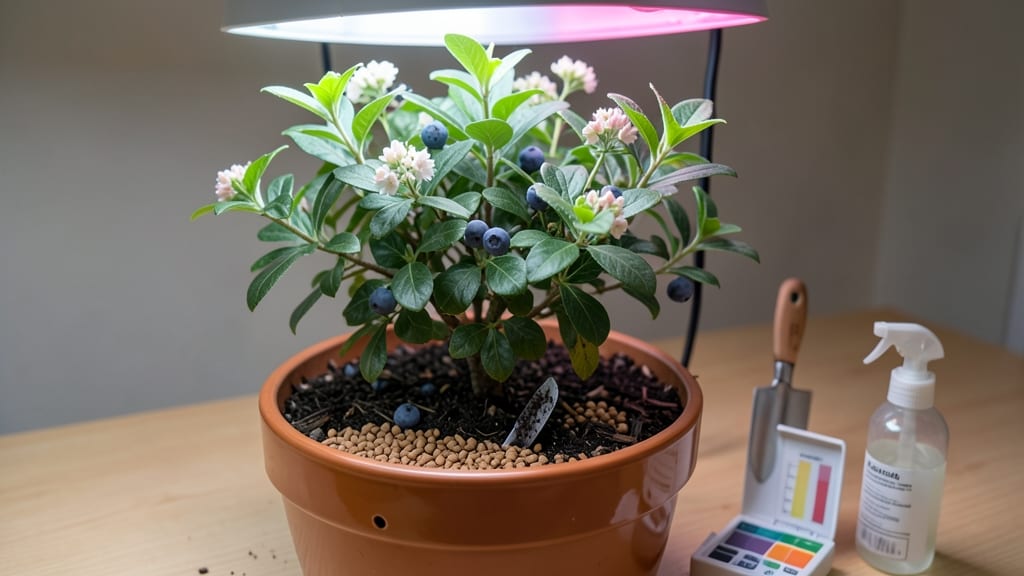
Growing blueberries indoors means fresh, sweet berries year-round—no frost or pollinators required. 🌱 I tried this after my backyard bushes struggled with acidic soil, and now I harvest more berries in my kitchen than I ever did outside.
The key is picking the right dwarf variety, like 'Top Hat' or 'Peach Sorbet,' which thrive in containers and produce fruit reliably.
You'll need a 10-15 gallon pot with drainage, a well-draining acidic soil mix (pH 4.5-5.5), and a sunny spot near a south-facing window or under grow lights. Blueberries love humidity, so misting leaves or using a pebble tray helps mimic their natural bog environment.
Temperature swings are the biggest challenge—keep them between 60-75°F and avoid drafts.
Patience pays off: your plant might take 2-3 years to bear fruit, but once it does, you'll enjoy months of harvests with proper care. Prune in late winter to shape the bush and remove dead wood, and fertilize lightly every 4-6 weeks with an acid-loving plant formula.
The first berries might be small, but they'll improve with each season.
Troubleshooting is simple: yellow leaves mean adjust pH or check watering; no fruit could signal insufficient light or nitrogen. If pests appear, wipe leaves with soapy water—blueberries rarely attract serious indoor invaders. With consistency, you'll have a thriving bush that outproduces any store-bought berries.
📚 In This Guide
- What you need
- Instructions
- Tips and common mistakes
- Wrapping up and next steps
What you need
- ● Blueberry plants: Dwarf varieties like Top Hat or Peach Sorbet (1–3 plants per container, depending on size).
- ● Containers: 5–7 gallon pots with drainage holes (1–2 per plant). Use fabric grow bags or plastic pots with saucers.
- ● High-quality potting mix: Acidic, well-draining soil blend (pH 4.5–5.5). Mix peat moss or coconut coir (50%), perlite (20%), and pine bark fines (30%).
- ● Fertilizer: Acid-loving plant fertilizer (e.g., Miracle-Gro Azalea, Camellia, and Rhododendron or fish emulsion).
- ● Grow lights: Full-spectrum LED lights (12–16 hours/day). Aim for 1,000–2,000 lumens per plant.
- ● pH testing kit: Digital or liquid test kit to monitor soil acidity.
- ● Aluminum sulfate or sulfur: For adjusting soil pH if needed.
- ● Watering can or spray bottle: With a fine rose nozzle for gentle watering.
- ● Humidity tray: A shallow tray with pebbles and water to boost humidity (especially useful in dry climates).
- ● Automatic timer: For grow lights to maintain consistent light cycles.
- ● Oscillating fan: For air circulation (reduces mold risk).
- ● Self-watering system: Drip irrigation or wicking pots for convenience.
- ● Pollination aid: A small paintbrush to hand-pollinate flowers (if growing from seed or self-pollinating varieties).
- ● Blueberry companion plants: Like thyme or comfrey to deter pests naturally.
Step-by-step instructions for growing blueberries indoors
Here's how to cultivate thriving blueberry bushes in containers—no yard required.
🪴 Step 1: Choose the Right Containers and Drainage System
Blueberries need acidic soil and excellent drainage, so select 5-gallon containers with drainage holes. I recommend terra cotta pots because they wick away excess moisture, preventing root rot. If using plastic, add a 2-inch layer of gravel at the bottom to improve airflow.
Position pots on elevated trays or saucers to catch drainage. Blueberries hate soggy roots, so the container must allow water to escape freely. If repurposing old pots, drill additional holes if the original drainage is insufficient—three to four holes per container ensures proper airflow.
🌱 Step 2: Prepare Acidic, Well-Draining Soil Mix
Blueberries demand soil with a pH between 4.5 and 5.5—standard potting mix won’t cut it. Mix 50% peat moss or coconut coir (for acidity) with 30% perlite (for drainage) and 20% compost. Avoid garden soil—it’s too alkaline and compacts easily.
Test your mix by squeezing a handful. It should hold moisture but crumble when pressed—not stick together like clay. Amend with sulfur powder (1 tablespoon per gallon of mix) if your tap water is alkaline. Water blueberries with rainwater or distilled water to prevent mineral buildup.
☀️ Step 3: Plant and Position for Optimal Light
Dig a hole twice as wide as the root ball but no deeper. Place the plant so the top of the root ball sits level with the soil surface—burying the stem too deep causes rot. Gently backfill with your acidic mix, pressing lightly to remove air pockets.
Blueberries need 6-8 hours of direct sunlight daily. A south-facing window works, but most homes lack sufficient intensity. Supplement with a full-spectrum LED grow light placed 12-18 inches above the plant. You’ll know the light is right when new growth is dark green and compact, not leggy and pale.
💧 Step 4: Water and Fertilize for Acid-Loving Growth
Water when the top 1-2 inches of soil feel dry—blueberries hate soggy roots but also despise drought. Use a self-watering system or water deeply at the base, avoiding wetting the leaves to prevent fungal diseases. Mulch with pine needles or sphagnum moss to retain moisture and acidity.
Fertilize every 4-6 weeks with an acid-loving plant fertilizer (look for high nitrogen in early spring, balanced NPK in summer). I use cottonseed meal (1 tablespoon per gallon of soil) for organic acidity. Watch for yellow leaves with green veins—a classic sign of iron deficiency in alkaline soil.
✂️ Step 5: Prune and Harvest for Year-Round Success
Prune in late winter or early spring before new growth begins. Remove dead, diseased, or crossing branches, cutting back to a healthy bud or lateral branch. Thin out crowded stems to improve airflow—blueberries need space to breathe. You’ll see new growth within 2-3 weeks if pruning was done correctly.
Harvest when berries are deep blue and fully plump, usually 60-90 days after flowering. Gently twist the berry from the stem—it should release easily without tearing the fruit. Store in the fridge for up to 2 weeks or freeze for longer storage. Expect 4-6 harvests per year with consistent care.
Tips & tricks for perfect indoor blueberry cultivation
Here's what nobody tells you about keeping your container-grown blueberries thriving year-round—these are the details that make all the difference.
Container Size Matters: While 5-gallon containers work, upgrade to 7-10 gallon pots for mature bushes (3+ years old). The extra space prevents root binding, which stunts growth and reduces fruit production. I've seen plants in 5-gallon pots struggle after just two years—root systems outgrow the space quickly.
Lighting Hack for Small Spaces: If natural light is limited, use a smart grow light on a timer for 14-16 hours daily during winter months. Blueberries need more light than most houseplants to set fruit. Position the light so it's 6-12 inches above the plant—closer for seedlings, farther as they mature. Watch for leaves stretching toward the light (etiolation)—this means they need more intensity.
Soil pH Troubleshooting: Test your soil pH every 3-4 months using a digital meter. If it creeps above 5.5, mix in 1 tablespoon of aluminum sulfate per gallon of soil and water thoroughly. The yellowing leaves with green veins you might see? That's iron chlorosis—a classic sign of alkaline soil. Blueberries absolutely refuse to fruit when pH gets too high, so stay vigilant.
Pruning Timing Secret: The 2-3 week window for new growth after pruning is your best indicator of success. If you don't see fresh green shoots within this time, either your cuts were too severe or the plant isn't getting enough light. For container plants, I prune slightly more aggressively than outdoor bushes—the confined space encourages dense growth that needs regular thinning to maintain airflow.
Pro Tips for Grow Blueberries Indoors
- Here's what nobody tells you about keeping your container-grown blueberries thriving year-round—these are the details...
- Container Size Matters: While 5-gallon containers work, upgrade to 7-10 gallon pots for mature bushes (3+ years old)....
- Lighting Hack for Small Spaces: If natural light is limited, use a smart grow light on a timer for 14-16 hours daily ...
Frequently asked questions
Got questions about growing blueberries indoors?
You’re not alone! Here are some of the most common queries—and their straightforward answers—to help you crush the harvest without the hassle.
What’s the best time of year to start growing blueberries indoors?
You can start anytime! Blueberries thrive indoors year-round, but late winter or early spring (February–March) is ideal for dormancy-breaking and faster growth. If starting from seeds, expect a 2–3 year wait for fruit—so consider buying young plants (1–2 years old) for quicker results.
How often should I water my indoor blueberry plants?
Keep the soil consistently moist (but not soggy) by watering every 2–3 days or when the top inch feels dry. Use rainwater or distilled water (tap water’s chlorine can harm roots). Drainage is key—empty saucers after watering to prevent root rot.
Can I grow blueberries indoors without a greenhouse or grow lights?
Yes, but with adjustments! Place your plant near a south-facing window for 6+ hours of sunlight daily. Supplement with a full-spectrum LED grow light (12–16 hours/day) if natural light is weak. Dwarf varieties (like ‘Top Hat’) adapt better to low light than standard bushes.
Why aren’t my blueberry leaves turning purple, and what does it mean?
Purple leaves signal low nitrogen or acidic soil. Boost nitrogen with a balanced fertilizer (10-10-10) and test your soil’s pH—it should be 4.5–5.5. If the soil is too alkaline, amend with sulfur or peat moss. Yellowing leaves? Check for overwatering or pests like spider mites.
Do indoor blueberries need a “winter” dormancy period?
Not strictly, but a 4–6 week “rest” (reduced watering, cooler temps 40–50°F) mimics dormancy and improves fruiting. Skip this only if your plant is thriving year-round. Prune lightly in early spring to encourage new growth.
Wrapping up and next steps
Growing blueberries indoors isn’t just possible—it’s a rewarding way to enjoy fresh, antioxidant-rich fruit anytime! With the right container, soil, and care, you’ll soon be harvesting sweet, juicy berries straight from your windowsill. 🌱
Ready to take the next step? Start by picking your favorite blueberry variety and gathering your supplies. Then, roll up your sleeves and get growing—your future self (and taste buds) will thank you!