
Plants
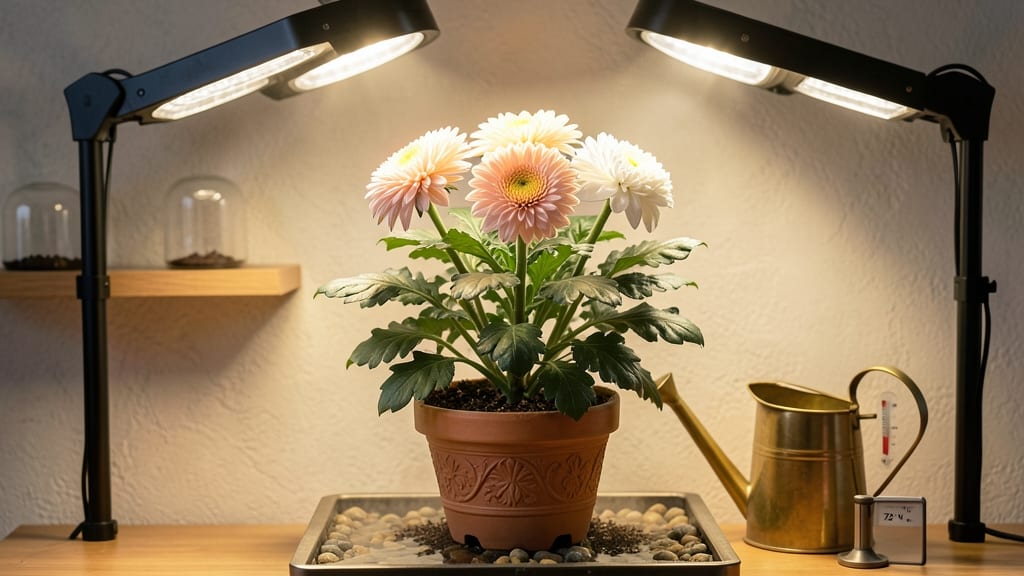
Mums (chrysanthemums) can survive indoors with proper care, but they thrive best in bright, indirect light and cooler temperatures. Use grow lights if natural light is limited, maintain humidity, and repot annually for optimal growth and blooming.
Indoor mums need bright, indirect sunlight for at least 6 hours daily—think east or north-facing windows. 🌿 Without enough light, they'll grow leggy and stop blooming. I've found that supplementing with LED grow lights (12-14 hours/day) during winter months makes all the difference, especially in dimmer spaces.
These plants also prefer cooler temps between 60-65°F, so avoid placing them near heaters or in stuffy rooms.
Humidity is another key factor—mums hate dry air. A pebble tray with water or a small humidifier nearby can work wonders. And don't forget to repot every 1-2 years to refresh the soil and give roots room to grow. With these adjustments, you can enjoy vibrant blooms indoors for years!
💡 In This Article
- Indoor Light and Temperature Needs for Mums
- Step-by-Step Indoor Mum Care Guide
Indoor light and temperature needs for mums
Mums (chrysanthemums) are photoperiod-sensitive plants, meaning their blooming cycles are triggered by daylight length and light spectrum.
For indoor success, they need 12-14 hours of light daily, with a focus on the blue and red wavelengths (400-500nm and 600-700nm) that drive photosynthesis and flowering. 🌞 Without this light exposure, mums enter a dormant state or produce weak, sparse blooms.
South-facing windows provide the most natural light, but east or west exposures work too—just avoid harsh midday sun that can scorch delicate leaves.
The ideal temperature range for indoor mums is 60-65°F during the day and 55-60°F at night. These plants originate from East Asia where they experience cool autumn temperatures, which is why they bloom best when mimicking these conditions indoors. Heat above 70°F stresses mums, causing leaf drop and bud abortion.
I've noticed that placing them near draft-free windows (but not in direct airflow) helps maintain stable temperatures. 🌡️ For winter care, keep them away from radiators or vents—consistent warmth is more important than occasional heat spikes.
Light intensity matters just as much as duration. Mums need 1,000-2,000 foot-candles of light (measured 12 inches from the plant) to thrive. In dimmer spaces, LED grow lights with a 6500K color temperature (cool white) are perfect supplements.
Position lights 6-12 inches above the plant and keep them on for 14 hours/day during winter months. The key is consistency—sudden light changes can confuse the plant's internal clock and delay flowering.
Temperature fluctuations also trigger dormancy. When indoor temps drop below 55°F for extended periods, mums may shed leaves to conserve energy.
This is normal behavior, but you can prevent it by using a small space heater (set to 60°F) during cold snaps. 🌬️ For summer months, aim for 65-70°F and increase humidity to 50-60% using a pebble tray or humidifier.
The right balance keeps mums actively growing year-round rather than going dormant.
One common mistake is assuming mums can adapt to any indoor light. In reality, they'll stretch toward light sources (etiolation) if conditions are too dim, resulting in weak stems and small leaves.
I've seen mums grow 2-3 feet tall indoors when deprived of proper light, compared to their 1-2 foot ideal height. This leggy growth makes them top-heavy and prone to falling over. The solution?
Rotate your plant weekly to ensure even light exposure and consider using reflective surfaces (like white walls or aluminum foil) to maximize light distribution.
Seasonal adjustments are crucial too. During autumn (their natural blooming season), extend light exposure to 14-16 hours/day to encourage flowering. In spring and summer, reduce to 12 hours/day to mimic outdoor conditions.
This light manipulation tricks mums into thinking it's always autumn, their preferred blooming season. 🌸 The result? Continuous (though smaller) blooms throughout the year instead of just one seasonal flush.