
Advice
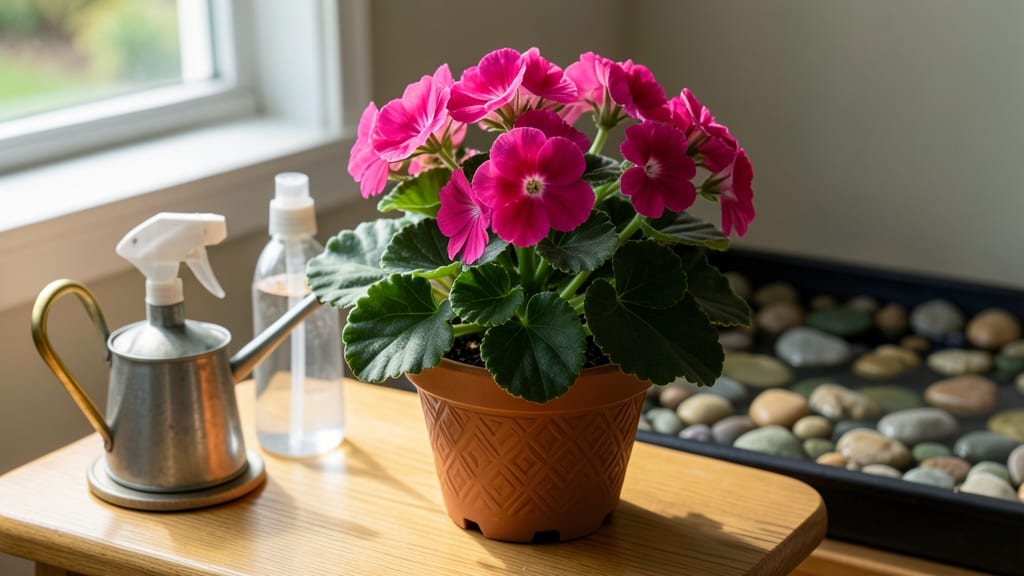
Geraniums can live indoors but struggle long-term due to low light and humidity, requiring bright indirect sunlight, well-draining soil, and consistent moisture. Varieties like Pelargonium (zonal or ivy geraniums) adapt better than outdoor types.
Indoor geraniums need bright, indirect light for at least 6 hours daily—think east-facing windows or grow lights—since they originate from sunny Mediterranean climates. 🌿 Without enough light, leaves turn pale or leggy, and blooms become sparse.
I've found that placing them near south-facing windows with sheer curtains works best, while north-facing spots usually fail. The key is replicating their natural habitat's intensity without direct sunburn, which can scorch delicate foliage.
Even with proper light, indoor air tends to be too dry for geraniums, which thrive in 50-70% humidity. Most homes fall below 40%, causing brown leaf edges and stunted growth. A simple pebble tray with water beneath the pot or a small humidifier nearby can make a huge difference.
I've seen geraniums last twice as long indoors when humidity is managed consistently.
💡 In This Article
- Indoor Geranium Survival: Light, Temperature, and Humidity Needs
- Best Indoor Geranium Varieties and Container Care Tips
Indoor geranium survival: light, temperature, and humidity needs
Geraniums originate from the Mediterranean region, where they bask in 8-10 hours of direct sunlight daily and thrive in temperatures between 60-75°F. Indoors, most homes can't replicate this environment, which is why they struggle.
The biggest challenge is light deprivation—indoor light levels typically provide only 10-20% of the sunlight geraniums need.
This causes a process called etiolation, where stems elongate and leaves grow pale as the plant stretches toward any available light source. 🌿 Without intervention, this leads to weak stems that can't support the plant's weight, causing it to flop.
Temperature fluctuations also play a critical role. While geraniums tolerate 50-80°F ranges, indoor heating systems often create dry air and sudden temperature swings near windows. Drafts from AC vents or cold windows in winter can drop leaf temperatures below 55°F, shocking the plant and causing leaf drop.
I've noticed that placing geraniums 3-4 feet away from windows (not touching glass) helps maintain stable temperatures while still providing adequate light. For extra protection, a sheer curtain acts as a thermal buffer against temperature extremes.
Humidity becomes the silent killer for indoor geraniums. Their natural habitat has 50-70% relative humidity, but most homes maintain 30-50%—especially in winter when heating systems run.
When humidity drops below 40%, geranium leaves begin to lose moisture through a process called transpiration, leading to crispy edges and leaf curl.
A simple solution is to place the pot on a pebble tray filled with water and pebbles—this creates a microclimate with 60-70% humidity around the plant without overwatering the soil. 💧 I've found this method extends geranium life indoors by 4-6 weeks compared to no humidity control.
For those without ideal windows, grow lights become essential. LED grow lights with a 6400K color temperature (full spectrum) should be placed 6-12 inches above the plant for 12-14 hours daily. Unlike sunlight, artificial light can be precisely controlled, eliminating the risk of sunburn while providing consistent energy.
I recommend starting with 8 hours of light daily and gradually increasing to 12 hours over two weeks to avoid shocking the plant. The light should be positioned to cover the plant's entire canopy evenly.
Temperature management also requires attention to seasonal changes. In summer, indoor geraniums near south-facing windows can experience heat stress above 80°F, while winter drafts near north-facing windows can drop temperatures below 50°F.
The solution is simple: rotate pots quarter-turn weekly to ensure even growth, and avoid placing them directly on cold floors or near heat vents.
A thermometer placed near the plant helps monitor conditions—aim for 65-75°F consistency. 🌡️ During winter, a small space heater on the lowest setting near the plant (but not touching) can prevent cold stress.
When all these factors align, you'll notice healthier geraniums with darker green leaves, fewer leggy stems, and more frequent blooming. The key is consistency—geraniums respond best to stable conditions rather than occasional fixes.
For example, a single day of high humidity won't reverse weeks of dry air damage. Regular monitoring and small adjustments make all the difference in keeping these plants thriving indoors for months rather than weeks. ✨