
Container Gardens
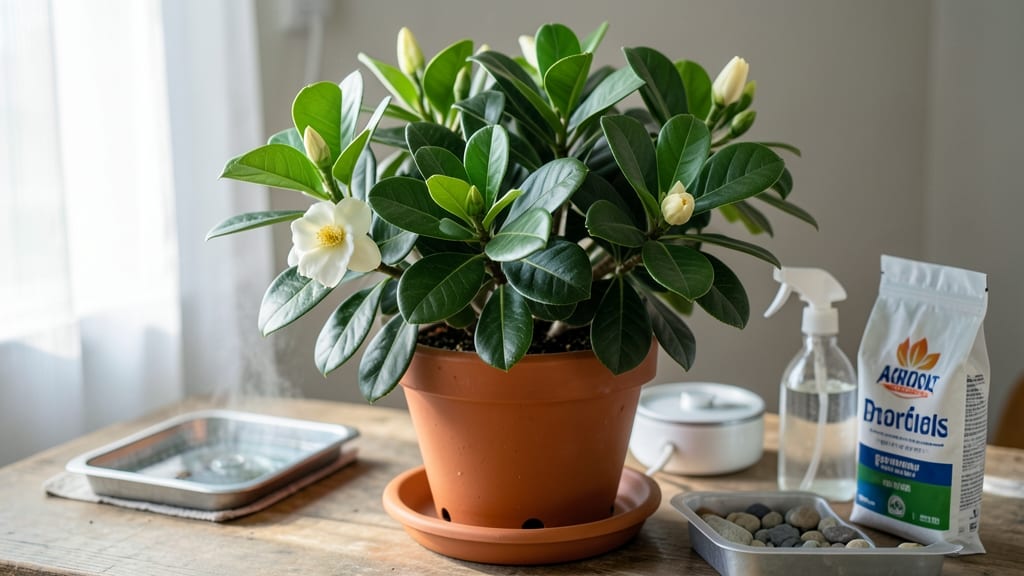
Gardenias can be grown indoors when you provide bright, indirect light for 6+ hours daily, maintain high humidity (60%+), and keep temperatures steady between 65–75°F. Use well-draining soil and water regularly, but never let the roots sit in soggy conditions to avoid rot.
Growing gardenias indoors is absolutely possible with the right setup—these fragrant beauties just need a few key adjustments to thrive inside. 🌿 The biggest challenge is replicating their natural tropical environment, which means investing in a good humidifier or pebble tray system to keep those leaves lush.
I’ve found that placing your plant near an east-facing window gives it the perfect balance of morning sun without harsh afternoon rays that can scorch the delicate foliage.
Another pro tip: If your home tends to stay dry, misting the leaves daily can make a world of difference. Just be mindful of the soil—gardenias hate soggy roots, so always check the top inch before watering again.
With these tweaks, you’ll be rewarded with those iconic white blooms and that intoxicating scent all year round.
💡 In This Article
- Indoor Lighting Requirements for Gardenias
- Humidity and Temperature Tips for Thriving Indoor Gardenias
Indoor lighting requirements for gardenias
Gardenias thrive on bright, indirect light because their natural habitat in tropical forests receives dappled sunlight through dense canopies. In indoor settings, this translates to 6-8 hours daily of light at a distance of 2-3 feet from a south- or west-facing window.
Direct sunlight, especially midday rays, can scorch leaves by causing photodamage—visible as crispy brown edges or bleached patches. 🌿 The ideal light intensity is around 1,000-2,000 foot-candles, similar to the glow of a well-lit office but without harsh shadows.
Artificial grow lights become essential during winter months or in north-facing homes. LED grow lights with a 5,000-6,500K color temperature (cool white spectrum) mimic natural daylight and should be placed 6-12 inches above the plant for 12-14 hours daily.
I’ve seen gardenias under these lights produce buds in just 8-10 weeks when combined with proper humidity—proof that artificial light can compensate for seasonal light deficits. For comparison, a standard household bulb provides only 300-500 foot-candles, far too weak for sustained flowering.
Positioning matters just as much as intensity. Rotate your plant quarter-turns every 2-3 weeks to prevent lopsided growth from leaning toward the light source. I noticed my gardenia developed a permanent tilt toward a west window until I started rotating it—now it stands upright with even foliage distribution.
The key is to balance light exposure across all leaves, ensuring no single side becomes overly shaded while others bake. This symmetry isn’t just aesthetic; it promotes even photosynthesis, which directly supports bud formation.
Watch for these light-related stress signals: Yellowing leaves indicate too much direct sun, while dark green but sparse foliage means insufficient light. If buds form but fail to open, your plant likely needs more light intensity or longer photoperiod.
Gardenias are particularly sensitive to light deprivation during their 6-8 week flowering cycle, so maintaining consistent light levels is critical. 💡 A simple trick is to place your plant near a bathroom window—steamy mirrors after showers create a natural humidity boost while the light stays bright.
For those with limited natural light, consider a south-facing window with sheer curtains—this diffuses harsh rays while maximizing exposure. In extreme cases, supplement with a full-spectrum grow bulb (like Philips Hue Bloom) that replicates sunlight’s spectrum.
The investment pays off when you see those first white blooms appear, often within 3-4 months of proper light management. Remember: gardenias won’t tolerate dim corners or fluorescent office lighting—they demand the same quality light they’d receive under a tropical canopy.