
Plants
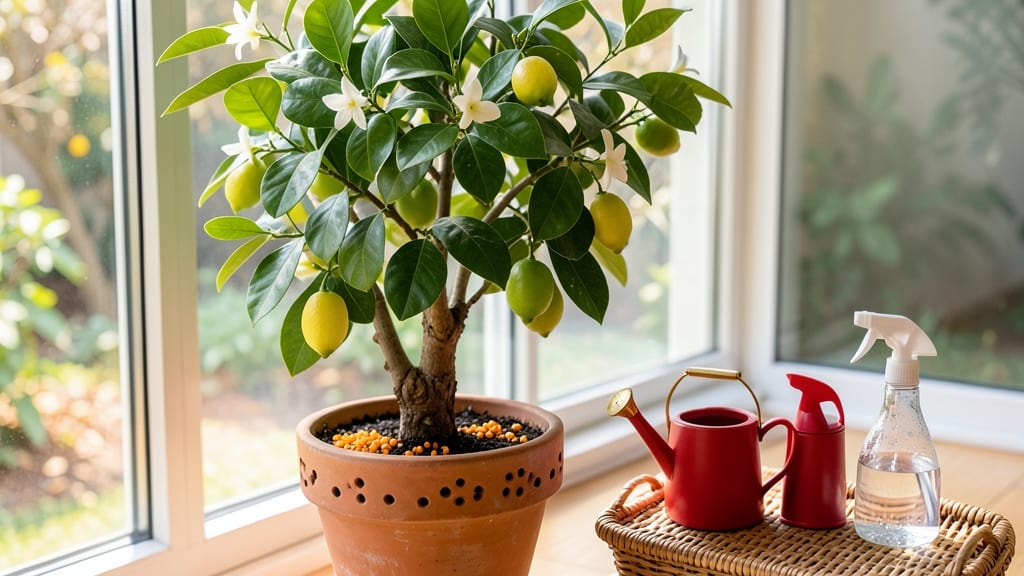
You can grow a lemon tree indoors successfully by selecting dwarf varieties like Meyer lemons, ensuring they receive at least 6 hours of bright light daily, using well-draining soil, and maintaining consistent moisture. Fruit production may take 2-5 years, but attentive care yields healthy growth in containers.
Indoor citrus growing has become surprisingly popular, and lemon trees are among the easiest to cultivate inside. 🌱 The key to success lies in choosing the right variety—Meyer lemons, for example, are hardier and more adaptable than their outdoor counterparts.
These compact trees thrive in containers, making them perfect for apartments or sunrooms. Beyond selecting the proper variety, proper light exposure is non-negotiable; without sufficient sunlight, your tree will struggle to produce fruit or even maintain healthy foliage.
I've found that supplementing natural light with a grow bulb during winter months can make all the difference in preventing leggy growth.
What often surprises beginners is how much patience indoor lemon trees require. While they may look lush and green within months, the first fruits typically appear only after 2-3 years of consistent care.
This waiting period makes it crucial to establish proper watering routines early—overwatering is a common mistake that leads to root rot, while underwatering causes leaf drop. The right balance ensures steady growth and eventually, that first sweet citrus harvest from your living room.
💡 In This Article
- Best Indoor Lemon Tree Varieties for Small Spaces
- Indoor Lemon Tree Care: Light, Watering, and Pruning Guide
Best indoor lemon tree varieties for small spaces
The Meyer lemon stands out as the gold standard for indoor growing due to its compact size and adaptability. Unlike outdoor varieties, Meyer lemons grow on dwarf rootstock that keeps mature trees between 3-6 feet tall—ideal for containers.
Their hybrid nature (Citrus meyeri) makes them hardier, tolerating indoor temperatures down to 40°F without permanent damage. The fruit itself is sweeter than standard lemons, with a thinner skin that's easier to peel, perfect for indoor harvests.
Eureka and Lisbon lemons, while popular outdoors, require more space and care indoors. These varieties need 8+ feet of height at maturity and produce larger, more acidic fruit that's better suited for commercial use. Their rootstock isn't dwarfed, so they'll outgrow most indoor spaces within 3-5 years.
The key difference lies in their growth habits: Meyer lemons develop a bushier form, while Eurekas grow more upright—critical when choosing based on your room layout and sunlight direction.
Rootstock selection determines everything from size to disease resistance. Meyer lemons are typically grafted onto trifoliate orange rootstock, which provides cold tolerance and compact growth. This rootstock also helps prevent the tree from becoming too top-heavy with fruit, reducing the risk of container tipping.
For beginners, this means less structural support needed and fewer pruning challenges compared to trees grown from seed, which often develop weak root systems and unpredictable growth patterns.
Fruit production varies dramatically between varieties. Meyer lemons can bear fruit within 2-3 years of planting, while Eurekas may take 5+ years to produce meaningful yields indoors. The trade-off? Meyer lemons have smaller fruit (about 2-3 inches in diameter) but higher sugar content.
This makes them more suitable for fresh eating or garnishes, whereas Eureka lemons produce larger fruit better suited for juicing—though their acidity may overwhelm indoor growers' expectations.
Consider your space's microclimate when selecting. A south-facing window with 6+ hours of direct sunlight will suit all varieties, but east-facing windows may only work for Meyer lemons. Their ability to tolerate lower light levels (though not as well as fruit production) makes them the most forgiving choice.
For rooms with limited natural light, a full-spectrum grow light on a 12-hour daily cycle becomes essential—especially during winter when daylight hours shrink dramatically.
One often-overlooked factor is fragrance. Meyer lemons emit a stronger citrus aroma than other varieties, which can be a pleasant bonus in kitchens or sunrooms. The scent intensifies when the tree flowers, creating a natural air freshener effect.
This sensory benefit, combined with their disease resistance, makes Meyer lemons the clear winner for most indoor growers looking for both practicality and enjoyment.