
Container Gardens
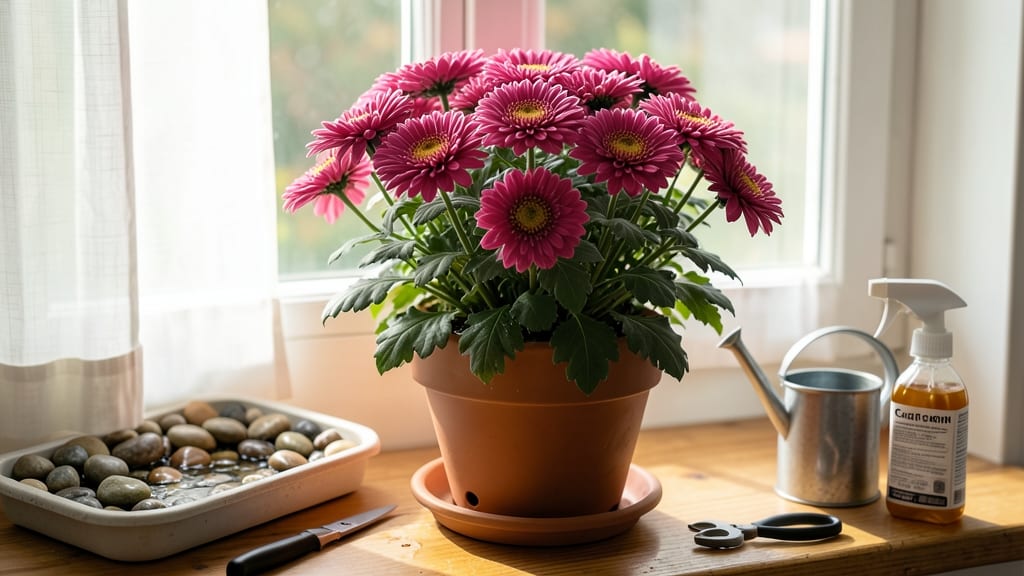
Wintering mums indoors means providing bright indirect light, maintaining temperatures between 50–60°F, and keeping moderate humidity to prevent wilting or dormancy. Gradually acclimate them to indoor conditions and avoid drafts or sudden temperature shifts.
Indoor mum care hinges on replicating their natural outdoor conditions.
Bright indirect light is crucial because mums need 12–14 hours of light daily to sustain their energy reserves, and direct sunlight can scorch their leaves. 🌿 I’ve found that east- or west-facing windows work best, but supplement with a grow light if natural light falls short.
The 50–60°F temperature range mimics their dormancy period, preventing stress or premature blooming, while moderate humidity (around 40–50%) keeps their foliage from drying out. These factors work together to create the ideal balance for overwintering success.
Start transitioning mums indoors before the first frost—typically in late fall—by placing them in a sheltered spot like a garage or porch for a few days to harden them off.
Once inside, inspect for pests like spider mites and adjust watering to every 1–2 weeks, letting the soil dry slightly between waterings. Avoid placing them near heating vents or cold drafts, as sudden temperature swings can shock the plants.
💡 In This Article
- Optimal Light, Temperature, and Humidity for Indoor Mums
- Step-by-Step Guide to Transitioning Mums Indoors
Optimal light, temperature, and humidity for indoor mums
Mums thrive indoors when their light needs are met through a process called photosynthesis optimization. These plants require 12–14 hours of bright indirect light daily to maintain chlorophyll production—the green pigment that converts light into energy.
Without enough light, mums enter a state of dormancy or develop weak, leggy stems.
East- or west-facing windows provide the ideal spectrum of light, but if your space lacks natural light, supplement with a grow light (LED or fluorescent) placed 6–12 inches above the plants for 12–14 hours per day. 💡 The key is avoiding direct sunlight, which can cause leaf burn due to excessive UV exposure.
The 50–60°F temperature range is critical because it mimics the natural dormancy period mums experience outdoors in winter. At temperatures below 50°F, the plants may struggle to absorb nutrients, while anything above 60°F can trigger premature blooming or stress.
This range also slows metabolic processes, helping the plants conserve energy. Place your mums in a spot away from heating vents or cold drafts—sudden temperature swings can cause shock, leading to wilting or leaf drop. A consistent environment is key to their survival.
Humidity plays a lesser-known but vital role in preventing leaf desiccation. Mums prefer 40–50% humidity, which you can achieve by grouping plants together or using a humidity tray filled with pebbles and water. Low humidity causes the edges of leaves to brown, a sign of moisture loss.
If your home is particularly dry (common in winter due to heating), consider using a small humidifier near the plants. 🌧️ The goal is to replicate the moisture levels they experience outdoors, where dew and morning fog naturally maintain humidity.
Another critical factor is the soil's moisture balance. Overwatering in winter can lead to root rot, while underwatering causes stress. Water only when the top 1–2 inches of soil feel dry, typically every 1–2 weeks.
The cooler indoor temperatures slow water evaporation, so less frequent watering is needed. Always use well-draining soil and pots with drainage holes to prevent waterlogging, which can suffocate roots and lead to fungal issues.
To mimic natural seasonal cues indoors, reduce fertilization to every 6–8 weeks during winter. Over-fertilizing can burn roots and encourage weak growth. Instead, focus on providing the right balance of light, temperature, and humidity.
These factors work synergistically—bright light fuels photosynthesis, stable temperatures reduce stress, and proper humidity keeps foliage healthy. Together, they create the ideal conditions for mums to survive and thrive indoors until spring.