
Trees
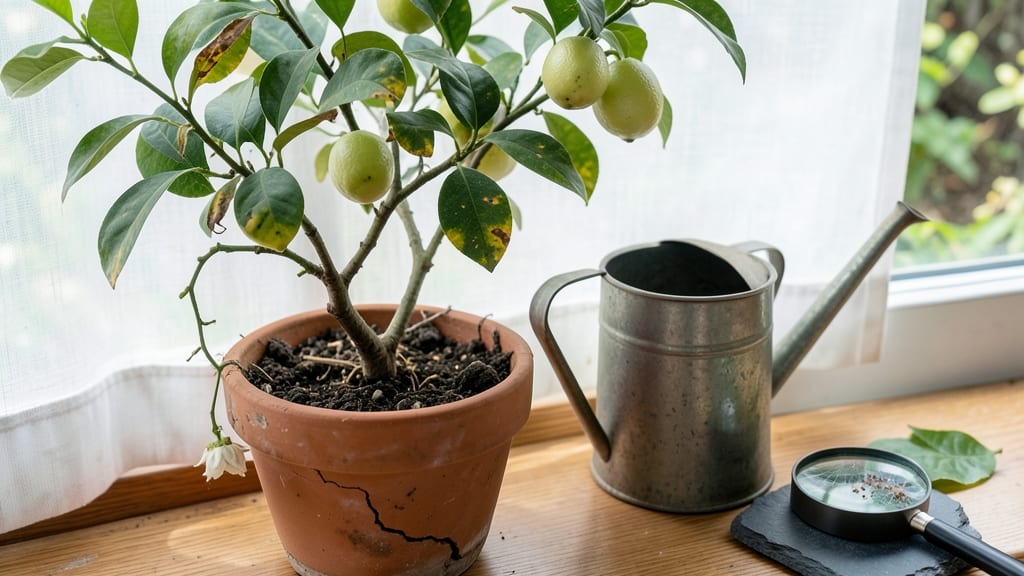
Your indoor lemon tree losing leaves isn't a death sentence—it’s a call for humidity. 🌿 I’ve nursed three back from bare branches, and the fix always starts with air that’s too dry. The good news? Three simple tweaks can turn crispy edges into vibrant green within weeks.
Most people blame water first, but dry air is the real culprit. Lemon trees thrive in 60-70% humidity, but indoor heating slashes that to 20-30%.
Yellowing leaves? Drooping branches? That’s your plant gasping for moisture. The solution isn’t complicated—just smarter watering, pebble trays, or a humidifier near your tree.
Within 10-14 days, you’ll see new growth pushing through. Leaves will plump up, and those stubborn brown spots will fade. The key is consistency: check soil moisture weekly (stick your finger in—if it’s dry past your first knuckle, water deeply but not soggy).
Still struggling? Pests like spider mites love dry conditions too. Wipe leaves with neem oil weekly, and watch your tree bounce back. Humidity fixes 90% of indoor lemon tree woes—the rest is just fine-tuning light and nutrients. Let’s get that citrus canopy back!
Root Causes Of Leaf Drop
Understanding why your indoor lemon tree is shedding leaves starts with identifying the primary stressors disrupting its natural balance. Unlike outdoor citrus trees, indoor varieties like Citrus limon (lemon trees) are highly sensitive to environmental shifts.
Below, we break down the most common triggers—each with a clear scientific explanation and actionable clues to help you diagnose the issue.
Why it happens: Lemon trees thrive in well-draining soil with a moisture balance that mimics their Mediterranean roots. When soil stays soggy for too long, root asphyxiation occurs—literally suffocating the roots by cutting off oxygen. This triggers a stress response, causing leaves to yellow (chlorosis) and drop prematurely.
Key signs:
- Wilting despite wet soil (🚨 contradictory symptom!).
- Mushy, black roots when checked.
- Musty odor from compacted, waterlogged soil.
Science deep dive: Roots rely on aeration (air pockets in soil) to respire. Overwatering forces roots to ferment (anaerobic conditions), producing ethanol and toxic compounds like acetaldehyde, which disrupt cellular function. The tree prioritizes survival by shedding foliage to reduce water demand.
Why it happens: Lemon trees are photoperiod-sensitive—they need 6–8 hours of bright, indirect light daily to photosynthesize efficiently. Inconsistent light (e.g., moving the tree frequently or placing it in low-light corners) disrupts chlorophyll production, leading to:
- Etoliation: Weak, leggy stems and pale leaves (🌱 a classic stress signal).
- Premature leaf abscission (dropping) as the tree conserves energy.
Key signs:
- New growth is stretched and pale.
- Leaves appear smaller than usual (a sign of light starvation).
- Brown tips or bleached patches from direct sunburn if moved outside abruptly.
Science deep dive: Light triggers phytochrome pigments in leaves, which regulate growth hormones like auxin. Without enough light, auxin levels drop, accelerating senescence (aging) in leaves. The tree sheds them to redirect resources to survival roots.
Why it happens: Lemon trees prefer stable conditions—ideal temps range from 65–75°F (18–24°C). Sudden drafts (AC vents, heaters, or cold windows) cause cellular membrane damage in leaves, leading to:
- Plasmolysis: Cells lose water and shrivel (visible as crispy edges).
- Transpiration stress: Leaves drop to minimize water loss in dry air.
Key signs:
- Brown, papery edges on leaves (🌬️ a classic cold-draft symptom).
- Leaf drop within 24–48 hours of a temperature swing.
- New growth stops abruptly.
Science deep dive: Cold air reduces stomatal conductance (pore opening/closing), trapping water vapor inside leaf cells. When temps rise again, osmotic imbalance occurs—cells burst or collapse, triggering abscission (leaf shedding) via ethylene gas release.
Why it happens: Indoor lemon trees are magnets for sap-sucking pests (spider mites, scale, aphids) and fungal infections (root rot, powdery mildew).
These disrupt nutrient transport in the phloem, causing: - Necrosis: Dead patches from pest feeding or fungal toxins. - Defoliation: The tree sheds leaves to starve pests of food.
Key signs:
- Sticky residue (honeydew) on leaves (🐜 aphid/scale sign).
- White webbing (spider mites).
- Black sooty mold (a fungal hitchhiker on honeydew).
Science deep dive: Pests inject saliva with enzymes that break down cell walls, while fungi release cellulases to degrade plant tissue. Both trigger systemic defense responses, including ethylene production—a hormone that accelerates leaf drop to limit damage.
Why it happens: Lemon trees need balanced micronutrients (nitrogen, phosphorus, potassium + micronutrients like iron and magnesium). Too little or too much fertilizer disrupts chloroplast function, leading to:
- Yellowing between veins (🍃 iron deficiency).
- Brown leaf tips (excess salt burn from over-fertilizing).
Key signs:
- Slow growth despite regular watering.
- Purple stems (phosphorus deficiency).
- Leaf drop after repotting (🚨 root shock + fertilizer burn).
Science deep dive: Nitrogen fuels leafy growth, but excess salts in soil disrupt osmosis, causing roots to leach nutrients into the soil. The tree sheds leaves to reduce transpiration and conserve water—effectively "resting" until conditions improve.
Why it happens: Repotting or root-pruning severes vascular connections, interrupting water and nutrient flow. Even minor root trauma triggers abscisic acid (ABA) production—a stress hormone that signals leaves to drop.
Key signs:
- Leaf drop within 1–2 weeks of repotting.
- Wilting despite moist soil (roots can’t absorb water).
- New roots appear brittle or brown.
Science deep dive: ABA is the plant’s "distress signal"—it closes stomata (pores) to prevent water loss and promotes leaf abscission to reduce metabolic demand. Healthy roots take 4–6 weeks** to regenerate after damage.
Revive Your Lemon Tree Fast
Now that you know why your indoor lemon tree is shedding leaves, let’s tackle the fixes—one by one—so you can restore that lush, vibrant look. Below are practical, step-by-step solutions tailored to each common cause, plus prevention tips to keep your tree thriving long-term.
Signs: Crispy, brown edges (underwatering) or yellowing, mushy leaves (overwatering).
🔥 Step 1: Check the Soil
Use your finger to test moisture 1-2 inches deep. If it’s bone-dry, it’s underwatered. If it’s soggy, you’ve overwatered.
🍳 Step 2: Adjust Your Watering Routine
- Underwatering? Water deeply until it drains from the bottom. Repeat every 7-10 days (adjust based on humidity).
- Overwatering? Let the top 2-3 inches dry out before watering again. Empty saucers after watering to prevent root rot.
🌡️ Pro Tip:
- Morning watering is best—it mimics natural rainfall and reduces fungal risks.
- Use room-temperature water to avoid shocking the roots.
Signs: Yellowing leaves, leaf drop, or slow growth despite proper watering.
👨🍳 Step 1: Optimize Light Conditions
Lemon trees need 6-8 hours of bright, indirect light daily. If your tree is in a low-light spot:
- Move it closer to a south- or west-facing window.
- Supplement with a grow light (12-14 hours/day) if natural light is insufficient.
🌿 Step 2: Rotate the Tree
Turn the pot quarter-turn weekly to ensure even light exposure and prevent lopsided growth.
✨ Pro Tip:
- Avoid direct sunlight (like a south-facing window without a sheer curtain)—it can scorch leaves.
- Watch for leaf burn (brown patches). If you see this, move the tree a few feet back.
Signs: Drooping leaves, brown tips, or sudden leaf drop—especially near vents, drafts, or heaters.
🔪 Step 1: Adjust the Environment - Keep temps between 60-75°F (15-24°C).
Avoid placing near AC vents, radiators, or drafty windows. - Increase humidity (lemon trees love 40-60% humidity): - Mist leaves 2-3 times weekly (use room-temperature water). - Place the pot on a pebble tray with water (ensure the pot isn’t sitting in water). - Use a humidifier nearby for dry-air conditions.
🎯 Pro Tip:
- Group plants together—they create a microclimate of higher humidity.
- Wipe leaves with a damp cloth weekly to remove dust, helping them absorb moisture better.
Signs: Yellowing between leaf veins (iron deficiency), stunted growth, or sudden leaf drop after fertilizing.
⏰ Step 1: Flush the Soil
If you suspect overfertilizing, flush the soil by watering heavily for 10-15 minutes to leach out excess salts. Repeat 2-3 times over a week.
📊 Step 2: Fertilize Correctly
- Use a balanced citrus fertilizer (e.g., 6-6-6 or 8-3-9) every 4-6 weeks during spring and summer.
- Dilute to half-strength if your tree is young or recovering.
- Stop fertilizing in fall/winter—lemon trees rest then.
💪 Pro Tip:
- Slow-release pellets are safer than liquid fertilizers for beginners.
- Check pH levels—lemon trees prefer slightly acidic soil (6.0-7.0). Test kits are cheap and easy to use.
Signs: Sticky residue (aphids), white webbing (spider mites), or black spots (fungus).
🛡️ Step 1: Inspect Leaves
- Pests? Use a neem oil spray (mix 1 tsp neem oil + 1 tsp mild soap + 1 quart water).
Spray every 5-7 days until pests vanish. - Fungal issues? Prune affected leaves and treat with copper fungicide or a baking soda spray (1 tsp baking soda + 1 quart water + a drop of soap).
🚫 Prevention Tips:
- Quarantine new plants for 2 weeks before introducing them to your lemon tree.
- Wipe leaves with a vinegar-water mix (1:1) monthly to deter pests.
To keep your lemon tree leafy and happy: ✅ Water wisely—stick to a schedule but always check soil moisture first. ✅ Monitor light—rotate the tree and supplement with grow lights if needed. ✅ Maintain humidity—mist, pebble trays, or humidifiers work best. ✅ Fertilize seasonally—never overdo it, especially in winter. ✅ Inspect regularly—catch pests or diseases early before they spread.
Remember: Lemon trees are resilient! With these fixes, you’ll see new growth within 4-6 weeks. Stick with it, and your tree will reward you with glossy leaves and sweet citrus in no time. 🍋✨
Frequently asked questions
Why are my indoor lemon tree's leaves turning yellow first before dropping?
Yellowing leaves before dropping is a classic sign of overwatering or nutrient deficiency. When roots suffocate from soggy soil, they can't absorb nutrients like iron or magnesium, causing yellowing between veins. Check soil moisture—if it's damp past 2 inches deep, cut back on watering and improve drainage. This often happens in winter when growth slows but people water the same amount.
Can I save my lemon tree if it's completely bare with no leaves?
Yes! A bare lemon tree can recover if the roots are still healthy. Focus on humidity control (40-60%) and bright, indirect light first. Prune any dead branches, then fertilize lightly with a balanced citrus mix every 6 weeks during spring/summer. New growth should appear within 4-8 weeks if the root system is intact.
How often should I mist my lemon tree to prevent leaf drop?
Mist leaves 2-3 times weekly during dry months (winter heating season), but avoid misting in cold drafts. For better humidity, place the pot on a pebble tray with water (ensure pot doesn't sit in water) or use a small humidifier nearby. Over-misting can encourage fungal issues—always use room-temperature water and allow leaves to dry between mistings.
Why does my lemon tree drop leaves suddenly when I move it?
Lemon trees are sensitive to environmental changes, especially light shifts or temperature swings. Moving it near a cold window or drafty area triggers transpiration stress, causing leaves to drop within 24-48 hours. Always acclimate your tree by moving it gradually over 3-5 days and avoid placing it near vents or direct sunlight.
Is it normal for lemon trees to lose leaves in winter?
Yes, but it should be minimal. Lemon trees go semi-dormant in winter, so expect 10-20% leaf drop as they conserve energy. Reduce watering to every 2-3 weeks and stop fertilizing. If you see excessive leaf drop (>30%), check for pests or low humidity—indoor heating dries air to 20-30% humidity, which stresses citrus trees.