
Tools
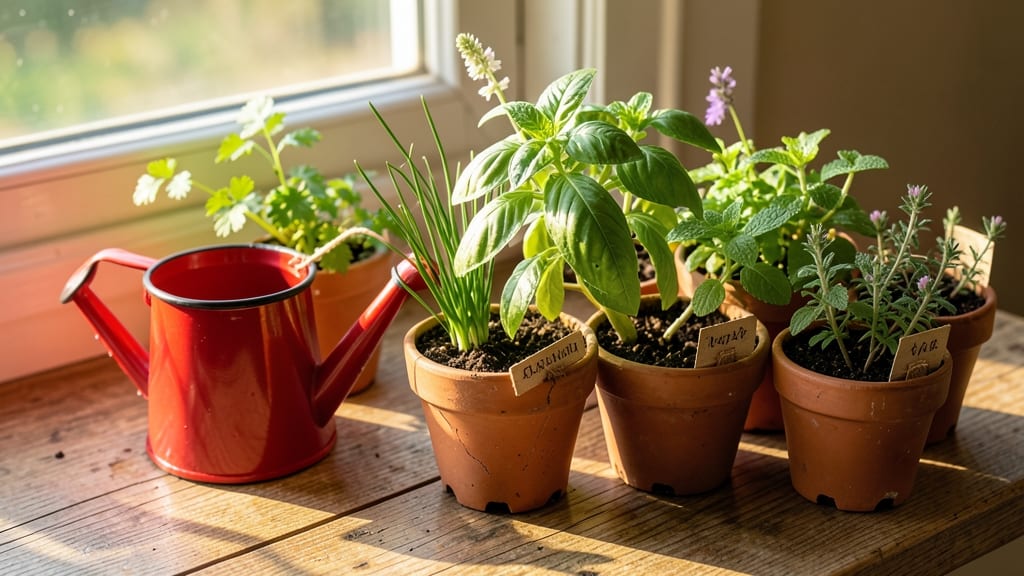
An indoor herb garden windowsill transforms your kitchen from a place that buys wilted basil to one where you snip fresh leaves anytime. 🌿 I’ve grown herbs this way for years—starting with just a single pot of basil that outlasted every store-bought bunch I’d ever bought.
The secret isn’t fancy equipment; it’s sunlight, the right soil, and knowing exactly when to water (hint: less than you think).
You’ll need 3-5 small pots (4–6 inches wide), well-draining soil mix, and herbs that thrive in containers—basil, parsley, chives, and mint are the easiest starters. Place them on a south- or west-facing windowsill where they get 4–6 hours of sunlight daily.
Overwatering is the #1 killer, so let the top inch of soil dry before watering again. A spray bottle keeps humidity up for delicate herbs like cilantro.
Within 2–3 weeks, you’ll see lush green growth, and by 4–6 weeks, you’ll be harvesting enough basil for pesto or parsley for garnishes. The smell alone—fresh, bright, and herbaceous—makes the effort worth it. No more sad grocery store herbs; just year-round freshness with minimal space.
This setup works for any kitchen, from tiny apartments to sprawling homes. Swap herbs seasonally (try dill in summer, thyme in winter) and watch your cooking transform. Ready to grow? Let’s get those herbs thriving!
📚 In This Guide
- What you need
- Instructions
- Tips and common mistakes
- Wrapping up and next steps
What you need
- ● Containers: 3–6 small pots (4–6 inches in diameter) with drainage holes
- ○ Optional: Self-watering planters or hanging pots for space-saving
- ● Growing Medium: High-quality potting mix (avoid garden soil—it compacts)
- ○ Optional: Perlite or vermiculite (10–20%) for aeration
- ● Herb Starters: Young herb plants (basil, mint, parsley, thyme, or cilantro) or seeds
- ● Pro tip: Buy organic seedlings for faster growth! 🌱
- ● Tools: Small trowel or spoon for planting
- ● Spray bottle (for gentle watering)
- ● Measuring cup (for soil mix)
- ● A sunny windowsill (south-facing ideal, 4–6 hours of light daily)
- ● Access to clean water (room temperature, not chlorinated)
- ○ Optional: Grow lights (LED, 12–16 hours/day) for low-light windowsills
- ○ Optional: Fertilizer (balanced liquid or slow-release pellets)
How to create a thriving windowsill herb garden
Sunny windowsills transform into productive herb gardens with the right setup—here's how to make it happen.
🪴 Step 1: Choose the Right Containers and Window
Select containers with drainage holes—6-inch diameter pots work perfectly for 4 plants. I prefer terracotta because it breathes and regulates moisture better than plastic. Place your herbs on a south- or west-facing windowsill where they’ll receive at least 6 hours of direct sunlight daily.
If your window doesn’t get enough light, supplement with a grow light positioned 6 inches above the plants. You’ll know your window is ideal when basil leaves stay vibrant green and parsley doesn’t stretch toward the glass.
🌱 Step 2: Prepare Soil and Plant Your Herbs
Fill each pot with a high-quality potting mix (never garden soil—it compacts too easily). Add a handful of perlite to improve drainage, then moisten the mix until it feels like a damp sponge. Press it down gently but don’t pack it tightly—roots need room to spread.
Plant your herbs at the same depth they were in their nursery pots. Space them 3-4 inches apart to allow airflow, which prevents fungal diseases. Water thoroughly after planting, letting excess water drain completely from the bottom.
☀️ Step 3: Maintain Light, Water, and Humidity
Rotate your pots quarter-turn weekly so herbs grow evenly toward the light. You’ll notice leggy growth if they’re stretching—this means they need more light or a shorter distance to the window. Mist the leaves occasionally to maintain humidity, especially in dry indoor air.
Water when the top inch of soil feels dry. Overwatering is the biggest mistake—herbs like rosemary and thyme hate soggy roots. A good rule: if the soil still feels moist after 24 hours, wait before watering again.
✂️ Step 4: Prune and Harvest Regularly
Pinch off the tips of new growth to encourage bushier plants. This is especially important for basil and parsley, which grow tall and leggy without pruning. Harvest leaves in the morning when essential oils are most concentrated—just snip what you need, leaving at least half the plant intact.
Fertilize lightly every 4-6 weeks with a balanced liquid fertilizer diluted to half strength. You’ll see healthier growth and more robust flavor in your herbs when you keep up with this simple routine.
Tips & tricks for perfect windowsill herb gardens
Here's what nobody tells you about keeping your herbs thriving—these little details make all the difference.
Light Optimization: Your herbs need that 6 hours of direct sunlight daily, but don't assume all windows are equal. North-facing windows often get only indirect light—supplement with a grow light 6 inches above for 12-14 hours daily. I've seen basil turn yellow within days from insufficient light, so check your window's actual sun exposure with a light meter app if possible.
The Soil Secret: That "damp sponge" texture in Step 2 is crucial—too wet and roots suffocate, too dry and herbs wilt. For the 6-inch pots, I add a thin layer of pebbles at the bottom before the potting mix to create extra drainage space. This prevents the classic "soggy bottom" problem that kills herbs faster than anything else.
Pruning Strategy: When you pinch those growth tips in Step 4, don't just snip randomly—look for the top two sets of leaves on each stem. This encourages branching while keeping your herbs compact. I've found that regular pruning (every 2-3 weeks) actually makes basil and parsley more flavorful by stimulating new growth.
Fertilizer Timing: That 4-6 week fertilization schedule is perfect, but here's the pro move: split the dose into two applications—half when you plant and half at the 3-week mark. This gives your herbs a gradual nutrient boost without overwhelming them. I use fish emulsion diluted to ¼ strength for extra organic benefits, but any balanced liquid fertilizer works.
Pro Tips for Indoor Herb Garden Windowsill
- Here's what nobody tells you about keeping your herbs thriving—these little details make all the difference.
- Light Optimization: Your herbs need that 6 hours of direct sunlight daily, but don't assume all windows are equal.
- The Soil Secret: That "damp sponge" texture in Step 2 is crucial—too wet and roots suffocate, too dry and herbs wilt.
Frequently asked questions
about your indoor windowsill herb garden—because every gardener has a few burning questions!How much sunlight do herbs really need?
Most herbs thrive in 4–6 hours of direct sunlight daily. South-facing windowsills are ideal, but east or west works too. If your spot is dim, supplement with a grow light (12–16 hours/day). Leafy herbs like basil tolerate shade better than sun-lovers like rosemary or thyme.
How long does it take for herbs to grow?
Timing varies! Fast growers like cilantro or parsley sprout in 2–3 weeks, while slower ones (e.g., rosemary, oregano) take 4–6 weeks to mature. Harvest leaves as soon as they’re 2–3 inches tall to encourage bushier growth. Patience is key—herbs grow faster with consistent care!
Why are my herbs turning yellow or wilted?
Yellow leaves often mean overwatering (check soil moisture—it should be damp but not soggy). Wilting? Likely underwatering or root stress. Adjust your watering routine (every 2–3 days for most herbs) and ensure pots have drainage holes. Brown edges? That’s sunburn—move your herbs to a shadier spot temporarily.
Can I grow herbs in small pots or just cups?
Yes! Herbs like basil, chives, or mint do well in small pots (4–6 inches wide) or even repurposed cups (with drainage holes). Just ensure roots have room to spread—crowded herbs stress easily. For long-term growth, upgrade to 6–8 inch pots after 2–3 months. No drainage? Poke holes in the bottom or use a saucer with pebbles!
How do I harvest herbs without killing the plant?
Always harvest from the top or outer stems to encourage new growth. Use clean scissors or fingers to snip just above a leaf node (where new leaves sprout). For bushy herbs like thyme, trim 1/3 of the plant at a time. Avoid harvesting more than 1/4 of the plant at once—balance is key for a thriving windowsill garden!
Wrapping up and next steps
Starting an indoor herb garden on your windowsill is one of the simplest yet most rewarding ways to enjoy fresh, homegrown flavors year-round! 🌿 With just a few basic supplies and a sunny spot, you can transform your kitchen into a thriving green oasis—no green thumb required.
Whether you’re a seasoned gardener or a curious beginner, this project is perfect for bringing nature indoors while saving money and boosting your meals with vibrant, pesticide-free herbs.
Ready to dive in? Start small—pick one or two herbs to grow, gather your supplies, and let your windowsill garden become a daily source of joy (and delicious garnishes!). Happy growing! 🌱