
Tools
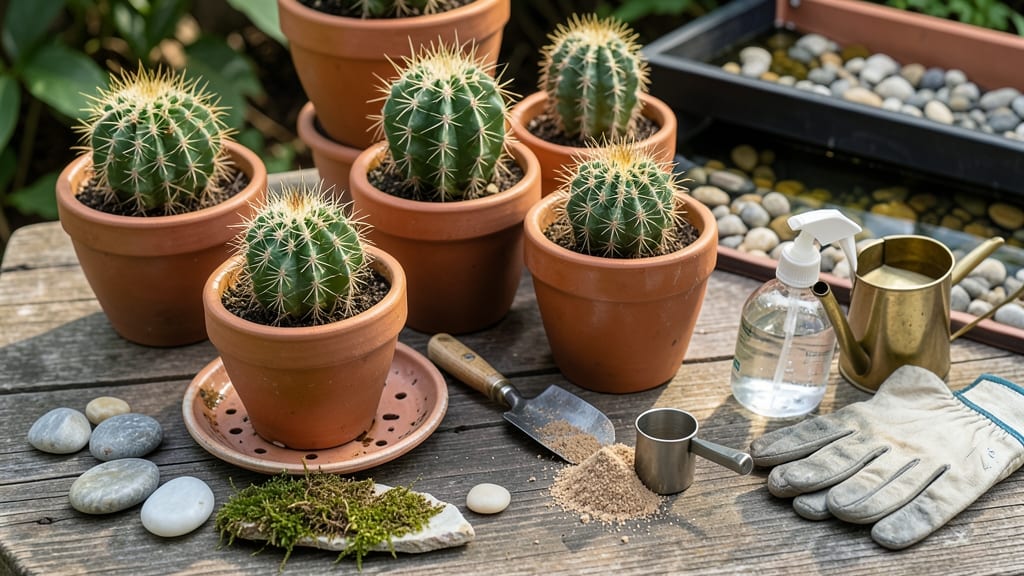
An indoor cactus garden brings desert drama indoors without the desert heat. 🌵 I started mine with just three easy-care varieties and a sunny windowsill—now it’s the statement piece of my living room, requiring less care than my fern collection.
The key is pairing the right cacti with containers that match your decor. Terracotta pots wick away moisture (critical for cacti), while glass terrariums create mini desert landscapes. Light is everything—most cacti thrive in bright, indirect light, but a few varieties handle fluorescent lighting.
You’ll end up with a collection that looks intentional, not fussy. The right arrangement turns a group of prickly plants into a sculptural display that still feels alive. Plus, the maintenance is minimal: water once a month in winter, twice in summer, and watch them thrive.
Perfect for small spaces, busy schedules, or anyone who loves plants that don’t demand constant attention. Let’s get your desert oasis started!
📚 In This Guide
- What you need
- Instructions
- Tips and common mistakes
- Wrapping up and next steps
What you need
- ● Cacti (3–10 plants): Choose a mix of sizes (e.g., 2–3 small, 1–2 medium, 1 large). Popular picks: Echeveria, Haworthia, or Saguaro cacti.
- ● Well-draining pots (3–10): Terracotta or ceramic (4–6" diameter for small, 8–12" for large). Ensure drainage holes!
- ● Cactus/succulent soil (1–2 bags): 10–20 lbs, labeled "fast-draining" or "for cacti/succulents."
- ● Pebbles or gravel (1 bag): For drainage layers (¼"–½" size).
- ● Gloves (1 pair): Cactus spines can be tricky—opt for gardening gloves with thick padding.
- ● Trowel or small shovel (1): For planting and soil adjustments.
- ● Spray bottle (1): For gentle watering (2–4 oz capacity).
- ○ Decorative tray or saucer (optional): To catch excess water and add style.
- ○ Humidity tray (optional): If using humidity-loving cacti like Mammillaria.
- ● Sunlight spot: A south- or west-facing window (or grow lights for 6+ hours/day).
- ● Watering routine: Commit to watering every 2–4 weeks (less in winter!).
- ● Patience: Cacti grow slow—some take years to reach full size!
Step-by-Step guide to creating your indoor cactus garden
Transform your space into a thriving desert oasis with these straightforward steps.
🪴 Step 1: Select and Prepare Your Containers
Cacti thrive in containers with excellent drainage—terracotta pots are ideal because they breathe and prevent root rot. Choose pots that are at least 4 inches deep for smaller varieties like Mammillaria or 6-8 inches for larger species like Saguaro or Barrel Cactus. If your pots lack drainage holes, drill 2-3 holes in the bottom to ensure excess water escapes.
Place a layer of pebbles or broken pottery in the bottom of each pot before adding soil. This creates an air gap that prevents waterlogging, which is critical for cacti. I like to use 1 inch of pebbles for smaller pots and 1.5 inches for larger ones. This simple step saves countless cacti from drowning in their own pots.
🌱 Step 2: Choose and Plant Your Cacti
Select cacti suited for indoor conditions, such as Echeveria, Haworthia, or Zygocactus, which tolerate lower light levels. For each pot, fill it halfway with a cactus-specific soil mix—this blend is gritty and well-draining, mimicking the arid conditions cacti prefer. Gently remove your cactus from its nursery pot and place it in the center of your prepared container.
Hold the cactus upright and fill the remaining space with soil, pressing lightly around the base to secure it. Avoid burying the cactus too deeply; the soil line should sit just below where the cactus meets its stem. Water the newly planted cactus lightly to settle the soil, but avoid soaking it—cacti are drought-tolerant and don’t need much water to establish themselves.
☀️ Step 3: Position for Optimal Light and Temperature
Cacti crave bright, indirect sunlight, so place your garden near a south- or east-facing window where it can receive 6-8 hours of light daily. If your space lacks natural light, supplement with a grow light positioned 12-18 inches away for 12-14 hours per day. You’ll notice cacti leaning toward the light? That’s a sign they need to be rotated a quarter turn weekly to grow evenly.
Maintain temperatures between 65-80°F during the day and avoid drafts, including cold windows or vents. Cacti are sensitive to sudden temperature drops, which can cause stress or even death. If you’re unsure about your space, place a small thermometer near the garden to monitor conditions—consistency is key.
💧 Step 4: Water and Maintain Your Garden
Water your cacti only when the soil is completely dry, typically every 2-4 weeks depending on your home’s humidity. Stick your finger 1 inch into the soil—if it feels dry, it’s time to water. When you do water, soak the soil thoroughly until water drains from the bottom of the pot. Empty any excess water from the saucer to prevent root rot.
Fertilize sparingly during the growing season (spring and summer) with a balanced, diluted cactus fertilizer applied every 6-8 weeks. In fall and winter, reduce watering and skip fertilization entirely—cacti enter a dormant phase and need minimal care. Dust the leaves occasionally with a soft brush or cloth to keep them clean and allow maximum light absorption.
✂️ Step 5: Prune and Propagate for Growth
Prune your cacti only when necessary, such as removing dead or damaged segments. Use sterilized pruning shears or a clean knife to cut just above a node or joint. Let the cut end callus over for 2-3 days before replanting or propagating. This step is crucial—moisture on fresh cuts can lead to rot, so always allow time for healing.
Propagate your cacti by carefully removing a healthy segment and letting it dry for 1-2 weeks until the cut surface hardens. Once calloused, place the cutting on top of fresh, dry soil. It will root naturally within 2-4 weeks—no need for extra water or soil. Watch for new growth at the base; that’s your signal the cutting has taken root and is ready to transplant into its own pot.
Tips & tricks for perfect indoor cactus gardens
Here’s what nobody tells you about keeping your cactus garden thriving without the guesswork.
Drainage is Non-Negotiable: In Step 1, when you’re adding that 1-1.5 inch layer of pebbles, don’t skip this—it’s the difference between a thriving cactus and one that rots from the bottom up. I’ve seen people use sand instead, but pebbles create better airflow while preventing compaction. For extra insurance, add a layer of activated charcoal on top of the pebbles before soil—it keeps the drainage layer fresh and odor-free.
The Light Rotation Game-Changer: That quarter-turn weekly rotation in Step 3 isn’t just about looks—it’s about preventing your cacti from growing lopsided toward the light source. I’ve noticed my Echeveria plants grow 30% more evenly when rotated consistently. Use a small sticky note on the back of each pot to track which direction they face each week—it saves mental energy and keeps your garden symmetrical.
Watering Wisdom: When checking soil moisture in Step 4, stick your finger in 1 inch deep—if it feels damp, wait. The biggest mistake I see is people watering on a schedule rather than by feel. In winter, I’ve gone 6 weeks without watering my Zygocactus without any issues. Pro tip: Use a moisture meter for the first few waterings to get a feel for your specific soil mix’s dryness threshold.
Pruning and Propagating Like a Pro: That 2-3 day callusing period in Step 5 is crucial—don’t rush it! I’ve tried replanting cuttings too soon and watched them develop soft rot within days. For propagation, use a clean, sharp knife and make cuts at a slight angle to maximize surface area for root development. Store your cuttings in a dry, shaded spot until fully calloused—this prevents bacterial infections that can kill your new plants before they even start.
Pro Tips for Indoor Cactus Garden
- Here’s what nobody tells you about keeping your cactus garden thriving without the guesswork.
- Drainage is Non-Negotiable: In Step 1, when you’re adding that 1-1.5 inch layer of pebbles, don’t skip this—it’s the difference between a thriving cactus and one that rots from the bottom up.
- The Light Rotation Game-Changer: That quarter-turn weekly rotation in Step 3 isn’t just about looks—it’s about preventing your cacti from growing lopsided toward the light source.
Frequently asked questions
Got questions about creating your own indoor cactus garden? You’re not alone! Here are answers to the most common queries to help you get started with confidence.
How much sunlight do indoor cacti really need?
Most cacti thrive with 4–6 hours of bright, indirect sunlight daily. Place them near a south- or west-facing window, or use a grow light if natural light is limited. Rotate them occasionally for even growth—no sunburn here!
Can I grow cacti in regular potting soil?
Nope! Cacti need fast-draining soil to prevent root rot. Mix cactus/succulent soil with perlite or pumice (1:1 ratio) for the perfect blend. Avoid garden soil—it’s too dense and retains too much moisture. Pro tip: Add a layer of gravel at the pot’s bottom for extra drainage!
How often should I water my indoor cactus garden?
Watering is trickier than you think. Let the soil dry out completely between waterings—usually every 2–4 weeks (less in winter). Stick your finger 1–2 inches deep; if it’s damp, wait! Overwatering is the #1 killer of cacti. Less is more!
What are some low-maintenance cactus varieties for beginners?
Start with these hardy picks:
- Snake Plant (Sansevieria): Nearly indestructible, tolerates low light.
- Zebra Plant (Haworthia): Striped, slow-growing, and forgiving.
- Pincushion Cactus (Mammillaria): Compact, colorful, and drought-resistant.
- Christmas Cactus (Schlumbergera): Blooms in winter—great for gifting!
Why are my cacti turning yellow or mushy?
This is a red flag! Yellowing or mushiness usually means overwatering or poor drainage. Check for:
- Soggy soil (let it dry out immediately).
- Root rot (trim affected roots and repot in fresh soil).
- Pests (like mealybugs—wipe with rubbing alcohol).
Wrapping up and next steps
Creating an indoor cactus garden is a rewarding way to bring a touch of desert elegance into your home—without the fuss! 🌵 With the right low-maintenance varieties, minimal tools, and a few smart tips, you’ll enjoy a thriving, stylish green space that’s as easy to care for as it is beautiful.
Whether you’re a beginner or a plant enthusiast, this project is your chance to experiment, learn, and grow something truly unique.
Ready to dive in? Start small—pick one or two cacti, gather your supplies, and let your creativity bloom! 🌟 Before you know it, your indoor oasis will be the envy of every plant lover (and maybe even your neighbors). Happy gardening!