
Container Gardens
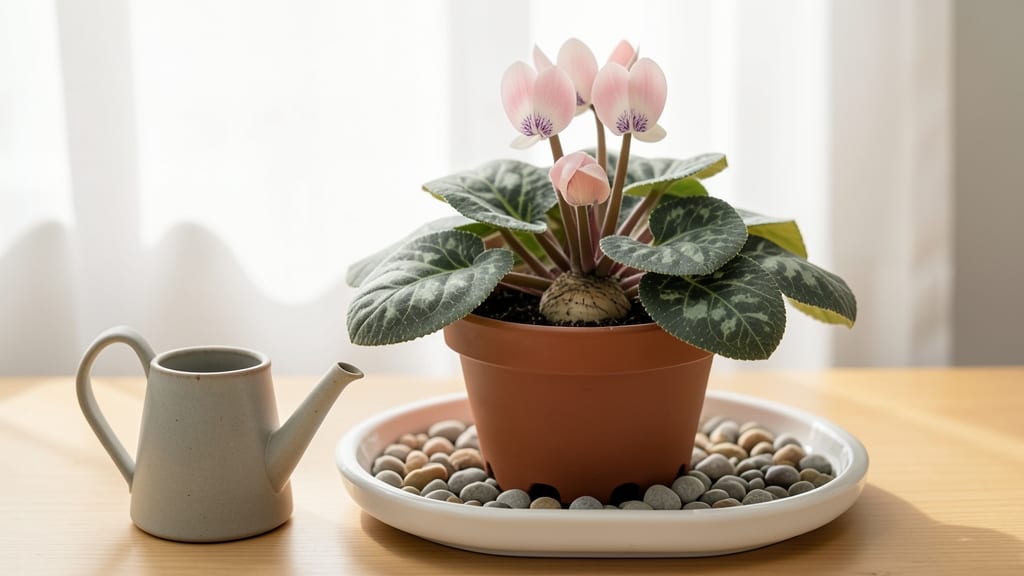
Cyclamen thrives indoors when you take care of them properly—bright but indirect light, like a north-facing window or a few feet from an east-facing one. 🌿 I’ve kept mine blooming for months by mimicking their woodland understory habits, and the secret is avoiding harsh afternoon sun that scorches their delicate leaves.
The key is consistent moisture—water from below so the tubers don’t rot, and let the top inch dry between waterings. Overwatering is the #1 killer, but underwatering sends them into dormancy faster than you’d think.
A humidity tray or pebble tray keeps those pretty leaves from crisping at the edges.
You’ll see new buds form within 4-6 weeks of proper care, and the blooms last for weeks if you deadhead spent flowers. The tubers store energy for next season, so don’t disturb them after blooming ends—just reduce water and let them rest.
Perfect for small spaces, offices, or sunrooms where you want color without fuss. Here’s how to keep them happy year after year!
📚 In This Guide
- What you need
- Instructions
- Tips and common mistakes
- Wrapping up and next steps
What you need
- ● Pot: A container with drainage holes (6–8 inches in diameter for mature plants). Terracotta or ceramic works best.
- ● Potting Mix: A well-draining, peat-based or coco-coir blend (avoid heavy garden soil). Quantity: Enough to fill the pot with 1–2 inches of space left at the top.
- ● Cyclamen Tubers: Healthy, firm tubers (check for soft spots or mold). Size: 2–4 inches in diameter.
- ● Watering Can or Spray Bottle: A gentle-mist nozzle helps avoid overwatering.
- ● Fertilizer: A balanced, water-soluble fertilizer (10-10-10 or 20-20-20), diluted to half-strength.
- ● Humidity Tray: A shallow tray with pebbles and water to boost moisture (especially in dry climates).
- ● Grow Lights: A full-spectrum LED grow light (12–16 hours/day) if natural light is limited.
- ● Pruning Shears: For trimming dead leaves or spent blooms.
- ● Mulch or Orchid Bark: A thin layer on top of soil to retain moisture.
Step-by-Step instructions for caring for cyclamen indoors
Here’s how to keep your cyclamen thriving—it’s all about the light, water, and a little patience.
🌱 Step 1: Find the Perfect Light Spot
Cyclamen love bright, indirect light—think east-facing windows or a few feet from a south-facing one. Too much direct sun scorches their delicate leaves, while too little makes them stretch and lose blooms. I place mine near a sheer curtain where the light filters softly. If your plant starts leaning toward the window, it’s begging for more light. Rotate the pot a quarter turn weekly so it grows evenly.
Watch for these signs: deep green leaves with no yellowing mean it’s happy. If leaves pale or stems stretch thin, move it closer to the light. Fluorescent grow lights work well if natural light is scarce—keep them 12-18 inches away for 12-14 hours daily. Avoid drafts, too; cyclamen hate sudden temperature swings.
💧 Step 2: Water with Precision (The Tricky Part!)
Cyclamen roots rot easily, so I water only when the top inch of soil feels dry. Stick your finger in—if it’s damp, wait. Use room-temperature water and pour it slowly into the saucer until it’s half-full. After 10 minutes, empty any excess. Overwatering is the #1 killer, so I’d rather underwater slightly than drown them.
Here’s the thing—cyclamen store water in their tubers, so they’re drought-tolerant once established. If the leaves start wilting, don’t panic. Give them a drink, then let the soil dry out again. Yellow leaves usually mean overwatering, while crispy edges signal underwatering. Adjust your schedule based on what you see.
☀️ Step 3: Feed and Prune for Long-Lasting Blooms
Feed your cyclamen every 4-6 weeks during bloom time with a balanced, water-soluble fertilizer (like 10-10-10) diluted to half strength. I skip fertilizer in winter when growth slows. Deadhead spent blooms by pinching them off at the base—this redirects energy to new flowers. Never cut the stems; cyclamen resent aggressive pruning.
After blooming fades, let the leaves yellow naturally. Don’t yank them! The plant needs this rest to regenerate. Once all leaves die back, reduce watering to once every 2-3 weeks until new growth appears in spring. This dormancy period is key to reblooming next year.
⏰ Step 4: Adjust Care for Seasonal Changes
Spring and summer are peak bloom seasons—keep light bright and water consistent. In fall, reduce water slightly as growth slows. Winter is the trickiest: cyclamen need cooler temps (55-65°F) and less water. If your home stays warm, move it to a cooler spot like a basement window. Avoid heat vents—they dry out the air and stress the plant.
Watch for pests like spider mites (tiny webs on undersides of leaves) or aphids (sticky residue). Wipe leaves with a damp cloth weekly to deter them. If you spot trouble, isolate the plant and treat with neem oil—it’s gentle but effective. Cyclamen are fussy, but with these tweaks, they’ll reward you with blooms for months.
Tips & tricks for perfect cyclamen care indoors
These little details make all the difference when keeping your cyclamen blooming beautifully year after year.
Light Spot Strategy: In Step 1, when positioning your cyclamen, I recommend placing it near a north-facing window if you don't have east-facing options. North light is the most consistent indirect light, which cyclamen adore. If you're using fluorescent grow lights for the recommended 12-14 hours daily, position them 12-18 inches away and set a timer—cyclamen need that consistent light cycle to thrive. The key is mimicking natural daylight patterns as closely as possible.
Watering Wisdom: The 10-minute drainage rule in Step 2 is crucial—it prevents root rot while ensuring the plant gets enough moisture. I've found that using a moisture meter (inserted into the soil) gives even more precise readings than the finger test. If it reads dry at the top inch, that's your cue to water. For extra peace of mind, use a saucer with drainage holes to catch excess water, then empty it after those 10 minutes.
Seasonal Temperature Tips: When adjusting care for seasonal changes in Step 4, pay special attention to winter conditions. That 55-65°F range is ideal, but if your home stays warmer, consider moving your cyclamen to a cooler room at night. I've noticed that even a slight drop in nighttime temperatures (like moving it to a cooler hallway) can trigger better blooming in spring. Just avoid cold drafts—cyclamen hate temperature swings more than anything.
Pro Tips for Take Care Of Cyclamen Indoors
- These little details make all the difference when keeping your cyclamen blooming beautifully year after year.
- Light Spot Strategy: In Step 1, when positioning your cyclamen, I recommend placing it near a north-facing window if ...
- Watering Wisdom: The 10-minute drainage rule in Step 2 is crucial—it prevents root rot while ensuring the plant gets ...
Frequently asked questions
Got questions about keeping your cyclamen thriving indoors? Here are some of the most common concerns—and their easy solutions!
Why are my cyclamen leaves turning yellow?
Yellowing leaves are usually a sign of overwatering or poor drainage. Let the top inch of soil dry out between waterings, and ensure your pot has drainage holes. If the roots are mushy, trim them back and repot in fresh, well-draining soil. Pro tip: Yellow leaves can also mean your plant needs more light—try moving it near a bright, indirect window.
How often should I water my indoor cyclamen?
Water your cyclamen only when the top 1–2 inches of soil feel dry—typically every 7–10 days in winter or spring. Overwatering is the #1 killer of cyclamen! Use room-temperature water and avoid letting it sit in saucers. Less is more! In warmer months, you may need to water slightly more often, but always check the soil first.
Can I keep my cyclamen blooming all year?
Cyclamen naturally bloom in fall and winter, but with the right care, you can encourage year-round blooms! Provide bright, indirect light (like an east or north-facing window) and keep temps between 60–70°F. After flowering, let the leaves die back, then reduce watering—new blooms will return in 2–3 months! Bonus: Deadhead spent blooms to encourage more flowers.
What’s the best way to revive a drooping cyclamen?
A drooping cyclamen is often thirsty or root-bound. First, check the soil—if it’s dry, water gently until it drains. If the plant stays limp, it may need more humidity (try a pebble tray) or a larger pot. Avoid fertilizing until it recovers. Pro tip: Trim any blackened or mushy roots to prevent rot.
Are there low-maintenance alternatives to cyclamen?
If cyclamen seem too finicky, try these easy-care indoor bloomers:
- African Violet: Thrives in bright, indirect light; water when soil is dry.
- Peperomia: Drought-tolerant and loves humidity—great for beginners!
- Calathea: Loves indirect light and consistent moisture (but no soggy soil!).
- Zebra Plant: Nearly indestructible with striking foliage.
All of these are pet-safe (unlike cyclamen, which is toxic to pets).
Wrapping up and next steps
Caring for cyclamen indoors is all about balancing light, water, and patience—and with these tips, you’ll enjoy their stunning blooms for months! 🌸 Remember, they thrive in bright, indirect light, prefer well-draining soil, and need a rest period to rebloom.
If you’ve followed the steps above, your cyclamen should reward you with vibrant flowers and lush foliage.
Now that you’re equipped with the know-how, why not expand your indoor garden? Try pairing cyclamen with complementary plants like ferns or ivy for a lush, low-light corner. Happy gardening! 🌿