
Succulent
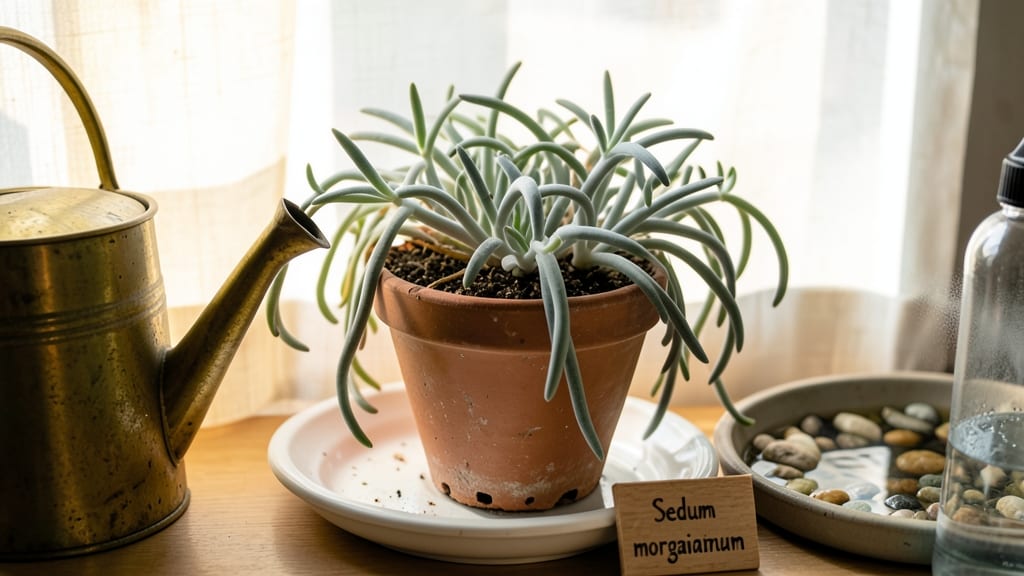
Keeping succulents alive indoors starts with one simple truth: they hate soggy soil more than they love sunlight. 🌱 I’ve lost count of how many I’ve drowned trying to mimic their desert homes—until I learned their three non-negotiables: bright light, fast-draining soil, and a watering schedule that’s more "wait and see" than "set it and forget it."
The right setup makes all the difference: a south-facing window or grow light, a pot with drainage holes, and a soil mix that’s 60% mineral grit (like perlite or pumice). Most people overwater because they think succulents are cacti—close, but not the same.
Your goal is soil that’s dry to the touch before you water again, usually every 2-3 weeks in winter and 1-2 weeks in summer.
What you’ll end up with is a collection of plump, vibrant plants that thrive year-round, not just in spring. The key is watching for wrinkled leaves (underwatered) or mushy stems (overwatered)—both fixable with adjustments. Even my blackest thumb can’t kill these once I got the basics right.
Works for any indoor space, from sunny offices to north-facing apartments with grow lights. Here’s how to troubleshoot the common pitfalls before they become problems—and keep those leaves looking like they’re basking in the desert sun.
📚 In This Guide
- What you need
- Instructions
- Tips and common mistakes
- Wrapping up and next steps
What you need
- ● Succulents: 1-3 small to medium-sized succulents (e.g., Echeveria, Haworthia, or Jade Plant)
- ● Pot: 1-2 pots with drainage holes (4-6 inches in diameter)
- ○ Optional: A cache pot (decorative outer pot) for a polished look
- ● Well-draining soil: 1 bag of cactus/succulent mix (or 60% potting soil + 40% perlite/pumice)
- ● Drainage material: Small pebbles, gravel, or broken pottery (½ inch layer for pots)
- ● Watering can or spray bottle: With a narrow spout for precise watering
- ● Sunlight source: South-facing window (bright, indirect light) or
- ● Grow lights (LED, 12-16 hours/day, 6-12 inches above plants)
- ○ Fertilizer (optional but helpful): Balanced liquid fertilizer (5-10-10) or succulent-specific granules
- ● Humidity tray (for low-humidity environments)
- ● Self-watering system (e.g., wicking pots for consistency)
- ● Plant labels (to track varieties and care needs)
- ● Pruning shears (for trimming leggy growth)
- ● Repotting kit (if upgrading pots later)
Step-by-Step guide to indoor succulent care
Here’s how I’ve kept my collection thriving for years—no green thumb required.
🪴 Step 1: Choose the Right Pot and Soil
Succulents need pots with drainage holes—no exceptions. I use terracotta pots because they breathe and prevent root rot, but plastic works too as long as it drains. Fill the pot with a cactus/succulent mix (never regular potting soil—it holds too much moisture). The mix should be gritty and sandy, not fluffy like garden soil.
Press the soil lightly into the pot, but don’t pack it down. You want it loose enough for roots to spread easily. Tap the pot gently on the table to settle the soil without compacting it. If your mix feels too dense, add a handful of perlite or coarse sand to improve drainage.
☀️ Step 2: Position for Bright, Indirect Light
Succulents crave 4-6 hours of sunlight daily, but direct midday sun scorches their leaves. Place them near a south- or east-facing window where light is bright but filtered. You’ll know it’s right when leaves stay plump and green—not pale or wrinkled.
If your home is low-light, supplement with a grow light (LED or fluorescent) for 12-14 hours daily. Keep it 6-12 inches away—too close burns leaves, too far stretches stems. Rotate the pot weekly so all sides get even light.
💧 Step 3: Water Deeply but Infrequently
Wait until the top 1-2 inches of soil feel completely dry before watering. Stick your finger in—if it comes out clean, it’s time. Water thoroughly until it drains from the bottom, then empty the saucer to prevent soggy roots. I water mine every 2-3 weeks in winter and once a week in summer.
Overwatering is the #1 killer. If leaves pucker or turn translucent, you’re watering too often. If they wrinkle or fall off, it’s a drought signal—but don’t panic. Succulents bounce back fast when you adjust.
✂️ Step 4: Prune and Propagate for Health
Snip off dead or yellowing leaves at the base with clean scissors. Healthy leaves can root in water—place cuttings in a jar with 1 inch of water, keeping them out of direct sun. Roots grow in 2-4 weeks; plant them in soil once established.
If your succulent stretches (leggy growth), it’s begging for more light. Trim the top third and propagate it—this encourages bushier growth. Avoid fertilizing unless you’re repotting; succulents thrive on neglect.
🌱 Step 5: Rotate and Repot as Needed
Turn your pot quarter-turn weekly so all sides get even light. This prevents lopsided growth and keeps stems sturdy. Repot every 2-3 years or when roots crowd the container. Choose a pot 1-2 inches wider—succulents hate being cramped.
Fresh soil gives them a nutrient boost. Gently remove the plant, brush off old soil, and place it in the new pot with fresh mix. Water lightly and return to its sunny spot. No fertilizer needed—succulents are low-maintenance survivors.
Tips & tricks for thriving indoor succulents
Between us, these little tricks saved my first collection from the "brown thumb" graveyard. The difference between a happy plant and a sad one often comes down to these small details.
Soil Secrets: The gritty texture of cactus/succulent mix isn't just about drainage—it mimics their natural desert environment. If you're mixing your own, use a ratio of 60% potting soil to 40% perlite or coarse sand. I learned this the hard way after my first batch compacted into a water trap. Pro tip: Sterilize your pots by soaking them in a 10% bleach solution for 10 minutes before reuse—this prevents fungal infections from old soil.
Light Test: Here's what nobody tells you—succulents will tell you exactly what they need. If leaves develop a reddish tint, they're getting too much direct sun. If they stretch toward the light (called etiolation), they're starving for brightness. I keep a small mirror near my windows to bounce extra light onto my collection during winter months when natural light is scarce.
Watering Wisdom: The finger test in Step 3 is your best friend, but timing matters too. Water in the morning so excess moisture has time to evaporate during the day. I use a spray bottle to mist the leaves occasionally—just enough to clean dust without adding moisture to the soil. And never, ever let your succulent sit in saucer water overnight; that's a one-way ticket to root rot.
Propagation Hack: When you're propagating those 1-inch water cuttings, add a drop of hydrogen peroxide to the water. It prevents bacterial growth and speeds up root development by about 30%. I've rooted cuttings in just 10 days using this trick instead of the usual 2-4 weeks. Just remember to change the water every 3-4 days to keep it fresh.
Pro Tips for Keep Succulents Alive Indoors
- Between us, these little tricks saved my first collection from the "brown thumb" graveyard. The difference between a ...
- Soil Secrets: The gritty texture of cactus/succulent mix isn't just about drainage—it mimics their natural desert env...
- Light Test: Here's what nobody tells you—succulents will tell you exactly what they need. If leaves develop a reddish...
Frequently asked questions
Got questions about keeping your succulents thriving indoors?
Here are answers to the most common ones—because even the toughest plants need a little TLC!
How often should I water my indoor succulents?
Water your succulents only when the soil is completely dry—usually every 2-4 weeks, depending on light and humidity. Overwatering is the #1 killer! Stick your finger 1-2 inches into the soil: if it’s dry, it’s time. Less is always better—succulents store water in their leaves.
Can succulents survive in low-light rooms?
Most succulents need bright, indirect light (like a south- or east-facing window) to thrive. In low-light areas, they’ll stretch (called "etiolation") or lose color. If natural light is scarce, supplement with a grow light 12-14 hours daily. Avoid dark corners—they’re a slow death for succulents!
Why are my succulents turning mushy or rotting?
Mushy leaves or stems usually mean overwatering or poor drainage. Check these fixes:
- Let soil dry out thoroughly between waterings.
- Repot in a container with drainage holes and fresh, gritty soil.
- Trim rotted parts with clean scissors and let the plant dry out for a few days.
What’s the best soil mix for indoor succulents?
Avoid regular potting soil—it holds too much moisture. Use a well-draining mix like:
- 50% cactus/succulent soil (from a garden store).
- 30% perlite or pumice (for aeration).
- 20% coarse sand (like horticultural sand).
Can I keep succulents alive in small pots?
Yes, but size matters! Succulents thrive in pots with drainage holes and just enough room for their roots (usually 1-2 inches larger than the plant’s base). Overpotting leads to soggy soil. If repotting, choose a shallow, wide container—succulents hate deep, wet environments. Rotate the pot occasionally for even growth!
Wrapping up and next steps
Keeping succulents thriving indoors boils down to three simple secrets: bright, indirect light, well-draining soil, and mindful watering. With the right setup and a little patience, your green companions will reward you with vibrant growth and stunning beauty for years to come! 🌱✨
Ready to put your new skills to the test? Start with one or two succulents—pick a sunny spot, prep your pot, and give them love (but not too much!). Watch them flourish, and soon, you’ll be the proud plant parent of a lush indoor jungle. Happy growing! 🌟