
Watering
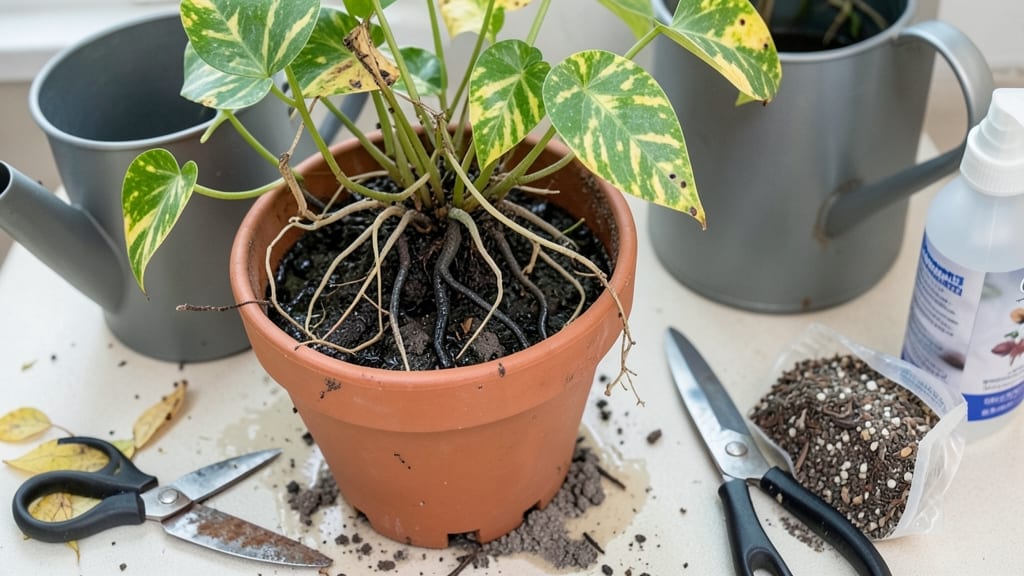
How to fix an overwatered indoor plant might still have a chance—even if the soil feels like a swamp. 🌱 I’ve revived more soggy roots than I’d like to admit, and the secret isn’t complicated: it’s about giving roots a chance to breathe again before it’s too late. The first step? Stop watering entirely and let the soil dry out completely.
Start by gently removing the plant from its pot and inspecting the roots—healthy ones are firm and white, while mushy or black roots need trimming. Repot in fresh, well-draining soil and choose a container with drainage holes (yes, even for ferns).
Overwatering often means the pot is the real culprit, so upgrade if needed.
Within 2-4 weeks, you’ll see new growth as roots recover, and the leaves will perk up like they’re on a caffeine high. The key is patience: overwatered plants bounce back slower than you’d hope, but with the right care, they’ll be thriving again.
Prevent future soggy soil by watering only when the top inch feels dry, and always use pots with drainage. For succulents, let the soil dry completely between waterings—fern lovers, keep it slightly moist but never soggy. Trust me, your plants will thank you.
The Hidden Triggers Behind Plant Drowning
Overwatering isn’t just a gardening mistake—it’s a silent killer for indoor plants, often sneaking up when you least expect it. 🌧️💦 Understanding the root causes (literally!) of overwatering helps you avoid it in the future.
Below, we break down the science behind why your plant might be drowning, from soil science to human habits.
Plants need aeration in their roots—just like humans need oxygen. When soil lacks proper drainage, excess water pools around roots, cutting off airflow and suffocating them. Here’s why it happens:
- Compacted or heavy soil: Clay or loam soils hold water like a sponge, slowing drainage. Without air pockets, roots can’t "breathe." Solution tip: Mix in perlite, sand, or orchid bark to lighten the mix.
- No drainage holes: Pots without holes trap water at the bottom, creating a soggy death zone. Even "self-watering" pots can backfire if not monitored.
- Root-bound plants: When roots fill the entire pot, they tangle and block water flow. This forces water to sit instead of draining.
🔍 Pro Tip: Tap your pot after watering—if water drips out within 10 seconds, drainage is good. If it gurgles or pools, it’s time to repot.
Humans often water on emotion rather than science. Here’s how good intentions go wrong:
- Watering on a schedule: Many assume plants need water every 7 days, but factors like humidity, light, and pot size change needs. Example: A snake plant in bright light may only need water every 3–4 weeks.
- Mistaking thirst for wilting: Some plants (like succulents) shrink when thirsty, while others (like ferns) droop when overwatered. Confusing signals leads to overcompensation.
- Top-watering without checking soil: Poking your finger 1–2 inches into the soil tells you the real story. If it’s damp, hold off!
💡 Quick Fix: Use a moisture meter or the "knuckle test"—if the soil feels damp at the first knuckle, wait.
Your home’s climate can turn a normal watering routine into a disaster. These invisible forces sneak up on plants:
| Factor | How It Causes Overwatering | Adjustment Needed |
|---|---|---|
| 🌡️ Low light | Plants photosynthesize slower, so they transpire (release water) less. Soil stays wet longer. | Reduce watering by 30–50% and move to brighter indirect light. |
| 💧 High humidity | Moist air slows evaporation, keeping soil damp. Common in bathrooms or kitchens. | Water only when the top 50% of soil is dry or use a dehumidifier. |
| ❄️ Cold drafts | Cool air reduces root activity, so plants can’t absorb excess water efficiently. | Avoid placing pots near windows or AC vents. |
✨ Remember: A plant’s water needs are a balance of light, air, and temperature—not just a calendar.
Not all plants are created equal—and neither are their water needs. Here’s why generic care fails:
- Succulents vs. tropicals: A jade plant (succulent) stores water in its leaves, while a peace lily (tropical) thrives in consistently moist soil. Mixing their care is a recipe for root rot.
- New vs. mature plants: Seedlings need frequent, light watering, while established plants prefer deep, infrequent soaks.
- Seasonal changes: Winter slows growth, so plants need half the water they do in summer. Yet many water just as heavily!
📊 Research Hack: Look up your plant’s native habitat. A rainforest plant? Keep soil moist. A desert cactus? Let it dry out completely.
Now that you know the why, the next step is fixing the damage—stay tuned for our root rescue techniques! 🚀
Revive Your Plant Step by Step
Now that you know the signs and causes of overwatering, let’s tackle the fixes—one problem at a time. The good news? Most plants can bounce back with the right care.
Below, we’ll map common overwatering issues to practical solutions, from immediate first aid to long-term prevention. Grab your gloves, and let’s get your green friend back to health!
---
Cause: Soggy soil + poor drainage = root rot (fungal/bacterial infection). Solution: 1. Remove the plant gently from its pot. Shake off excess soil to inspect roots. 2. Trim the damage 🔪: Use sterilized scissors to cut away black, mushy, or slimy roots. Healthy roots are firm and white. 3. Disinfect the roots (optional but helpful): Soak them in a 1:10 hydrogen peroxide-water mix for 10 minutes to kill fungus. 4. Repot in fresh soil 🏺: - Choose a well-draining mix (add perlite, orchid bark, or coco coir). - Pick a terracotta or ceramic pot (porous materials help wick away moisture). - Bottom watering only: Place the pot in a tray of water for 10–15 mins, then drain completely. 5. Pause watering for 1–2 weeks to let roots recover.
✨ Pro Tip: If repotting feels risky, try the "paper towel method"—wrap roots in a dry towel for 24 hours to absorb excess moisture before replanting.
---
Cause: Compacted soil suffocates roots, preventing oxygen uptake. Solution: 1. Fluff the soil 👨🍳: Gently loosen the top 2 inches of soil with a chopstick or fork to improve airflow. 2. Add aerators: - Mix in perlite, vermiculite, or sand (10–20% of the soil volume). - For heavy clay soil, swap out 20–30% of the top layer with fresh potting mix. 3. Adjust watering habits: - Test soil moisture with your finger—water only when the top 1–2 inches are dry. - Use a moisture meter for precision (aim for 40–60% moisture in most cases). 4. Boost humidity (if needed): Place a pebble tray with water nearby or mist leaves lightly (avoid soggy foliage).
💡 Quick Fix: If the plant is severely wilted but roots are still firm, trim yellow leaves (they drain energy) and place the plant in bright, indirect light to recover.
---
Cause: Excess moisture + poor airflow = mold, mildew, or bacterial rot. Solution: 1. Sanitize the pot 🧼: - Scrub the pot with soapy water or 1 part bleach to 9 parts water. - Rinse thoroughly and let dry in sunlight (UV kills bacteria). 2. Revamp the soil: - Discard old soil (it’s contaminated). - Use a fungicide treatment (like neem oil spray or copper fungicide) on roots before repotting. 3. Improve airflow: - Space plants 2–3 inches apart to reduce humidity buildup. - Use a small fan on low setting (2–3 hours/day) to circulate air. 4. Prevent recurrence: - Water in the morning so foliage dries by night. - Avoid leaving saucers under pots—empty them after watering.
🌡️ Warning Sign: If you see white fuzzy mold on soil, it’s likely Pythium or Phytophthora fungus. Act fast—these spread quickly!
---
Cause: Overwatering leaches nutrients, starving the plant. Solution: 1. Flush the soil 💦: - Water the plant thoroughly for 10 minutes, then let it drain completely. Repeat 2–3 times to wash out excess salts. 2. Fertilize lightly 🌱: - Wait 2–4 weeks after repotting before fertilizing. - Use a balanced, water-soluble fertilizer (like 10-10-10) at half-strength. - Slow-release granules (like Osmocote) are safer for recovery. 3. Boost microbial life: - Add compost or worm castings (10%) to the soil to restore beneficial bacteria. - Spray kelp or fish emulsion (diluted) to provide micronutrients.
🎯 Prevention Tip: Overwatered plants need less fertilizer—more water = more nutrient runoff. Always water before fertilizing!
---
If your plant is completely mushy, black, or smells like decay, it may be beyond saving—but you can still try: 1. Root pruning + propagation: - Cut back to healthy green stems and propagate in water or fresh soil. - Example: Snip a 4-inch stem with leaves, remove lower leaves, and place in water until roots regrow.
2. Soil solarization (for pots): - Leave the empty pot in direct sunlight for 3–5 days to kill pathogens before repotting. 3. Last resort: If the plant is a succulent or cactus, you might need to let it dry out completely for weeks before attempting revival.
--- 🔥 Remember: Prevention is key! Once you’ve rescued your plant, adjust your watering routine based on its needs. Most indoor plants thrive on less water than you think—when in doubt, underwater slightly rather than overdo it.
Next up: [How to Adjust Your Watering Schedule](#) to keep your plant happy long-term!
Frequently asked questions
How do I know if my plant is overwatered vs. underwatered?
Check the soil first—if it’s damp 1-2 inches down, it’s likely overwatered. Overwatered plants often have yellowing leaves, mushy stems, and roots that smell foul or look black. Underwatered plants usually have brown, crispy edges and dry, pulling soil. The key difference? Overwatered plants wilt from root suffocation, while underwatered plants wilt from thirst.
Can I save a plant with completely black, mushy roots?
It depends! If some green roots remain, trim the black/mushy parts, rinse the roots, and repot in fresh, dry soil. For succulents or cacti, let the remaining roots dry out completely (weeks!) before replanting. If all roots are black, propagation may be your only option—try growing new stems in water or soil. Patience is key: recovery takes 2-4 weeks even with healthy roots.
What’s the fastest way to dry out soggy soil?
Remove the plant, wrap the root ball in a dry paper towel, and let it sit for 24 hours to absorb excess moisture. Place the pot in a sunny spot (but avoid direct sun) and avoid watering for 7-10 days. For severe cases, mix dry sand or perlite into the soil to improve drainage. Never let the pot sit in water—this traps humidity and worsens rot.
Is it okay to use hydrogen peroxide on my plant’s roots?
Yes! A 3% hydrogen peroxide solution (1 part peroxide to 10 parts water) kills fungus and bacteria while being safe for plants. Soak the roots for 5-10 minutes, then rinse with clean water before repotting. This is especially helpful if you see mold or a foul smell. For sensitive plants (like ferns), reduce to a 1:20 ratio to avoid irritation.
How often should I water my plant after fixing overwatering damage?
Start with bottom watering (place pot in a tray of water for 10-15 minutes) every 2-3 weeks for most plants. Monitor the soil—water only when the top 1-2 inches are completely dry. Tropical plants (like pothos) may need slightly more frequent watering, while succulents should go 4-6 weeks between waterings. Use your finger as a guide: if it feels dry at the first knuckle, it’s time.