
Plants
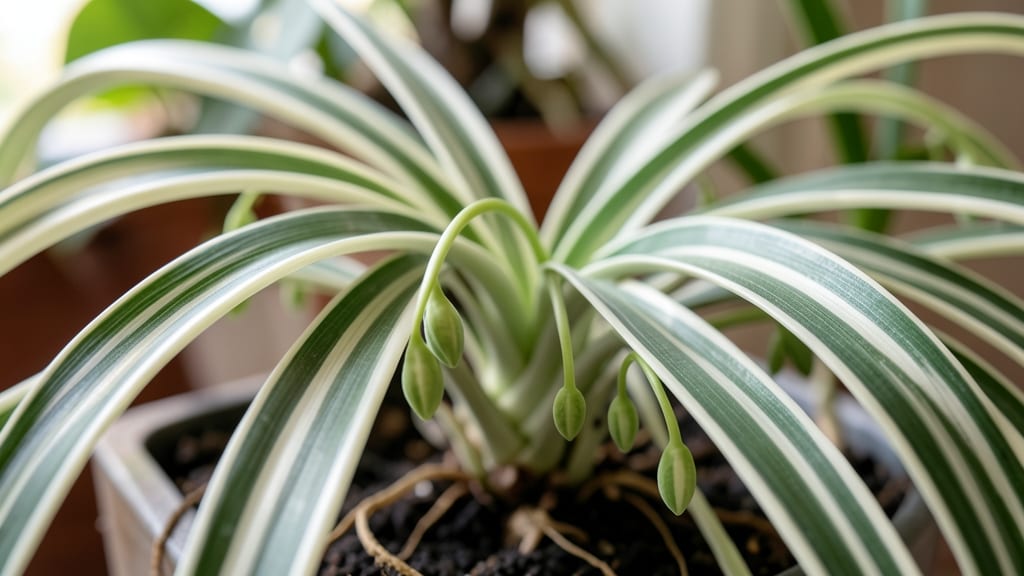
A spider plant needs bright indirect light indoors to keep its variegated leaves vibrant and trailing vines lush—6 to 8 hours daily is the sweet spot.
Struggling to keep your spider plant’s 🌿 variegated leaves vibrant and its trailing vines lush? The answer lies in mastering its light needs—too little or too much can turn your thriving plant into a sad, leggy mess.
Most homes fall short of the ideal, especially in low-light spaces like north-facing rooms or offices. Without enough brightness, those striking stripes fade, and new growth stretches thin, while too much direct sun scorches the edges.
Here’s how to spot the right balance, fix common mistakes, and even boost growth with simple tweaks—so your spider plant stays happy year-round.

Ideal light requirements for spider plants indoors: bright indirect sunlight explained
Your spider plant (Chlorophytum comosum) thrives in bright indirect sunlight, but many gardeners struggle to recreate this environment indoors. The key is understanding the light spectrum your plant needs—too little causes leggy growth, while too much scorches those beautiful variegated leaves.
Let’s break down exactly how to give your plant the perfect light conditions.
Spider plants are famously adaptable, but their optimal light range falls between 2,000 to 5,000 foot-candles of light. This translates to a spot near an east or north-facing window, where sunlight is gentle and filtered.
South-facing windows can work too, but only if your plant sits at least 3 feet away to avoid harsh afternoon rays.
Here’s the critical distinction many gardeners miss: bright indirect light ≠ direct sunlight. A west-facing window might seem bright, but those hot afternoon rays can cause brown leaf tips and crispy edges.
Think of it like this—your spider plant wants the same light conditions as a shady forest understory, where sunlight dapples through leaves.
The variegation on your spider plant’s leaves is a direct indicator of its light health. In optimal conditions, those yellow and white stripes will stay crisp and vibrant. But when light is insufficient, the green parts dominate, and the variegation fades to a dull, washed-out look.
This happens because the plant prioritizes chlorophyll production in low light, reducing energy spent on pigmentation.
If you notice your spider plant developing long, sparse stems with leaves only at the tips, it’s stretching toward any available light—a classic sign of light deprivation. The solution? Move it closer to a brighter window or supplement with a 12-hour LED grow light.
I’ve found that even a simple 6000K daylight bulb on a timer can work wonders for plants in dim corners.
Another common mistake is assuming all bright light is safe. A south-facing window might seem ideal, but the intensity of midday sun can exceed what your spider plant can handle.
Test this by placing your hand near the plant—if you can’t hold it there comfortably for 10 minutes, the light is too harsh. Use a sheer curtain to diffuse the light if needed.
For those with north-facing windows, you’re already on the right track! These windows provide consistent, gentle light that spider plants adore. Position your plant 2-3 feet away to ensure it gets enough brightness without risking overheating.
If your window is particularly small, consider rotating your plant quarter-turns every 2 weeks to promote even growth.
Pro tip: Pay attention to how your spider plant’s growth pattern changes with the seasons. In winter months, when natural light is dimmer, you might need to supplement with artificial light or move it to a sunnier spot temporarily.
Conversely, in summer, watch for signs of light stress if you’ve recently moved it to a brighter location.
Remember, spider plants are forgiving, but they’ll always give you visual cues about their light needs. Keep an eye on those leaves and growth habits, and you’ll create the perfect indoor haven for your trailing green friend.
With the right light, your spider plant will reward you with lush, variegated foliage and those adorable baby spiderettes!
Signs your spider plant isn’t getting enough (or too much) light: leaf patterns to watch
Your spider plant (Chlorophytum comosum) communicates its light needs through its leaves—pay attention to these visual cues. Leggy growth with sparse foliage or faded variegation (dull green stripes) signals it’s craving more brightness.
Meanwhile, crispy brown tips or yellowing leaves often mean it’s getting too much direct sun, causing stress. These patterns help you diagnose issues before they become irreversible.
Start by comparing your plant’s leaves to a healthy specimen. A thriving spider plant has vibrant yellow-and-green variegation, firm leaves, and compact growth. Stressed plants, however, show dramatic differences in leaf structure and color.
For example, underlit plants stretch toward light sources, while overlit ones develop crispy edges from dehydration. Here’s how to spot the difference:
Too Little Light vs. Too Much Light: Spider Plant Leaf Patterns
| Sign | Too Little Light | Too Much Light |
|---|---|---|
| Leaf Color | Dull green, faded stripes | Bleached or brown patches |
| Growth Pattern | Leggy stems, sparse leaves | Stunted growth, crispy edges |
| Leaf Texture | Soft, thin leaves | Brittle, dry tips |
| Fix It | Move to bright indirect light | Filter light with sheer curtain |
If your spider plant is leggy with elongated stems, it’s stretching toward the nearest light source. This happens when placed in low-light areas like dim corners or behind closed curtains.
To fix it, relocate your plant to a north- or east-facing window, where it can receive 6-8 hours of filtered sunlight daily. Avoid south- or west-facing windows, as they often expose plants to harsh afternoon rays.
On the flip side, yellowing leaves or brown tips indicate sunburn from direct sunlight. If your plant sits near a south-facing window without protection, its leaves may develop crispy edges or white patches.
Move it 3-4 feet away from the window or use a light sheer curtain to diffuse the light. Prune damaged leaves to encourage new growth and reduce stress on the plant.
Pro tip: Rotate your spider plant quarter-turn weekly to ensure even light exposure. This prevents one-sided growth and helps maintain its compact shape. Pair this with regular checks of the soil moisture—underlit plants may need less water, while overlit ones dry out faster.
Adjust your watering routine accordingly to support recovery.
Remember, spider plants are adaptable, but they thrive in bright indirect light. By observing these leaf patterns and adjusting their environment, you’ll restore your plant’s health and keep those variegated leaves vibrant for years. 🌿