
Plants
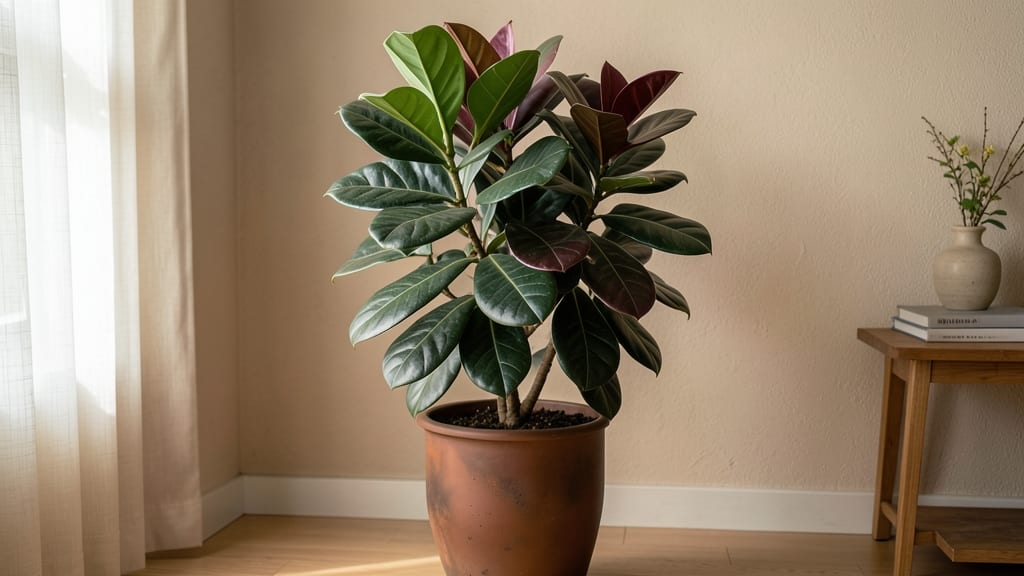
A rubber plant needs bright indirect light indoors for 4-6 hours daily—too little and it stretches like a sleepy cat, too much and it burns like a sunburn.
Struggling to keep your rubber plant 🌿 alive despite your best efforts? The answer might be simpler than you think—light exposure is the game-changer for these hardy yet picky houseplants.
Too little light leads to leggy stems and pale leaves, while direct sun scorches the glossy foliage. The key is finding that sweet spot near an east or north-facing window, where the light is gentle but strong enough to fuel growth.
In this guide, I’ll break down exactly how much light your rubber plant needs, how to spot the signs of trouble, and the best spots to place it—even if your home only has low-light corners.

Optimal light requirements for rubber plants indoors: low to bright indirect sun explained
Rubber plants (Ficus elastica) thrive in bright indirect light, making them perfect for indoor spaces with filtered sunlight. Unlike sun-loving plants, they can't handle harsh rays, but too little light leads to weak growth.
Understanding their light spectrum needs (4,000–10,000 lux) is key to keeping them lush and healthy.
The ideal indoor spot for a rubber plant balances photosynthesis efficiency without risking leaf burn. Natural light from east or north-facing windows provides gentle morning sun, while west-facing windows may require distance to avoid afternoon intensity. Artificial grow lights can supplement during darker months.
Here’s a clear breakdown of your rubber plant’s light needs, including how to spot underlighting vs. overexposure and how light affects each growth stage:
Rubber plants exhibit three distinct growth responses based on light exposure. In low light, they stretch toward light sources, producing elongated stems with sparse leaves—a clear sign of underlighting.
This occurs when placed in dim corners or behind sheer curtains, where light drops below 4,000 lux. Rotate your plant weekly to encourage even growth.
In ideal bright indirect light, your rubber plant will develop thick, waxy leaves and a sturdy stem. This is the sweet spot for photosynthesis, where the plant efficiently converts light into energy.
Place it near an east-facing window for morning sun or a west-facing window with a sheer curtain to diffuse afternoon rays. Avoid south-facing windows unless you’re using a light filter or placing it 5+ feet away.
Overexposure to direct sunlight causes leaf scorch, visible as brown or yellow patches. These spots appear first on leaves closest to the light source. If you notice this, move your plant further from the window or add a light-filtering screen.
Variegated rubber plants are especially sensitive—their white or pale leaves lack chlorophyll and burn easily.
Light also influences blooming potential, though rubber plants rarely flower indoors. In their native tropical habitats, they bloom in response to seasonal light changes, but indoor plants focus energy on leaf production.
If you notice buds forming, it’s a sign your plant is thriving in consistent bright indirect light and may reward you with small, insignificant flowers.
Seasonal light shifts demand adjustments. During winter, shorter days reduce natural light to 3,000–5,000 lux, often below your plant’s needs. Supplement with a 12-hour grow light (LED or fluorescent) placed 6–12 inches above the plant.
In summer, longer days mean more light—watch for afternoon sun through west-facing windows, which can exceed 10,000 lux and cause damage.
Pro tip: Use a light meter to measure lux levels in potential spots. Aim for 6,000–8,000 lux for optimal growth. If your home lacks natural light, reflective surfaces like mirrors or white walls can amplify existing light by 20–30%, making dim areas more suitable.
Pair this with a rotate-every-2-weeks schedule to prevent lopsided growth.
Remember, rubber plants are forgiving—they’ll survive in low light but won’t thrive. By matching their light spectrum needs to your home’s conditions, you’ll enjoy a lush, healthy plant that grows 2–3 feet per year with minimal effort.
Start with bright indirect light, monitor leaf health, and adjust as needed—your rubber plant will thank you with vibrant foliage for years.
Signs your rubber plant isn’t getting the right light (and how to fix it)
Your rubber plant (Ficus elastica) might be sending you SOS signals through its leaves—yellowing, browning, or stretching toward the window like it’s searching for sunlight. These visual cues often point to light issues, whether too little or too much.
The key is understanding how your plant’s growth patterns change when its light needs aren’t met.
For example, leggy growth with sparse leaves is a classic sign of underlighting, while crispy brown edges on leaves often mean direct sunburn. Even slow growth or dropping leaves can stem from inconsistent light exposure.
Let’s break down these symptoms and how to fix them before your plant’s health declines further.
Rubber plants thrive in bright indirect light (4,000–10,000 lux). Too little light causes etiolation (stretchy stems), while direct sun leads to leaf scorch. North or east-facing windows are ideal—place your plant 2-3 feet away to avoid harsh rays.
If your rubber plant’s leaves are turning yellow, especially on the older ones, it’s often a sign of overwatering combined with low light. The plant struggles to process excess moisture without enough energy from sunlight.
To fix this, reduce watering and move your plant closer to a bright, indirect light source, like a sheer curtain-covered window. A south-facing window with filtered light works well too.
For leggy growth—where stems stretch and leaves grow far apart—your plant is reaching for light. This happens when placed in dim corners or under artificial lights that don’t mimic natural sunlight.
Rotate your plant quarter-turns weekly to encourage even growth, and supplement with a grow light (like a LED full-spectrum bulb) if natural light is insufficient. Aim for 12–14 hours of light daily during winter months.
Brown spots or crispy edges on leaves? Your rubber plant is getting too much direct sunlight, especially from south or west-facing windows. These spots are sunburn marks, and while they won’t kill the plant, they’re unsightly. Move your plant further from the window or use a light-filtering curtain to diffuse harsh rays. If you love natural light, try placing it behind a sheer fabric or 2 feet back from the glass.
Slow growth or small, pale leaves can also indicate light deprivation. Rubber plants grow best with consistent, moderate light, so if your home lacks natural light, consider reflective surfaces like white walls or mirrors to bounce light onto the plant.
For low-light conditions, a grow light on a timer (like the GE LED Plant Light) can mimic sunlight and encourage healthier growth.
Finally, if your plant’s leaves drop suddenly, it could be reacting to light stress—like a sudden move from a dark corner to a bright window. Adjust light exposure gradually over 1–2 weeks to avoid shocking the plant.
With the right light, your rubber plant will reward you with bold, glossy leaves and steady growth—no more guesswork!