
Plants
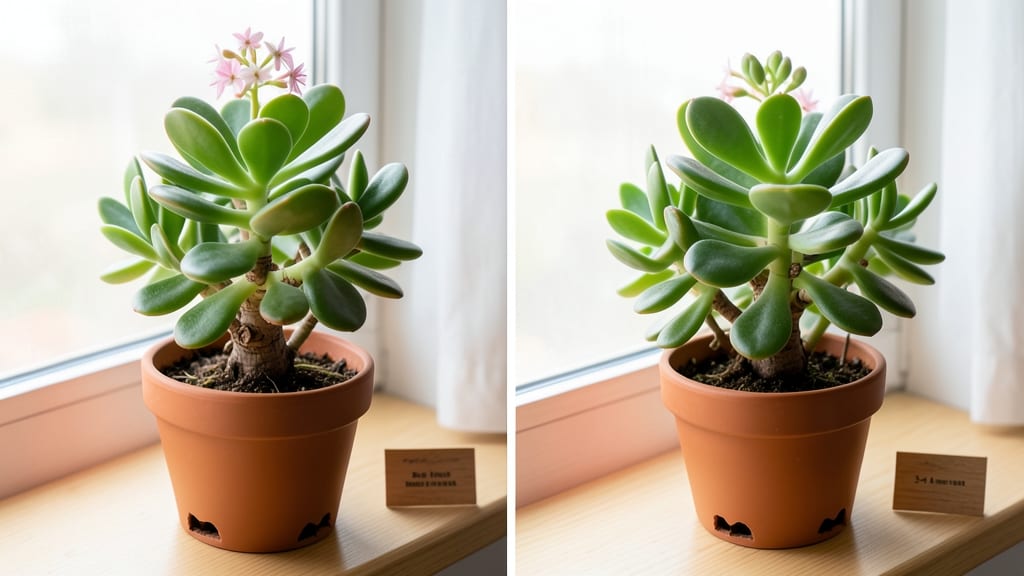
A jade plant needs bright, indirect light indoors for 4-6 hours daily—the sweet spot between thriving and crispy leaves.
Struggling to keep your 🌿 jade plant alive indoors? The secret might be simpler than you think—light exposure plays a critical role in its survival and growth. But how much is just right?
Too little light, and your plant stretches toward the window like it’s starving, growing leggy and weak. Too much direct sun, and those plump leaves start looking like they’ve been kissed by a blowtorch. The key is finding that perfect balance.
Below, I’ll break down exactly where to place your jade plant for optimal growth, how to spot light problems early, and what to do if your home’s lighting just won’t cooperate.

Ideal light requirements for jade plants: bright indirect sunlight explained
If your jade plant (Crassula ovata) is struggling indoors, the issue might be its light exposure. These succulents thrive with bright indirect sunlight, but too little or too much can stunt growth or damage leaves.
Understanding their light needs is the first step to keeping them healthy and vibrant.
Jade plants are native to South Africa, where they grow under bright sunlight with occasional shade. Indoors, they need a similar balance—enough light to photosynthesize but protection from harsh rays that can scorch their thick, waxy leaves.
Without proper light, they’ll stretch toward windows, grow leggy, and lose their compact shape.
| Light Requirement | Indoor Specification | Signs of Issue |
|---|---|---|
| Daily Light Hours | 4-6 hours of bright indirect light | Leggy growth, pale leaves |
| Best Window Placement | South or west-facing windows | Yellowing leaves, brown patches |
| Direct Sun Tolerance | Morning sun only (avoid afternoon rays) | White/yellow sunburn marks |
| Winter Adjustments | Move closer to window or use grow lights | Stunted growth, etiolated stems |
| Summer Care | Use sheer curtain for filtered light | Crispy leaf edges, wilting |
A south-facing window is ideal for jade plants because it provides the most consistent bright light throughout the day. However, direct afternoon sun can be too intense, especially in summer. If you notice white or yellow patches on leaves, your plant is getting too much direct sunlight.
In this case, move it a few feet back from the window or use a sheer curtain to diffuse the light.
East-facing windows also work well because they offer gentler morning light, which is less harsh than midday or afternoon sun. West-facing windows can be tricky—they provide strong light in the afternoon, which may cause sunburn.
If your jade plant is in a west-facing window, monitor it closely and adjust its position as needed to avoid leaf damage.
North-facing windows are the least ideal for jade plants because they receive the least sunlight. If this is your only option, supplement with a grow light for at least 6 hours a day.
Look for full-spectrum LED grow lights, which mimic natural sunlight and encourage healthy growth. Place the light 6-12 inches above the plant and adjust the height as it grows.
Seasonal changes also affect your jade plant’s light needs. During winter, days are shorter, and natural light is weaker. If your plant starts looking leggy or its leaves turn pale, it’s not getting enough light.
Move it to the brightest spot in your home or extend its light exposure with a grow light. In summer, the opposite can happen—too much direct sun can cause leaf scorch. Rotate the plant occasionally to ensure even growth and protect it from harsh rays.
Watch for visual cues that indicate your jade plant isn’t getting the right amount of light. Leggy growth, where stems stretch out and leaves space themselves far apart, is a classic sign of low light.
Similarly, yellowing leaves or leaves that drop off easily can signal either too much or too little light. If you see red or brown patches on the leaves, it’s likely a sign of sunburn from excessive direct sunlight.
To keep your jade plant thriving, aim for a balance of bright indirect light and occasional direct morning sun. If your home lacks natural light, don’t hesitate to invest in a grow light—it’s a game-changer for indoor succulents.
With the right light conditions, your jade plant will reward you with thick, glossy leaves and a compact, bushy shape that’s the envy of every plant lover.
Remember, jade plants are resilient, but they do need consistent light to thrive. Experiment with different window placements and monitor your plant’s response. Over time, you’ll find the perfect spot where your jade plant gets just the right amount of bright indirect sunlight to stay happy and healthy year-round. 🌿☀️
How to adjust your home’s lighting for a thriving jade plant
If your jade plant looks leggy or pale, it’s likely begging for better light. Since these plants thrive on bright indirect sunlight, your home’s lighting might need a tweak. Start by evaluating your space—south-facing windows are ideal, but even east or west exposures can work with adjustments.
Natural light is best, but artificial solutions like grow lights can save your plant if you’re stuck in a dim corner. The key is replicating 4-6 hours of sunlight daily, whether from windows or bulbs. Let’s explore how to optimize both natural and artificial lighting for your jade plant’s health.
Natural vs. Artificial Light for Jade Plants
Natural Light
- Pros: Free, full-spectrum, no setup
- Cons: Seasonal changes, limited placement
Best for: South/west-facing windows with 4-6 hours of bright indirect light.
Artificial Light
- Pros: Consistent, adjustable, works year-round
- Cons: Initial cost, requires maintenance
Best for: North-facing rooms or low-light spaces using LED grow lights (12-14 hrs/day).
For natural light, position your jade plant near a window but avoid harsh afternoon sun, which can cause sunburn. A bookshelf or kitchen counter by a south-facing window is perfect.
If your home lacks bright spots, rotate the plant quarter-turns weekly to ensure even growth and prevent lopsided stems.
When using grow lights, LEDs are the best choice—they’re energy-efficient and mimic sunlight. Place the bulb 6-12 inches above the plant and keep it on for 12-14 hours daily. Fluorescent lights work too but may require closer placement (3-6 inches) for effectiveness.
Don’t overlook reflective surfaces like mirrors or white walls to bounce extra light onto your plant. Even a white-painted shelf can amplify natural light by 20-30%. Combine these tricks with proper watering (every 2-3 weeks) to keep your jade plant thriving in any indoor space.
Remember: Yellowing leaves mean too much light, while stretched stems signal a need for more. Adjust as needed, and your jade plant will reward you with vibrant, healthy growth all year round. 🌿