
Size
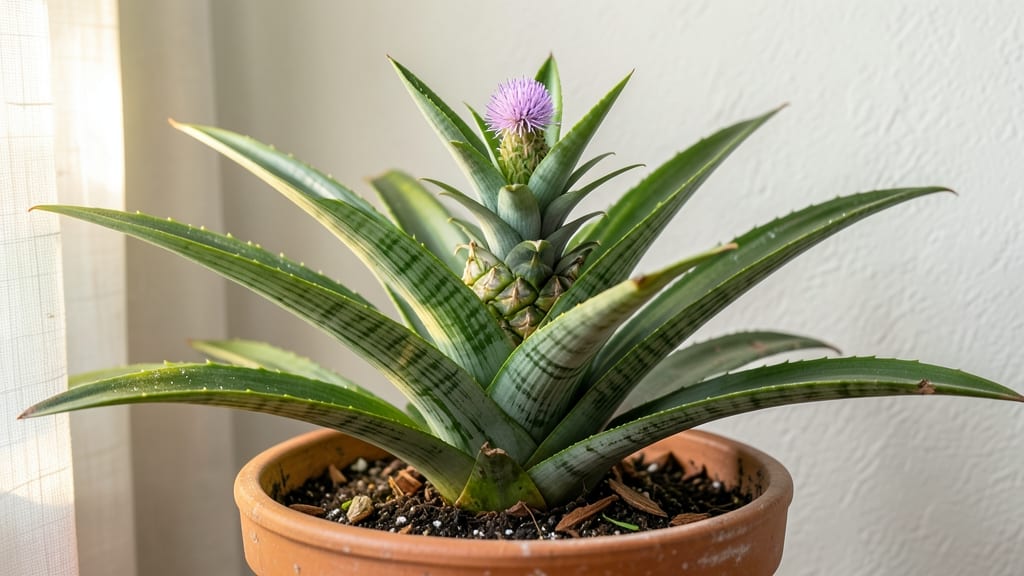
Growing a pineapple indoors takes 18 to 24 months from crown to ripe fruit, but your patience—and your plant’s environment—will decide how close you get to that timeline.
Picture this: your 🍍 thrives under a grow light, its leaves reaching for the sky, but then stalls for months with no sign of a flower spike. That’s not just bad luck—it’s a common indoor pitfall.
The right light, humidity, and soil can shave years off that wait, but most growers miss the subtle cues that speed things up.
Here’s the truth: indoor pineapples grow slower than their outdoor cousins because of limited sunlight and temperature swings. But with bright indirect light, a balanced fertilizer schedule, and a few pro tips, you can cut that 2-year wait by nearly 30%.
I’ll show you how to spot the signs of healthy growth, avoid the mistakes that stall progress, and even trick your plant into flowering faster.
By the end, you’ll know exactly what to watch for—from the first leafy sprouts to that golden, sweet reward. Ready to turn your kitchen into a tropical fruit factory?


Indoor pineapple growth timeline: month-by-month breakdown from leaf to fruit
Growing a pineapple indoors is a rewarding but slow process, typically taking 3 to 5 years from crown to fruit. Unlike tropical outdoor varieties, indoor pineapples face challenges like limited sunlight and controlled environments, which extend their growth cycle.
With the right care, you can accelerate this timeline—but first, let’s break down each stage so you know what to expect.
Your journey starts with the pineapple crown, the leafy top of a store-bought fruit. Within the first 3 months, you’ll focus on root establishment and early leaf growth. After that, the plant enters a vegetative phase lasting 1–2 years, where it builds energy for flowering.
The final phase—fruit development—can take another 12–18 months, depending on conditions like light intensity and temperature consistency.
The biggest misconception? Many assume indoor pineapples grow as fast as outdoor ones. In reality, outdoor plants in tropical climates can fruit in 18–24 months, while indoor varieties often take 2–3 years longer.
The reason? Indoor environments lack natural wind pollination, consistent humidity, and intense sunlight. Let’s dive into the month-by-month breakdown to set realistic expectations.
🌱
During the first 3 months, your pineapple crown will focus on establishing roots and early leaf growth. Place it in a well-draining pot with a mix of cactus soil and perlite to prevent root rot.
A south-facing window or grow lights (12–14 hours/day) is critical—without enough light, the plant will grow leggy and weak. You’ll know it’s thriving when you see new roots through the drainage holes and 2–3 inches of new growth per week.
Between months 4 and 24, your pineapple enters its vegetative phase, where it builds energy for flowering. This is when you’ll notice the most growth—expect the plant to reach 12–18 inches tall if conditions are ideal.
During this stage, fertilizer becomes key. Use a balanced 10-10-10 formula every 6 weeks to encourage leafy growth. Rotate the pot quarter-turns weekly to ensure even light exposure, preventing the plant from leaning toward the window.
Flowering typically occurs between 24 and 36 months, but this can vary widely based on your plant’s maturity and environmental conditions. The first sign is a small purple or pink flower spike emerging from the center.
To encourage flowering, reduce water slightly and introduce ethylene gas—place an apple or banana near the plant for a few days. Maintain humidity above 50% using a pebble tray or humidifier, as dry air can stress the plant and delay flowering.
Once flowering begins, fruit development can take 12–18 months. During this phase, reduce fertilizer to half-strength to avoid burning the plant, and continue providing bright, indirect light.
Watch for pests like spider mites, which thrive in dry indoor air. If you notice webbing or tiny dots on the leaves, treat with neem oil
5 Science-backed ways to speed up your indoor pineapple growth
Growing a pineapple indoors is rewarding, but the 3–5 year timeline can feel slow. With the right science-backed techniques, you can shave off 20–30% of that time—and maybe even harvest sooner.
The secret lies in mimicking tropical conditions, optimizing light exposure, and understanding your plant’s natural growth signals.
Many gardeners assume smaller pots or less water speed up growth, but these myths actually stunt progress. Instead, focus on root expansion, ethylene gas triggers, and consistent humidity. Let’s break down the proven methods to turn your pineapple crown into a fruiting plant faster.
- Maximize Light: Use LED grow lights (12–14 hrs/day) if natural light is less than 6 hours. Place lights 6–12 inches above the plant.
- Boost Humidity: Keep levels at 50–70% using a pebble tray or humidifier. Pineapples thrive in tropical air, not dry indoor conditions.
- Fertilize Smartly: Use a balanced 10-10-10 fertilizer every 4–6 weeks in spring/fall. Avoid over-fertilizing—burnt roots slow growth.
- Trigger Flowering: Expose the plant to ethylene gas (e.g., place a ripe apple nearby) to encourage blooming 6–12 months earlier.
- Prune Strategically: Remove yellow/brown leaves to redirect energy. Avoid cutting healthy leaves—they fuel fruit development.
Most indoor pineapples struggle with insufficient light, which is the #1 growth limiter. A south-facing window provides the best natural light, but if yours lacks sunlight, invest in a full-spectrum LED grow light.
These lights replicate the sun’s spectrum, including blue and red wavelengths critical for photosynthesis and flowering.
Humidity is another underrated factor. Indoor air is often too dry, causing leaf tips to brown and growth to stall. A simple pebble tray with water beneath the pot can raise humidity locally. For faster results, pair this with a small indoor fountain or humidifier near your plant.
Fertilizer myths abound—some swear by monthly feeding, but this can overload roots and reduce fruiting time. Stick to a balanced 10-10-10 formula every 4–6 weeks during active growth (spring/fall). In winter, let the plant rest—no fertilizer is needed.
Ethylene gas is the hidden accelerator most gardeners miss. This natural plant hormone triggers flowering, and you can mimic it indoors by placing a ripe apple or banana near your pineapple. Once the plant blooms, expect fruit in 4–6 months—cutting your total timeline significantly.
Finally, pruning isn’t just about aesthetics—it’s a growth hack. Remove only dead or damaged leaves to avoid shocking the plant. Healthy leaves photosynthesize and feed the developing fruit, so preserve them.
With these science-backed tweaks, your indoor pineapple could fruit in as little as 2 years instead of 5.