
Container Gardens
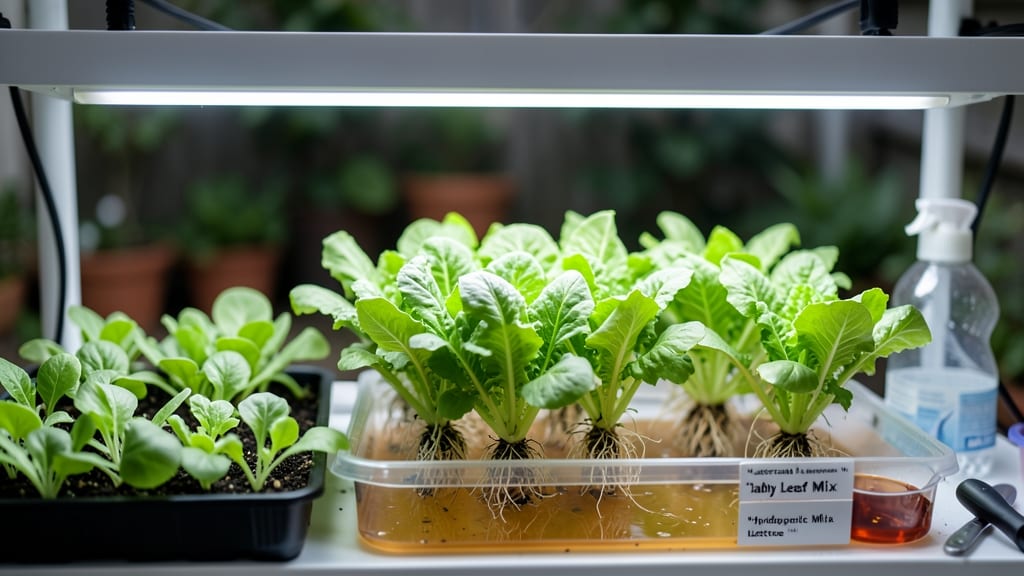
Growing leafy greens indoors means fresh salads year-round without a backyard. 🌱 I’ve turned my kitchen windowsill into a mini farm, and the secret isn’t expensive gear—it’s smart containers and light tricks that mimic spring sunshine.
Even in apartments with limited space, you can grow crisp lettuce, peppery arugula, and sturdy kale within 6-8 weeks of planting.
The biggest mistake? Assuming any container will work. Deep trays (at least 6 inches) prevent root crowding, while shallow dishes speed up harvests for baby greens. I use recycled plastic bins with drainage holes—cheap, reusable, and perfect for stacking.
Pair that with a south-facing window or a basic LED grow light (12-16 hours daily), and you’ve got the light recipe greens crave.
Watering throws people off—too much drowns roots, too little wilts leaves. I stick my finger 1 inch deep in the soil; if it’s dry, it’s time to water. Humidity helps too: a pebble tray under the container or a spray bottle keeps leaves happy in dry winter air.
The first harvest? 3-4 weeks of tender greens, and you’ll never buy wilted store-bought again.
This works for any greens—spinach, Swiss chard, even microgreens—no matter your space. Start small, scale up, and soon you’ll be clipping fresh greens for sandwiches, soups, or smoothies. No garden? No problem.
Common Causes Of Indoor Greening Struggles
Leafy greens thriving indoors can feel like magic—until they don’t. When your homegrown kale, spinach, or microgreens start looking sad (or worse, sad and sad), it’s usually a sign that one or more key growing conditions are off.
Understanding why your greens are underperforming is half the battle. Below, we break down the science behind the most common culprits—so you can fix them fast and get back to harvesting.
---
Leafy greens are light-hungry—they rely on photosynthesis to convert sunlight into energy, and without enough, they’ll stretch, yellow, or bolt (send up flower stalks prematurely). Indoors, the biggest culprits are:
- Insufficient intensity: Even if your greens get 6+ hours of light, fluorescent or LED bulbs often lack the blue spectrum (400–500 nm) critical for compact growth.
Without it, plants stretch toward the light (a condition called etiolation), becoming leggy and weak. - Fix it: Use full-spectrum grow lights (like 10,000–20,000K LEDs) 6–12 inches above plants. Rotate containers daily for even exposure.
- Distance issues: Lights too far away (18+ inches) weaken light penetration, while lights too close (under 4 inches) can burn leaves (look for crispy brown edges). - Fix it: Aim for 4–12 inches depending on wattage. Adjust as greens grow.
- Natural light traps: South-facing windows may seem ideal, but glass filters UV rays and blocks up to 50% of light. North-facing windows? Even worse. - Fix it: Supplement with reflective surfaces (aluminum foil behind containers) or grow lights for 12–16 hours/day.
---
Too much love (in the form of water) can suffocate roots and invite fungal diseases like Pythium or Botrytis. Signs your greens are drowning: - Yellowing leaves (especially lower ones). - Mushy stems or a foul smell from the soil. - Slow growth despite plenty of light.
Why it happens: - Poor drainage: Containers without drainage holes trap excess water, cutting off oxygen to roots. - Overzealous watering: Leafy greens like loose, moist (not soggy) soil. Watering on a schedule (even daily) without checking moisture leads to root rot. - Cold soil: Temps below 50°F (10°C) slow drainage and encourage rot.
Fix it: - Use well-draining soil mixes (50% potting soil + 50% perlite/coco coir). - Water only when the top 1–2 inches of soil are dry (stick your finger in—no guesswork!). - Upgrade containers: Add drainage holes or use self-watering systems with reservoirs.
---
Leafy greens need nitrogen (N), phosphorus (P), and potassium (K) in the right ratios. Too little or too much throws growth off:
| Symptom | Likely Cause | Quick Fix | |---------------------------|------------------------------------------|----------------------------------------| | Pale yellow leaves | Nitrogen deficiency (common in reused soil) | Add balanced fertilizer (e.g., 10-10-10) or compost. | | Purple stems/leaves | Phosphorus deficiency (stress response) | Use a phosphate-rich fertilizer or bone meal. | | Brown leaf edges | Over-fertilization (salt buildup) | Flush soil with water; reduce fertilizer. | | Slow growth | General nutrient lockout (compacted soil) | Loosen soil or repot; add worm castings. |
Pro tip: 💡 Indoor soils deplete faster than outdoor beds. Test soil every 4–6 weeks and fertilize lightly (half-strength) every 2–3 weeks.
--- Leafy greens thrive in cool but stable conditions (ideal: 60–75°F / 15–24°C). Indoors, HVAC vents, drafts, or radiators can throw them off:
- Too hot (>80°F / 27°C): - Leaves wilt or develop brown tips (transpiration outpaces water uptake). - Fix: Move containers away from heat sources; use a fan for airflow.
- Too cold (<50°F / 10°C): - Growth stalls; leaves turn purple or translucent. - Fix: Keep greens near (not on) windows; avoid drafty spots.
- Low humidity (<40%): - Leaves curl or crisp (like lettuce "bolting" early). - Fix: Use a humidifier or place containers on a pebble tray with water.
--- Stagnant air and cramped roots are silent growth killers. Watch for: - Powdery mildew (white dust on leaves) or black spots (fungal infections). - Stunted growth despite good light/nutrients. - Roots circling the container (visible through clear pots).
Why it happens: - Poor airflow: Containers too close together or in sealed cabinets trap humidity, inviting mold. - Root-bound plants: Greens in small pots strangle themselves as roots spiral, starving the plant. - No ventilation: Static air prevents gas exchange (CO₂ in, O₂ out), slowing photosynthesis.
Fix it: - Space containers 6–12 inches apart for airflow. - Repot every 4–6 weeks or trim roots if they’re circling. - Add a small fan (2–3 hours/day) to mimic breezes.
Fixing Common Indoor Green Growing Issues
Growing leafy greens indoors can be incredibly rewarding, but it’s not without its challenges. From leggy plants to yellowing leaves, indoor gardening comes with unique hurdles. The good news? Most issues have simple fixes—let’s tackle them head-on with practical solutions and prevention tips.
---
Cause: Lack of light or overcrowding. Fix: - 🔥 Move to a brighter spot – Place your containers near a south-facing window or under grow lights (LED or fluorescent) for 12–16 hours daily. If natural light is limited, supplement with a full-spectrum bulb 6–12 inches above the plants. - 🍳 Thin out seedlings – If plants are too close, snip the weakest stems at the base to give the strongest ones room to grow. Aim for 2–3 inches of space between seedlings. - 👨🍳 Rotate containers weekly – This ensures even light exposure and prevents stems from stretching toward one side.
Prevention Tips: ✨ Use reflective surfaces (like aluminum foil or white trays) behind containers to bounce extra light onto the plants. ✨ Choose compact varieties like baby kale, arugula, or microgreens—they thrive in smaller spaces with less light.
---
Cause: Overwatering, underwatering, or nutrient deficiencies. Fix: - 💧 Check moisture levels – Stick your finger 1 inch into the soil. If it’s soggy, reduce watering and ensure pots have drainage holes. If dry, water thoroughly until it drains from the bottom. - 🌡️ Adjust humidity – Low humidity (common in dry climates) causes leaf edges to crisp. Place a pebble tray with water under the container or use a humidifier nearby. - 📊 Fertilize lightly – Yellow leaves can signal a lack of nitrogen. Use a balanced liquid fertilizer (like 10-10-10) every 2–3 weeks, but dilute to half-strength to avoid burning roots.
Prevention Tips: 💡 Water at the base (not overhead) to prevent fungal diseases like powdery mildew. 🎯 Use well-draining soil—mix potting soil with perlite or coconut coir (50/50) for better aeration.
---
Cause: Poor airflow, overwatering, or bringing pests indoors. Fix: - 🔪 Isolate affected plants – Move them away from healthy greens to prevent spread. - 🍳 Spray with neem oil – Mix 1 tsp neem oil + 1 tsp mild soap + 1 quart water. Spray every 3–4 days until pests disappear. - 🌿 Improve airflow – Space containers apart and use a small fan on low setting for 1–2 hours daily to deter mites and gnats. - ⏰ Trap fungus gnats – Fill a shallow dish with apple cider vinegar + a drop of dish soap and place near plants. Adults will drown in it.
Prevention Tips: ✨ Inspect new plants before bringing them indoors. ✨ Use sticky traps (yellow cards) to monitor for early signs of pests.
---
Cause: Insufficient nutrients, root-bound containers, or temperature stress. Fix: - 🍳 Repot if root-bound – If roots circle the bottom, transfer to a slightly larger container (just 1–2 inches wider) with fresh soil. - 🔥 Boost nutrients – Switch to a hydroponic or fish emulsion fertilizer for a quick nutrient kick. Compost tea is also a great organic option. - 🌡️ Keep temps stable – Most greens prefer 60–75°F. Avoid placing containers near drafts, heaters, or AC vents.
Prevention Tips: 💡 Rotate fertilizers every few weeks to prevent nutrient lockout. 🎯 Harvest outer leaves first—this encourages bushier growth without shocking the plant.
---
Cause: Overwatering or poor drainage. Fix: - 💧 Let soil dry slightly between waterings. Top-dress with fresh soil to smother mold spores. - 🔪 Remove affected soil – Scoop out the top ½ inch of moldy soil and replace it with sterile potting mix. - 🌿 Improve drainage – Add a layer of perlite or vermiculite to the bottom of the container before replanting.
Prevention Tips: 💡 Use sterilized soil—bake potting mix in the oven at 200°F for 30 minutes to kill pathogens. 🎯 Water in the morning so excess moisture evaporates during the day.
--- Final Thought: Most indoor growing woes are fixable with light adjustments, smart watering, and a little preventive care. Keep an eye on your greens, and don’t hesitate to tweak conditions as they grow. Happy harvesting! 🥬✨
Frequently asked questions
What are the easiest leafy greens to grow indoors for beginners?
Start with fast-growing varieties like baby spinach, arugula, or microgreens—they mature in just 3-4 weeks and tolerate lower light better than others. Lettuce varieties (like butterhead or romaine) are also forgiving, while kale and Swiss chard handle cooler indoor temps well.
Can I use regular potting soil for indoor greens?
No—regular potting soil compacts too easily and drains poorly. Mix 50% potting soil with 50% perlite or coconut coir for better aeration. For faster results, use a seed-starting mix (lighter and more sterile) until seedlings develop true leaves, then transition to the blended mix.
How do I know if my indoor greens are getting enough light?
Check for these signs: leggy stems (stretching toward light), pale yellow leaves, or slow growth. If your greens are 6+ inches from a south-facing window or under grow lights for 12+ hours/day, they should thrive. For testing, hold a piece of white paper under your plants—if you can't read it easily, they need more light.
What's the best way to harvest indoor leafy greens without killing the plant?
Use the "cut-and-come-again" method: Snip outer leaves 1 inch above the base when they're 3-4 inches tall. This encourages bushier regrowth. For baby greens, harvest the entire plant when leaves reach 2-3 inches—they'll be tender and ready for salads!
Why are my indoor greens turning bitter or developing tough stems?
This happens when greens bolt (send up flower stalks) due to stress—usually from too much light, heat, or nutrient deficiencies. Keep temps between 60-75°F, ensure 12-16 hours of light daily, and fertilize lightly with a balanced liquid fertilizer every 2-3 weeks. Varieties like arugula or baby kale are less prone to bolting.