
Flowers
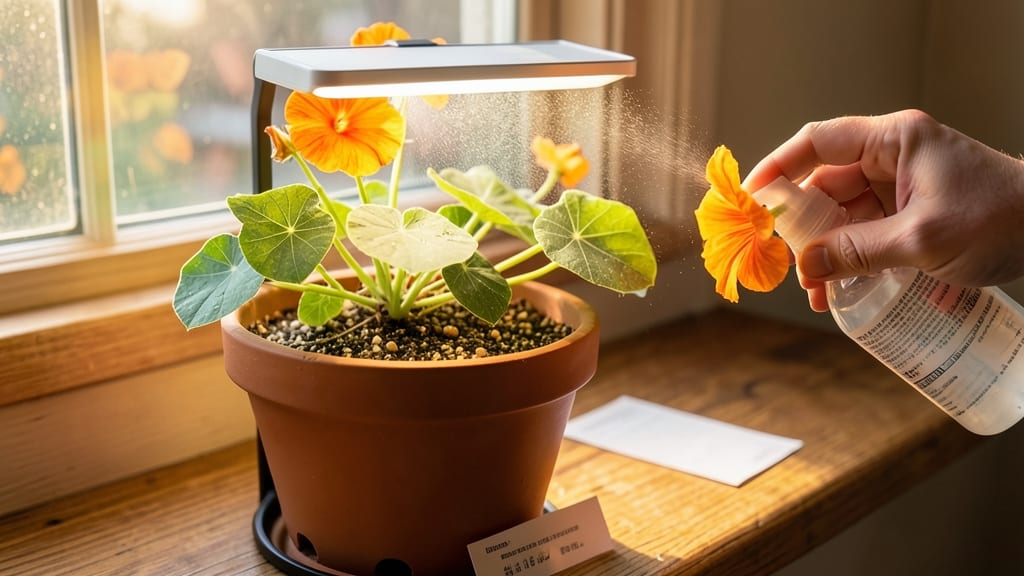
Growing edible flowers indoors lets you harvest vibrant petals for salads and garnishes year-round—no greenhouse or sunny windowsill required. 🌸 I've grown pansies, nasturtiums, and borage under basic grow lights, and they thrive when you match their needs to what you can provide indoors.
The key is choosing the right varieties that tolerate lower light and smaller containers.
Start with containers that have drainage holes (3-5 inches deep works well) and fill them with a light, well-draining potting mix. Nasturtiums and pansies are the easiest for beginners, while borage and calendula need slightly more space.
A simple grow light on a timer—just 12-14 hours a day—replaces sunlight perfectly, and you'll see new growth within 2-3 weeks if you keep the soil consistently moist but not soggy.
By the time your first blooms appear, you'll be snipping petals for cocktails, salads, or garnishes with zero sunlight struggles. The flowers stay tender and flavorful, and you'll never pay $6 for a handful of nasturtiums at the farmers' market again.
Plus, the process is oddly satisfying—watching delicate blooms grow under artificial light feels like magic.
This method works for any indoor space, from kitchens to offices, as long as you keep the environment stable. Even my black thumb can't kill these with the right setup. Let's get those petals growing!
📚 In This Guide
- What you need
- Instructions
- Tips and common mistakes
- Wrapping up and next steps
What you need
- ● Edible flower seeds or seedlings: Choose fast-growing varieties like nasturtiums, pansies, or violas (1–3 plants per container). Avoid toxic flowers (e.g., foxglove, lily of the valley).
- ● Containers: 6–12" pots with drainage holes (1–2 per plant). Use terracotta, fabric, or ceramic.
- ● High-quality potting mix: Lightweight, well-draining blend (avoid garden soil). 1–2 bags (10–15 quarts) per setup.
- ● Grow lights: Full-spectrum LED (12–16 hours/day). 1–2 lights depending on space (e.g., 24W for small setups).
- ● Watering can or spray bottle: Gentle watering prevents root rot. 1 small can.
- ● Fertilizer: Balanced liquid fertilizer (10-10-10 or organic). 1 bottle.
- ○ Optional: Humidity dome or plastic wrap (for seedlings).
- ● Tweezers (for delicate petals).
- ● pH test kit (ideal range: 6.0–7.0).
- ● Self-watering planters (for busy gardeners!).
- ● Prerequisites: Dedicated indoor space (e.g., windowsill, shelf, or grow tent).
- ● Patience! Some flowers take 4–8 weeks to bloom.
Step-by-step instructions for growing edible flowers indoors
Here's my foolproof method to grow vibrant, tasty blooms without a sunny windowsill.
🪴 Step 1: Choose the Right Containers and Soil Mix
Use 4-6 inch diameter pots with drainage holes—edible flowers hate soggy roots. I like terracotta because it breathes and prevents overwatering. Fill each with a lightweight mix of 50% potting soil and 50% perlite to keep roots aerated. This prevents the compacting that drowns delicate flower roots.
Tap each pot gently to settle the soil, then moisten it until damp but not dripping. The right moisture level feels like a wrung-out sponge—just enough to hold together when squeezed. This ensures roots establish quickly without sitting in water.
🌱 Step 2: Select and Plant Your Seeds or Transplants
Start with easy varieties like nasturtiums, pansies, or violas—they thrive indoors and handle lower light. Plant 1-2 seeds per pot at a depth of ¼ inch (about twice the seed size). Press lightly to ensure good soil contact, then cover with a fine mist of water.
If using transplants, choose small starter plants with 3-4 leaves and healthy stems. Gently remove from their nursery pots and place in your prepared containers, burying up to the first set of leaves. This encourages strong root growth right away.
☀️ Step 3: Position Under Grow Lights for Optimal Growth
Place pots under a full-spectrum LED grow light positioned 6-8 inches above the plants. Edible flowers need 12-14 hours of light daily to prevent leggy growth. I set mine on a timer to automate the process—no guesswork about daylight hours.
Watch for leaves stretching toward the light. If you see stems growing thin and pale with leaves spaced far apart, your light is too far away. Adjust it until foliage stays compact and dark green. This ensures sturdy stems that support heavy blooms.
💧 Step 4: Water and Fertilize for Healthy Blooms
Water when the top inch of soil feels dry—stick your finger in to check. Water deeply until it drains from the bottom, then empty the saucer to prevent root rot. Overwatering is the #1 killer of indoor edible flowers, so I always wait until the soil is truly dry before watering again.
Feed with a balanced liquid fertilizer (10-10-10) every 4-6 weeks during active growth. You'll notice new leaves and buds forming within a week of fertilizing. Stop feeding once flowers appear to encourage blooming rather than foliage growth.
✂️ Step 5: Harvest and Maintain for Continuous Blooms
Harvest flowers in the morning after dew has dried. Use clean scissors to snip stems just above a leaf node—this encourages more blooms to form. I always harvest no more than ⅓ of the plant at once to avoid shocking it.
Deadhead spent blooms regularly to redirect the plant's energy into new flowers. You'll see a fresh flush of buds within 2-3 weeks if you keep up with this simple task. Rotate pots weekly to ensure even light exposure all around.
Tips & tricks for perfect indoor edible flowers
These simple tricks will help you grow thriving edible blooms even without natural sunlight.
Container Selection: While terracotta is ideal, any pot with drainage holes works—just avoid plastic, which can trap moisture. I've successfully used ceramic and even repurposed coffee mugs (with holes drilled) for small varieties. The key is ensuring excess water escapes immediately to prevent root rot.
Light Positioning: Those 12-14 hours of light are non-negotiable for sturdy stems. If your grow light flickers or dims, move it closer to maintain consistent intensity. I notice my plants grow leggy when the light's too far away—adjust until leaves are dark green and compact, not stretched and pale.
Soil Moisture Test: The "wrung-out sponge" test is foolproof, but here's another trick: Use a chopstick to check moisture deeper in the pot. If it comes out clean after pushing through the soil, it's time to water. This prevents overwatering while ensuring roots get moisture where they need it most.
Harvesting Timing: Morning harvests yield the freshest flowers, but if you're short on time, afternoon works too—just avoid harvesting after sunset when moisture lingers on petals. I always clean my scissors with rubbing alcohol between cuts to prevent spreading disease between plants.
Pro Tips for Growing Edible Flowers Indoors
- These simple tricks will help you grow thriving edible blooms even without natural sunlight.
- Container Selection: While terracotta is ideal, any pot with drainage holes works—just avoid plastic, which can trap moisture.
- Light Positioning: Those 12-14 hours of light are non-negotiable for sturdy stems.
Frequently asked questions
Got questions about growing edible flowers indoors? You’re not alone! Here are some of the most common concerns—and their easy solutions.
What are the easiest edible flowers to grow indoors with no direct sunlight?
Start with nasturtiums, pansies, or borage—they thrive under grow lights or near bright windows. For zero sunlight, try microgreens with edible flowers (like sunflower or amaranth) under LED grow bulbs. These are hardy, fast-growing, and forgiving for beginners!
How long does it take for indoor edible flowers to bloom?
Timelines vary! Most edible flowers bloom in 4–8 weeks under ideal conditions (12–16 hours of light daily, 60–70°F temps). Pansies and violas may flower in 3–4 weeks, while calendulas or marigolds can take 6–10 weeks. Patience pays off—check seed packets for specific varieties!
Can I use regular potting soil, or do I need something special?
Regular well-draining potting mix works, but amend it with 20% perlite or coco coir to prevent root rot. For hydroponics, use a lightweight, airy medium like coconut fiber. Avoid garden soil—it’s too dense and can harbor pests. Pro tip: Add a slow-release fertilizer at planting for a nutrient boost!
What should I do if my indoor edible flowers get pests or diseases?
Isolate affected plants immediately! Common culprits:
- Aphids or spider mites? Spray with neem oil or insecticidal soap.
- Fungal spots (like powdery mildew)? Improve airflow and treat with baking soda spray (1 tsp baking soda + 1 quart water).
- Root rot? Stop watering until soil is dry, then repot in fresh mix.
Are all edible flowers safe to eat raw, or do some need cooking?
Most are safe raw but have different flavors/textures when cooked! Raw-friendly picks: nasturtiums (peppery), violets (sweet), pansies (mild). Cooking enhances: squash blossoms (sautéed), hibiscus (tea or jam). Always research specific varieties—some (like foxglove) are toxic!
Wrapping up and next steps
Growing edible flowers indoors isn’t just a creative hobby—it’s a delicious way to bring freshness, beauty, and nutrition to your space year-round. With the right setup, even minimal sunlight won’t stop you from cultivating vibrant blooms like nasturtiums or pansies, ready to elevate your dishes or teas.
Start small, experiment with varieties, and soon, your windowsill will be a thriving edible garden!
🌱 Your Next Step:
Ready to dive in? Pick one flower to start—maybe a hardy calendula or a fragrant viola—and gather your supplies. Before you know it, you’ll be harvesting petals for salads, garnishes, or homemade remedies. Happy growing! 🌸