
Container Gardens
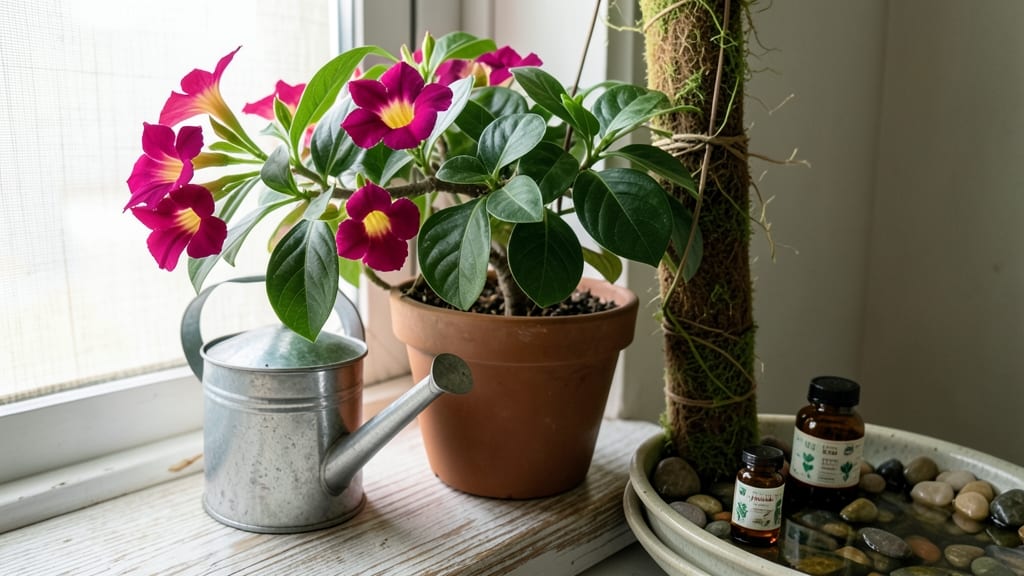
Indoor mandevilla care starts with this trick: bright, indirect light is the difference between a thriving plant and a sad, leggy one. ✨ I’ve kept mine going for years in my east-facing living room—no grow lights, no fancy setups—just a spot where the morning sun kisses the leaves without scorching them.
Most people overwater or underlight their mandevillas, and that’s where the real trouble begins.
The secret isn’t complicated: water when the top inch of soil feels dry, and use a pot with drainage holes to avoid root rot. My plants stay happy with 1-2 inches of water every 5-7 days, depending on how warm your home is.
Too much water turns the leaves yellow; too little makes them wrinkle. And here’s the kicker—these plants love humidity, so a quick misting or pebble tray keeps them from drying out in dry winter air.
By pruning back leggy stems in early spring, you’ll encourage bushier growth and more of those showstopping trumpet-shaped blooms all summer long. The key is cutting just above a leaf node, and don’t worry—mandevillas are forgiving.
Even if you hack it back too hard, it’ll bounce back with fresh, vibrant new shoots within weeks.
For experienced growers, try fertilizing lightly every 4-6 weeks during spring and summer with a balanced liquid fertilizer. The payoff? Nonstop blooms from May through October, even in low-light spots.
And if you notice yellow leaves or brown tips, it’s usually a sign of overwatering or low humidity—not a death sentence. Let’s get yours thriving!
📚 In This Guide
- What you need
- Instructions
- Tips and common mistakes
- Wrapping up and next steps
What you need
- ● Pot: A well-draining container (12–18 inches in diameter) with drainage holes. Terracotta or ceramic works best.
- ● Potting Mix: A high-quality, well-draining blend like cactus/succulent mix or a 50/50 mix of peat moss and perlite (10–12 quarts).
- ● Support Structure: A trellis, bamboo stake, or moss pole (at least 4–6 feet tall) for climbing.
- ● Fertilizer: A balanced liquid fertilizer (10-10-10 or 20-20-20) or a slow-release granular fertilizer for indoor plants.
- ● Watering Can: With a narrow spout to avoid overwatering (1–2 gallons capacity).
- ○ Humidity Tray: A shallow tray with pebbles and water to boost humidity (optional but helpful in dry climates).
- ● A grow light (LED or fluorescent) if natural light is low-light (e.g., 12–14 hours/day).
- ● Plant mister for occasional foliar sprays (especially in winter).
- ● Pruning shears for shaping and encouraging bushier growth.
- ● Plant food (like fish emulsion or compost tea) for extra nutrients.
- ● Thermometer/hygrometer to monitor temperature (ideal: 60–80°F) and humidity (ideal: 40–60%).
Step-by-step instructions for mandevilla care indoors
Here’s how to keep your mandevilla lush and blooming—even when natural light is limited.
🪴 Step 1: Choose the Right Spot for Light and Humidity
Mandevillas thrive in bright, indirect light, but they’ll tolerate low-light conditions if you supplement with a grow light for 12-14 hours daily. Place your plant near an east-facing window for gentle morning sun or a west-facing window for filtered afternoon light. If your home has dim lighting, a full-spectrum LED grow bulb positioned 6-12 inches away will prevent leggy growth.
Watch for signs of stress: yellowing leaves mean too much direct sun, while stretched stems signal insufficient light. Increase humidity by grouping plants together or placing the pot on a pebble tray filled with water—just ensure the pot’s base doesn’t sit directly in water to avoid root rot.
💧 Step 2: Water Consistently Without Overdoing It
Water your mandevilla when the top 1-2 inches of soil feel dry to the touch. Stick your finger in the soil—if it’s damp past your first knuckle, wait another day. Overwatering is the fastest way to kill a mandevilla, so always use a pot with drainage holes and empty the saucer after watering. In winter, when growth slows, reduce watering to every 7-10 days unless the soil is bone-dry.
Here’s the thing—mandevillas are thirsty but hate soggy roots. I like to water deeply until water runs out the drainage holes, then wait until the soil surface looks slightly dry before watering again. If the leaves start curling or drooping, it’s usually a sign of underwatering, but yellowing edges often mean overwatering.
☀️ Step 3: Feed Regularly for Continuous Blooms
Use a balanced liquid fertilizer (like 10-10-10 or 20-20-20) diluted to half-strength every 2 weeks during spring and summer. This encourages the lush, vine-like growth and abundant blooms mandevillas are known for. In fall and winter, cut back to once a month or stop fertilizing entirely if the plant looks dormant. Always water the plant before fertilizing to avoid burning the roots.
You’ll notice the difference within a few weeks: darker green leaves, more vigorous vines, and clusters of trumpet-shaped flowers. If you see slow growth or sparse blooms, it’s time to step up the feeding. Just don’t overdo it—fertilizer burns (brown leaf tips) are a common mistake, especially in hot weather.
✂️ Step 4: Prune to Encourage Bushier Growth and More Flowers
Prune your mandevilla after blooming or in early spring to shape the plant and encourage new growth. Cut back overly long vines by about one-third to promote bushier, fuller plants. Use clean, sharp pruning shears to make cuts just above a leaf node or set of leaves. This prevents the plant from looking leggy and ensures more energy goes into flowering rather than vertical growth.
Don’t skip this step—I’ve seen mandevillas become unruly and sparse if left unpruned. After trimming, you can propagate the cuttings in water or fresh potting mix to grow new plants. Just be patient; it takes 4-6 weeks for new growth to appear after pruning.
🌿 Step 5: Rotate and Clean for Year-Round Health
Rotate your mandevilla every few weeks so all sides get even light exposure. This prevents the plant from growing lopsided toward the window. Wipe the leaves occasionally with a damp cloth to remove dust, which helps the plant absorb more light and breathe better. In the winter, if your home is dry, consider using a small humidifier nearby or misting the leaves lightly—just avoid getting water on the flowers.
This is the moment that matters: a well-cared-for mandevilla will reward you with nonstop blooms from spring through fall and even a few winter flowers if given the right conditions. Keep an eye out for pests like spider mites or aphids—if you spot them, treat with neem oil or insecticidal soap to keep your plant thriving.
Tips & tricks for thriving mandevilla care indoors
These simple strategies will help you keep your mandevilla blooming beautifully year-round, even in less-than-ideal lighting conditions.
Lighting Strategy: If you're using a grow light for the recommended 12-14 hours daily, position it just 6-12 inches away from the plant's top leaves. I've found that adjusting the height based on the season works best—closer in winter when natural light is scarce, and slightly higher in summer when the plant needs less supplemental light. This mimics natural light cycles and prevents leggy growth.
Watering Wisdom: The top 1-2 inches dry test is foolproof, but here's what I've learned: use your finger to check soil moisture at the same time each day. Morning is ideal because it gives the roots time to absorb water before evening. I've also noticed that mandevillas in terracotta pots dry out faster than those in ceramic—adjust your watering schedule accordingly based on your pot material.
Fertilizer Timing: When feeding every 2 weeks during spring and summer, I've found that pairing it with your regular watering schedule helps prevent root burn. For example, if you water on Mondays and Thursdays, fertilize on the Monday feedings. This consistency lets the plant gradually absorb nutrients without shock. In fall and winter, I switch to a monthly feeding schedule to match the plant's natural growth slowdown.
Pruning Payoff: After pruning those overly long vines by one-third, don't throw away the cuttings! Place them in a glass of water with just the bottom few inches submerged. You'll see roots forming in about 2-3 weeks, and you'll have new plants to share or expand your collection. This is my favorite way to propagate—it's free and the new plants often bloom faster than seed-grown ones.
Pro Tips for Care Of Mandevilla Indoors
- These simple strategies will help you keep your mandevilla blooming beautifully year-round, even in less-than-ideal l...
- Lighting Strategy: If you're using a grow light for the recommended 12-14 hours daily, position it just 6-12 inches a...
- Watering Wisdom: The top 1-2 inches dry test is foolproof, but here's what I've learned: use your finger to check soi...
Frequently asked questions
Got questions about keeping your Mandevilla happy indoors?
You’re not alone! Here’s a quick guide to the most common concerns—from light struggles to winter care—so your tropical beauty stays lush and blooming all year.
How much light does Mandevilla need indoors?
Mandevilla thrives in bright, indirect light (think east or south-facing windows). If leaves yellow or stems stretch (a sign of etiolation), it’s begging for more light. A grow light 12–14 hours daily can save the day in low-light spots. Pro tip: Rotate the pot weekly for even growth!
Can Mandevilla survive indoors in winter?
Yes! Unlike outdoor Mandevilla, indoor varieties tolerate cooler temps (down to 50–55°F). Avoid drafts or cold windows, and reduce watering—overwatering in winter can drown roots. If blooms slow, a cool but bright spot (like a sunroom) keeps it happy until spring. Bonus: Prune leggy stems to encourage bushier growth!
Why are my Mandevilla leaves turning yellow?
Yellow leaves usually mean overwatering or poor drainage. Let the top 1–2 inches of soil dry out between waterings, and ensure the pot has drainage holes. Brown edges? It’s underwatered or thirsty for humidity (try a pebble tray or humidifier). Check: Stick your finger in the soil—if it’s soggy, hold off!
How do I get my Mandevilla to bloom indoors?
Blooms love consistent care: bright light, regular feeding (balanced fertilizer every 4–6 weeks in spring/summer), and slightly cooler nights (60–65°F). If blooms fade fast, it might need more light or a rest period (reduce water/fertilizer in fall/winter). Trick: Deadhead spent blooms to encourage new ones!
Can I grow Mandevilla from cuttings indoors?
Take 4–6 inch cuttings in spring/summer, let them dry for a few hours, then dip in rooting hormone (optional) and plant in moist perlite or sand. Keep humid (use a plastic bag or propagator) and warm (70–75°F). Roots form in 2–4 weeks—then pot up! Tip: Skip fertilizer until new growth appears.
What pests should I watch for on indoor Mandevilla?
Mealybugs, spider mites, and aphids love Mandevilla’s sap. Check undersides of leaves for white cottony spots (mealybugs) or tiny webs (mites). Treat with neem oil or insecticidal soap, and isolate the plant to stop pests from spreading. Prevent: Wipe leaves with a damp cloth weekly!
Wrapping up and next steps
Caring for Mandevilla indoors is totally doable—even in low-light spaces! With the right balance of bright, indirect light, well-draining soil, and consistent moisture, your plant will reward you with stunning blooms year-round. 🌿✨ Don’t let setbacks discourage you; every gardener learns as they go.
Ready to level up your indoor jungle? Start by monitoring your Mandevilla’s progress—adjust care as needed—and soon, you’ll be the proud host of a thriving, flowering showstopper! 🌸