
Container Gardens
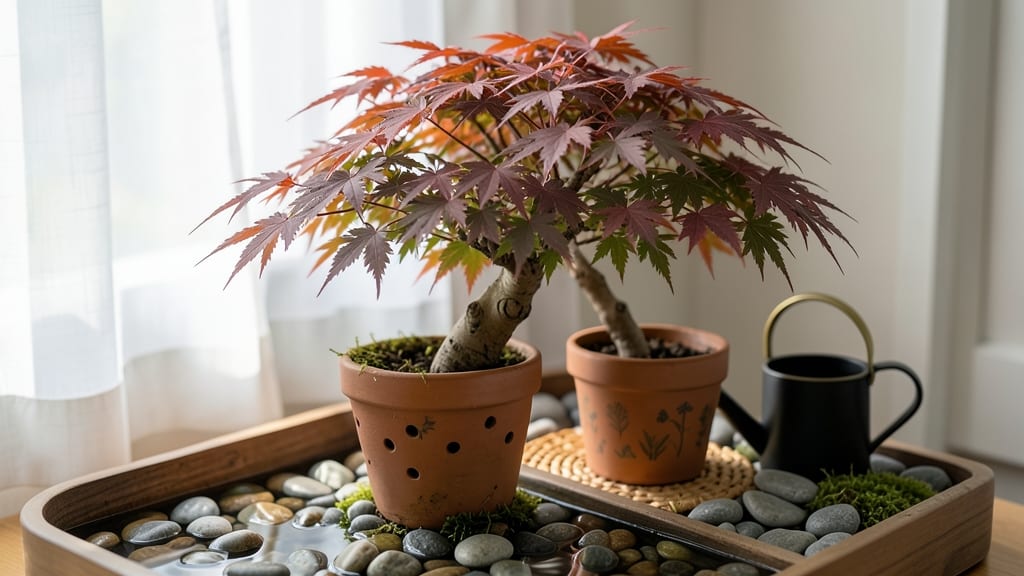
You can grow a Japanese maple indoors, but it requires bright indirect light, well-draining soil, and controlled humidity. Dwarf varieties like ‘Tokyo Delight’ or ‘Emperor I’ adapt best to indoor conditions when planted in large containers with proper pruning and seasonal care.
Japanese maples are prized for their stunning foliage, but their delicate nature makes indoor cultivation tricky. 🌿 The key lies in replicating their natural habitat—think of a sunlit forest floor with dappled light and moist air.
Most varieties need at least 6 hours of bright, indirect sunlight daily, which you can achieve near an east-facing window or with a full-spectrum grow light for 12-14 hours. Even then, leaves may pale without proper light intensity, so supplementing with artificial light during winter months is often necessary.
The right soil mix is equally critical: a blend of 50% organic matter (like peat or coconut coir) and 50% inorganic material (perlite or sand) prevents root rot while allowing excess moisture to drain.
Don't overlook the importance of container size—small pots limit root growth and lead to stress. Aim for at least a 12-inch diameter container for dwarf varieties, with drainage holes to prevent waterlogging.
I've found that repotting every 2-3 years in early spring gives these trees the space they need to thrive. The real challenge comes in maintaining consistent humidity; misting leaves daily or placing the pot on a tray of pebbles with water can create that crucial microclimate.
With these adjustments, your indoor Japanese maple can live for decades, offering seasonal color changes year after year.
💡 In This Article
- Japanese Maple Light and Environmental Needs Indoors
- Best Japanese Maple Varieties and Care Tips for Indoor Growth
Japanese maple light and environmental needs indoors
Japanese maples rely on photosynthesis efficiency to maintain their vibrant foliage, which explains why indoor conditions often lead to leaf discoloration. These trees evolved in Japan’s temperate forests where they receive dappled sunlight—bright but filtered through a canopy.
Indoors, this translates to needing 10,000-15,000 lux of light intensity (about 50% of direct sunlight) for 6-8 hours daily.
Without enough light, chlorophyll production drops, causing leaves to lose their signature reds, purples, or greens and turn pale yellow or green. 🌿 The key is positioning near east-facing windows (gentle morning sun) or using full-spectrum LED grow lights placed 12-18 inches above the plant for 12-14 hours/day during winter.
Temperature swings are equally critical—Japanese maples prefer 60-75°F during active growth (spring-fall) but can tolerate 40-50°F in winter dormancy. Drafts from heating vents or air conditioning create stress, while sudden temperature drops below 50°F can trigger leaf drop.
Humidity becomes the silent killer: these trees thrive at 50-70% relative humidity, but indoor air often drops to 20-30% in winter. Low humidity causes leaf edges to crisp and brown, mimicking outdoor drought stress.
A simple solution is placing the pot on a pebble tray filled with water or using a humidifier nearby—this raises local humidity without overwatering the soil.
What most people overlook is how light quality affects leaf color retention. Blue light (400-500nm wavelength) triggers chlorophyll production, while red light (600-700nm) enhances anthocyanin pigments (the red/purple hues). Grow lights should have a 10:1 blue-to-red ratio to maintain vibrant foliage.
I’ve seen ‘Bloodgood’ maples lose their deep red tones indoors because they weren’t getting enough blue spectrum—switching to a cool-white LED bulb (6,500K color temperature) fixed the issue within weeks. The science is clear: without proper light spectrum, your maple’s leaves will revert to basic green, regardless of the variety.
Seasonal adjustments are non-negotiable. In winter, reduce watering by 50% since cooler temps slow root activity, and move the plant closer to a bright window (south-facing if possible) to compensate for shorter daylight.
The challenge is balancing these needs with indoor spaces—most homes can’t replicate a forest understory, so grow lights become essential for 3-4 months/year in northern climates.
Even with perfect light, a 10-inch pot limits root growth, forcing the tree to compete for nutrients—this is why repotting every 2-3 years in spring is critical for long-term health.
Consider this: a healthy indoor Japanese maple should have 1-2 inches of new growth per year and maintain at least 70% of its leaves year-round. If you’re seeing more brown than green, it’s not just a light issue—check your humidity levels and drainage system first.
I’ve had clients blame "poor quality plants" when the real problem was overwatering in winter or insufficient blue light. The good news? With the right setup, even 10-year-old dwarf maples can thrive indoors—it just takes patience and attention to these environmental details. 💫