
Plants
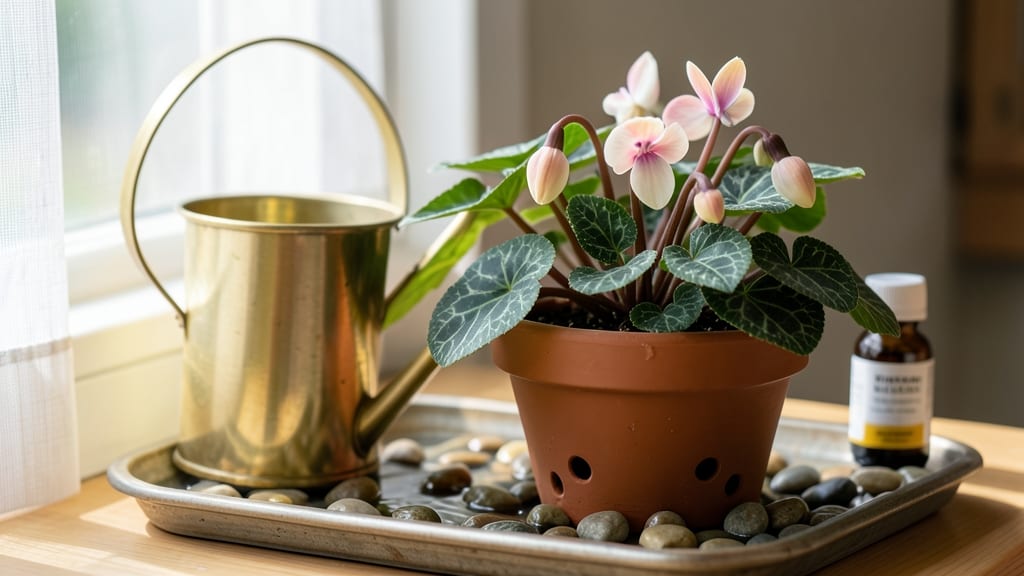
How to look after cyclamen indoors is simple once you know their three key needs—bright light, dry roots, and cool air. 💚 I’ve kept mine blooming for years by treating them like the delicate divas they are: no soggy soil, no hot drafts, and plenty of indirect sunlight. The secret isn’t complicated, but the payoff is worth it—those heart-shaped blooms last for weeks, and the foliage stays lush even in winter.
Start with well-draining potting mix and a container with drainage holes—cyclamen hate wet feet. Place them near an east or north-facing window where they get morning sun and afternoon shade. Water only when the top inch of soil feels dry, then let excess water drain completely.
Overwatering is the #1 killer, so I use a saucer with pebbles to catch runoff and keep roots happy.
Keep temperatures between 60-70°F during the day and slightly cooler at night. A cool basement or unheated garage works for summer dormancy if your plant needs a break. When blooms fade, don’t prune the stems—just let them die back naturally.
New leaves will emerge from the tuber, and with proper care, you’ll get another round of flowers in 6-8 weeks.
Troubleshooting is easy: yellow leaves? Too much water. Drooping blooms? Needs more humidity (try a pebble tray). Brown spots? Fungal issues—remove affected leaves and avoid overhead watering. With these tweaks, your cyclamen will reward you with season-after-season blooms that turn heads at any indoor space.
📚 In This Guide
- What you need
- Instructions
- Tips and common mistakes
- Wrapping up and next steps
What you need
- ● Cyclamen plant – Choose a healthy specimen with vibrant leaves and buds (preferably Cyclamen persicum for indoor care).
- ● Well-draining pot – A 6-8 inch terracotta or ceramic pot with drainage holes (cyclamen hates soggy roots!).
- ● High-quality potting mix – A blend of 50% peat or coco coir, 30% perlite or pumice, and 20% compost (or a pre-mixed african violet/cyclamen mix from a garden center).
- ● Distilled or rainwater – Tap water can harm cyclamen due to chlorine/fluoride (use filtered or bottled water if needed).
- ● Balanced liquid fertilizer – A 10-10-10 or 20-20-20 diluted to ½ strength (use every 4-6 weeks during blooming season).
- ● Humidity tray – A shallow tray with pebbles and water to boost air moisture (cyclamen love 50-70% humidity).
- ● Grow lights – A full-spectrum LED bulb (12-14 hours/day) if natural light is less than 6 hours/day.
- ● Spray bottle – For gentle misting (avoid wetting leaves to prevent botrytis fungus).
- ● Pruning shears – Small, sharp scissors to trim dead leaves or spent blooms.
- ● Thermometer/hygrometer – To monitor ideal temps (60-75°F) and humidity levels.
Simple cyclamen care routine for nonstop indoor blooms
Here’s the straightforward routine I’ve used to keep cyclamen flowering for months—no fuss, just consistent habits.
💧 Step 1: Master the Watering Trick
Cyclamen hate soggy roots, so I water only when the top 1 inch of soil feels completely dry. Stick your finger in—if it’s damp, wait. Use room-temperature water and pour it directly onto the soil, avoiding the leaves. This prevents rot and keeps blooms vibrant.
Real talk: Overwatering is the #1 killer of cyclamen. If the leaves start yellowing or the stems feel mushy, you’re watering too much. Let the soil dry out more between waterings next time. A saucer under the pot helps catch excess water, but empty it after 10 minutes—never let the plant sit in standing water.
☀️ Step 2: Position for Bright, Indirect Light
Place your cyclamen near an east- or west-facing window where it gets bright, indirect light for 6-8 hours daily. South-facing windows work too, but filter the light with a sheer curtain—direct sun scorches the leaves. You’ll know the light is right when the foliage stays deep green and the blooms open fully.
If the leaves turn pale or stretch toward the light, it’s not getting enough. Rotate the pot a quarter turn weekly so the plant grows evenly. Fluorescent grow lights work in a pinch, but natural light keeps them thriving longer. Avoid drafts or heating vents—they stress the plant and cause buds to drop.
✂️ Step 3: Deadhead and Fertilize Lightly
Snip off spent blooms at the base with clean scissors as soon as they wilt. This redirects the plant’s energy into new flowers instead of seed production. I also remove any yellowing leaves by gently twisting them off at the base—no cutting, or you’ll risk infection.
Feed your cyclamen every 4-6 weeks during active growth (spring through fall) with a balanced liquid fertilizer diluted to half strength. Too much fertilizer burns the roots, so always follow the package instructions. In winter, when growth slows, skip fertilizing entirely—let the plant rest.
🪴 Step 4: Adjust Care for Seasonal Changes
In spring and summer, your cyclamen will bloom nonstop if you keep the soil lightly moist and the air humidy. A pebble tray with water beneath the pot adds moisture without overwatering. In fall, reduce watering slightly—the plant naturally slows down as days shorten.
Winter is the plant’s dormant period. Cut back on watering so the soil stays barely moist, and stop fertilizing. If the leaves yellow or the stems shrivel, it’s normal—just give it time. With proper care, your cyclamen will reward you with fresh blooms again in early spring, often without any extra effort.
Tips & tricks for perfect cyclamen care
Keeping your cyclamen blooming for months isn't rocket science—just a few key habits make all the difference. Here's what I've learned after years of growing these delicate beauties.
Soil Test Tip: Before watering in Step 1, do the finger test properly—stick your finger about 1 inch deep into the soil. If it feels damp just below the surface, wait another day. The top layer can dry out while moisture lingers underneath, which is when root rot starts. I've ruined cyclamen this way twice, and now I always check deeper than just the surface.
Light Adjustment: In Step 2, if your east- or west-facing window isn't getting enough light (especially in winter), supplement with a simple LED grow light for 4-6 hours daily. Position it about 12 inches above the plant—closer if it's a weak bulb. I use a basic 6000K daylight bulb, and it makes a huge difference during short winter days when natural light is scarce.
Fertilizer Strategy: When fertilizing every 4-6 weeks in Step 3, I've found that alternating between a balanced liquid fertilizer and a slow-release pellet works wonders. The pellets provide steady nutrition while the liquid gives a quick boost. Just bury the pellets 1 inch below the soil surface after watering—they dissolve slowly over months.
Seasonal Transition: For Step 4's seasonal adjustments, I mark my calendar for the first week of fall to reduce watering gradually. This mimics the plant's natural response to shorter days. In winter, I move the pot to a cooler spot (around 55-60°F) if possible—this helps the plant conserve energy for spring blooming. A north-facing window works perfectly for this.
Pro Tips for Look After Cyclamen Indoors
- Keeping your cyclamen blooming for months isn't rocket science—just a few key habits make all the difference. Here's ...
- Soil Test Tip: Before watering in Step 1, do the finger test properly—stick your finger about 1 inch deep into the so...
- Light Adjustment: In Step 2, if your east- or west-facing window isn't getting enough light (especially in winter), s...
Frequently asked questions
Got questions about keeping your cyclamen thriving indoors? You’re not alone!
Here are answers to the most common concerns—from watering woes to winter care—so you can enjoy those stunning blooms all year round.
How often should I water my indoor cyclamen?
Water your cyclamen only when the top inch of soil feels dry. Overwatering is the #1 killer—stick your finger in the soil to check! Use room-temperature water and avoid letting it sit in saucers. Pro tip: Bottom-watering (placing the pot in a tray of water) helps prevent root rot while keeping leaves dry.
Can cyclamen survive winter indoors?
Cyclamen love cooler indoor temps (60–70°F) and can thrive through winter with the right care. Just avoid drafts (like near windows or vents) and reduce watering slightly—dormancy may kick in after blooming. Bonus: They’ll often rebloom in fall with proper rest!
Why are my cyclamen leaves turning yellow?
Yellow leaves usually mean overwatering or poor drainage. Let the soil dry out more between waterings, and ensure the pot has drainage holes. If only the lower leaves yellow, it’s natural aging—but mushy stems or black spots signal rot. Trim affected leaves and adjust care.
How do I revive a dying cyclamen?
Start with these steps:
- Check roots: Gently remove the plant from its pot—healthy roots are firm and white. Rotten roots? Trim them with clean scissors.
- Repot: Use fresh, well-draining soil and a pot just slightly larger than the current one.
- Adjust water: Water lightly only when the soil is bone-dry, and place it in bright, indirect light.
- Be patient: New growth may take 2–4 weeks!
What’s the best alternative if my cyclamen keeps dying?
If cyclamen feel high-maintenance, try these low-fuss indoor bloomers:
- African violets: Thrives in bright light, needs less water.
- Peperomia: Drought-tolerant and stylish!
- Calathea: Loves humidity and adds tropical flair.
Wrapping up and next steps
Looking after cyclamen indoors is simpler than you think—just remember light, water, and rest! With the right balance of bright (but indirect) sunlight, careful watering, and a cozy winter break, your cyclamen will reward you with stunning blooms for months.
Don’t let a few challenges discourage you; even seasoned plant parents learn as they go.
Ready to take your cyclamen care to the next level? Try experimenting with companion plants or documenting your plant’s growth in a journal. Every little step keeps your green thumb growing stronger—one petal at a time! 🌱✨